
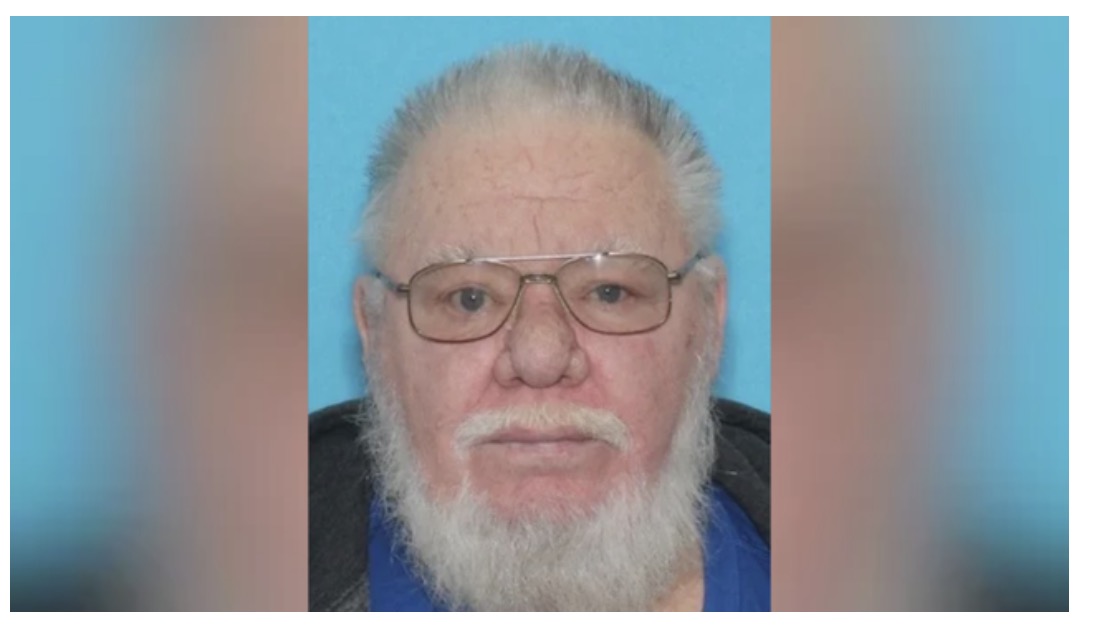
Two young women. Two murders. One man identified nearly 50 years later.
But there’s something about this story that bothers me more than almost anything else.
The man Pennsylvania State Police have linked to two murders in Washington County wasn’t just somebody who lived in the area. He was a long-haul truck driver.
Think about that for a minute.
A man who police say sexually assaulted and strangled two young women in the 1970s also had a job that could take him hundreds, sometimes thousands, of miles away from home.
Different cities. Different states. Different highways. Different truck stops. And potentially, different opportunities to commit crimes without anyone connecting them.
That’s the part of this investigation I believe deserves much more attention. Because while police have identified the man they believe killed Susan Rush and Brenda Ritter, I have a much bigger question.
What happened during all the years nobody knew who he was?
He Was Only 19 Years Old
On November 4, 2026, Pennsylvania State Police announced that DNA evidence had linked James Richard Clark Sr. to two murders that haunted Washington County for nearly half a century.
The first victim was Susan Rush.
She was just 21 years old when she disappeared in November 1976 after leaving a shopping center in Washington County. She was supposed to attend a Thanksgiving Eve gathering.
She never arrived.
Her body was discovered inside her vehicle the following day. Investigators determined she had been sexually assaulted and strangled.
Six months later, another young woman disappeared. Brenda Ritter was 18 years old when she left her boyfriend’s home in May 1977.
She never made it home.
Her body was eventually discovered on a hillside in South Strabane Township. She, too, had been sexually assaulted and strangled.
For decades, investigators couldn’t identify who committed these crimes. Then advances in DNA testing finally connected the murders to Clark.
According to police, he was just 19 when Rush was killed and 20 when Ritter was murdered. Nineteen years old.
That’s what really caught my attention.
At an age when most young men are still figuring out adulthood, police believe Clark had already committed two horrific murders.
And that leads me to another question. Were these his first two victims, or simply the first two investigators have been able to connect to him?
We don’t know.
But I believe it’s a question worth investigating.
The Truck Driving Connection Changes Everything
If Clark had spent his entire adult life in one small community, investigators might have a more limited geographic area to examine.
But he worked as a long-haul truck driver. That changes the scope of the questions.
We’re talking about an occupation built around traveling long distances, sometimes through multiple states in a single trip.
In the 1970s and 1980s, investigators didn’t have the same technology they have today.
There were no smartphones tracking people’s locations. No widespread network of digital cameras recording every highway exit. No modern DNA databases capable of connecting crimes across jurisdictions the way investigators can today. A murder in Pennsylvania and another murder hundreds of miles away might have been investigated by completely different departments with no obvious connection.
Now imagine someone whose occupation routinely took him across state lines. A person could potentially be in Ohio one week, West Virginia the next, and somewhere much farther away after that.
I’m not saying Clark committed murders in those places. No evidence released publicly has established that.
I’m saying his occupation creates an investigative question that cannot be ignored.
Where did James Richard Clark Sr. travel, and were there unsolved murders along those routes? That question could be just as important as identifying him in the first place.
The 1970s and 1980s: When America’s Highways Could Hide a Killer
To understand why Clark’s occupation concerns me so much, you have to understand what America looked like during the 1970s and 1980s.
This wasn’t the America we know today. Truck stops were a completely different environment in certain parts of the country.
Prostitution was prevalent along some major trucking corridors. Women involved in the sex trade sometimes approached drivers at truck stops and rest areas. Runaway teenagers were traveling across the country. Hitchhiking was far more common than it is today.
And many of those people were particularly vulnerable.
Some were running away from troubled homes. Others were struggling financially. Some were simply trying to get from one city to another without having money for transportation. For someone looking to exploit vulnerable people, the opportunities could be frightening.
Now combine that environment with a person willing to commit murder.
Think about the possibilities.
A truck driver could encounter someone at a truck stop in Indiana at three in the morning, travel hundreds of miles afterward, and be back in Pennsylvania before investigators even understood what happened.
There were no cellphones documenting everyone’s movements. No GPS history showing exactly where a truck had stopped. No license plate readers covering interstate highways the way they do today. And no nationwide digital system instantly connecting every unidentified victim, missing person, and homicide investigation. If a young woman disappeared in Indiana and another was murdered in Pennsylvania, investigators might have had no reason to believe the crimes were connected.
Especially if the person responsible didn’t live in either community permanently. That geographical separation could work in a killer’s favor.
And the people most vulnerable to predators weren’t always the people whose disappearances received widespread attention.
Runaways, women involved in prostitution, and people living transient lifestyles could disappear without immediately generating the same level of investigative resources or media coverage as other missing persons.
That is an uncomfortable part of America’s criminal history. We know from other investigations that some serial killers exploited exactly those circumstances.
And it raises an even more troubling question about Clark.
What If Truck Driving Wasn’t Just His Occupation, but Part of His Plan?
This is where I have a theory that goes beyond what investigators have publicly established.
Most people will look at Clark’s occupation and ask whether being a truck driver gave him opportunities to commit additional crimes.
I’m asking something different. What if he pursued truck driving because he already understood the opportunities that life on the road could provide?
Think about his age.
Police linked him to two murders committed when he was just 19 and 20 years old. That’s an incredibly young age to be connected to two sexually motivated killings.
What if those early crimes weren’t followed by an ordinary life in which he happened to become a truck driver? What if his attraction to traveling, being away from home, and moving between jurisdictions was connected to his violent behavior?
I want to be very clear: I have seen no publicly established evidence that Clark chose truck driving for that purpose, or even a verified timeline establishing when he first entered the profession. This is my theory, not a police finding.
But I think it’s a question worth examining.
Because there’s a difference between someone whose job unexpectedly creates an opportunity to commit a crime and someone who deliberately chooses a lifestyle because it could make committing crimes easier.
Those are two very different scenarios.
And if investigators can establish when Clark began driving trucks, where he worked, and how his employment developed after the murders, that timeline might help evaluate the possibility.
The Perfect Conditions for Crimes to Go Unconnected
Imagine the investigative challenges of that era.
A woman is found murdered in Ohio. Another disappears in Indiana. A third is discovered near an interstate in West Virginia.
Different counties. Different police departments. Different states.
Even if investigators suspected similar circumstances, connecting those cases was enormously difficult compared with today.
There was no modern CODIS DNA database during the 1970s. The FBI’s national DNA indexing system wouldn’t become operational until 1998. Investigators depended heavily on witness descriptions, physical evidence, fingerprints, telephone calls, and cooperation between jurisdictions.
And a long-haul truck driver might travel through several states without developing the kinds of lasting connections that would make him an obvious local suspect.
That doesn’t mean every truck driver was suspicious. The overwhelming majority were hardworking people earning an honest living.
But the occupation could provide unusual mobility to someone already inclined toward violence.
It’s also important to remember that interstate serial killings are not just something invented for television. The FBI has investigated the phenomenon of highway-related serial killings, including cases involving victims discovered along major transportation corridors and suspects with trucking connections.
That doesn’t establish Clark’s involvement in any additional crime.
But it demonstrates why examining his travel history would be a legitimate investigative avenue.
The Victims Nobody Connected
Another issue keeps bothering me.
How many women disappeared during those decades whose cases never received national attention? How many were dismissed as runaways? How many were involved in prostitution and never received the investigative attention they deserved? How many unidentified women were discovered near highways without investigators ever learning their names?
Those are real questions about the limitations of investigations during that period. And they matter when examining someone who traveled extensively for a living.
A victim doesn’t become less important because she was hitchhiking. She doesn’t become less important because she was a runaway. And she certainly doesn’t become less important because she was involved in prostitution.
Every one of those women was somebody’s daughter, sister, mother, or friend. Every one deserved to make it home.
I don’t know whether Clark encountered any such women during his travels. I don’t know whether he committed crimes outside Pennsylvania.
But I do know that identifying his routes, employers, and travel patterns could help investigators determine whether there are legitimate connections to other unsolved cases.
The Question I Can’t Get Past
Here is what I keep thinking about.
If investigators had identified Clark in 1977, when he was 20 years old, would they have uncovered anything beyond the two Washington County murders?
Would his work history have revealed something? Would investigators in other states have recognized his name? Or would the evidence have led nowhere?
We may never know.
But nearly 50 years later, investigators have something they didn’t have back then.
A name. A DNA connection. And the ability to compare old evidence using modern forensic technology.
For me, the most important thing isn’t simply determining whether Clark killed again. It’s establishing whether there is evidence that he did.
Because there’s a possibility these two murders represent the entirety of his crimes. And there’s also a possibility they represent only the small portion investigators have been able to uncover.
The open road may have been nothing more than how Clark earned his living. Or it may have provided opportunities investigators never knew to examine.
That’s the distinction I believe deserves serious attention.
And until more of his history is established, neither possibility should be treated as a proven conclusion.
Did He Really Stop After Two Murders?
Here’s where I struggle with this case.
Police have connected Clark to two murders committed approximately six months apart. Both victims were young women. Both were sexually assaulted. Both were strangled. The DNA evidence eventually linked the crimes to the same man.
And then what?
Did he suddenly stop? Did something happen in his life that changed his behavior? Was he responsible for other crimes that investigators haven’t connected? Or were these two murders the full extent of his violence?
All of those possibilities have to remain on the table.
I personally have a hard time assuming that someone police believe committed two murders at such a young age simply never committed another.
But my suspicion isn’t evidence, and I don’t want to confuse the two.
Some offenders stop committing crimes. Others change their methods, move, or go years between offenses. There is no way to determine what Clark did afterward simply by looking at these two cases.
Still, Pennsylvania State Police themselves have acknowledged the possibility of additional victims.
That makes this much bigger than a cold case announcement. It makes it an investigation that potentially extends far beyond Washington County.
The Most Important Evidence Might Be His Work History
If I were trying to understand the full scope of this case, one of the first things I would want to know is where Clark worked.
Which trucking companies employed him? What routes did he drive? What states did he regularly travel through? Did he change employers or relocate over the years? Were there extended periods when he was away from Washington County?
Those details could provide investigators with a timeline of his movements.
Imagine being able to establish that Clark regularly traveled a particular interstate corridor during the late 1970s or early 1980s.
Investigators could then compare those dates and locations with unsolved murders involving similar circumstances.
That wouldn’t prove he committed any additional crimes. But it could identify cases worth examining more closely, especially if biological evidence still exists.
Even decades later, old employment records, witness recollections, family information, and preserved forensic evidence might provide pieces of a much larger puzzle.
The challenge is that Clark died in July 2023. He can no longer be questioned. Investigators cannot ask him where he traveled, who he encountered, or what he may have done. Whatever answers remain will have to come from evidence and people who remember his life.
Somewhere, Another Family Might Still Be Waiting
This is the part I don’t want people to forget.
For almost 50 years, the families of Susan Rush and Brenda Ritter lived without knowing who killed their loved ones.
Think about how much life happened during those decades.
Children grew up. Families changed. People moved away. Some relatives may have died without ever learning the truth.
Meanwhile, the man police have now identified lived until 2023. He died before investigators publicly connected him to the murders.
There will never be a criminal trial in these two cases.
No courtroom confrontation. No opportunity for the families to hear him answer questions. But the DNA findings have finally provided answers about who police believe was responsible.
Now consider the possibility that other families could still be waiting for similar answers.
A young woman who disappeared in another state. A homicide from the late 1970s that never produced a suspect. A family that spent decades wondering why their loved one never came home.
I’m not claiming any particular unsolved case belongs to Clark.
I’m saying those families deserve to have potentially relevant evidence examined if investigators can establish a credible connection.
Two Forensic Links. How Many Unanswered Questions?
What makes this case so unsettling is that Clark wasn’t publicly identified as a suspect while he was alive.
According to investigators, advances in forensic technology eventually uncovered a connection that traditional detective work had not established.
That should make us think about how many other decades-old investigations might contain answers waiting inside preserved evidence.
But DNA alone isn’t the entire story.
The next step is understanding the person behind the evidence.
His movements. His employment. His relationships. His whereabouts during other unsolved crimes. And whether investigators in other states have cases with evidence that could be compared against his DNA profile.
There may ultimately be no additional victims connected to Clark. That possibility has to be acknowledged.
But with two murders linked to him and his background as a long-haul truck driver, I believe investigators have good reason to examine whether his crimes extended beyond Washington County.
My Final Thoughts
I keep coming back to one detail.
He was 19 years old when police say he committed the first murder. Twenty when they say he committed the second. And he lived for another 46 years after that.
Forty-six years. That’s an enormous amount of time.
We don’t know what he did during all those years. We don’t know whether he ever killed again.
But we do know that his work as a truck driver raises questions about how far his movements extended and whether investigators should look beyond Pennsylvania.
And I keep coming back to another possibility.
What if the trucking career wasn’t a coincidence? What if the freedom of the open road, the anonymity of traveling through unfamiliar communities, and the vulnerable people encountered along the way were part of what attracted him to that occupation?
Again, that’s my theory. It has not been established by investigators.
But given his young age when the two known murders occurred, I believe his career timeline deserves examination.
For me, identifying Clark shouldn’t be viewed as the end of the investigation. It should be an opportunity to examine everything investigators can still learn about his life.
Because this story isn’t just about a suspected serial killer who escaped identification for nearly half a century.
It’s about two young women whose lives were stolen, the families who waited decades for answers, and the possibility that other families are still waiting.
Pennsylvania State Police have identified the man linked to two murders. Now the question is whether those two murders tell the whole story.
And if the open road helped conceal additional crimes, how many families might still be waiting for answers in states hundreds of miles from Washington County?
Until investigators can answer that, I believe this case deserves attention well beyond Pennsylvania.