
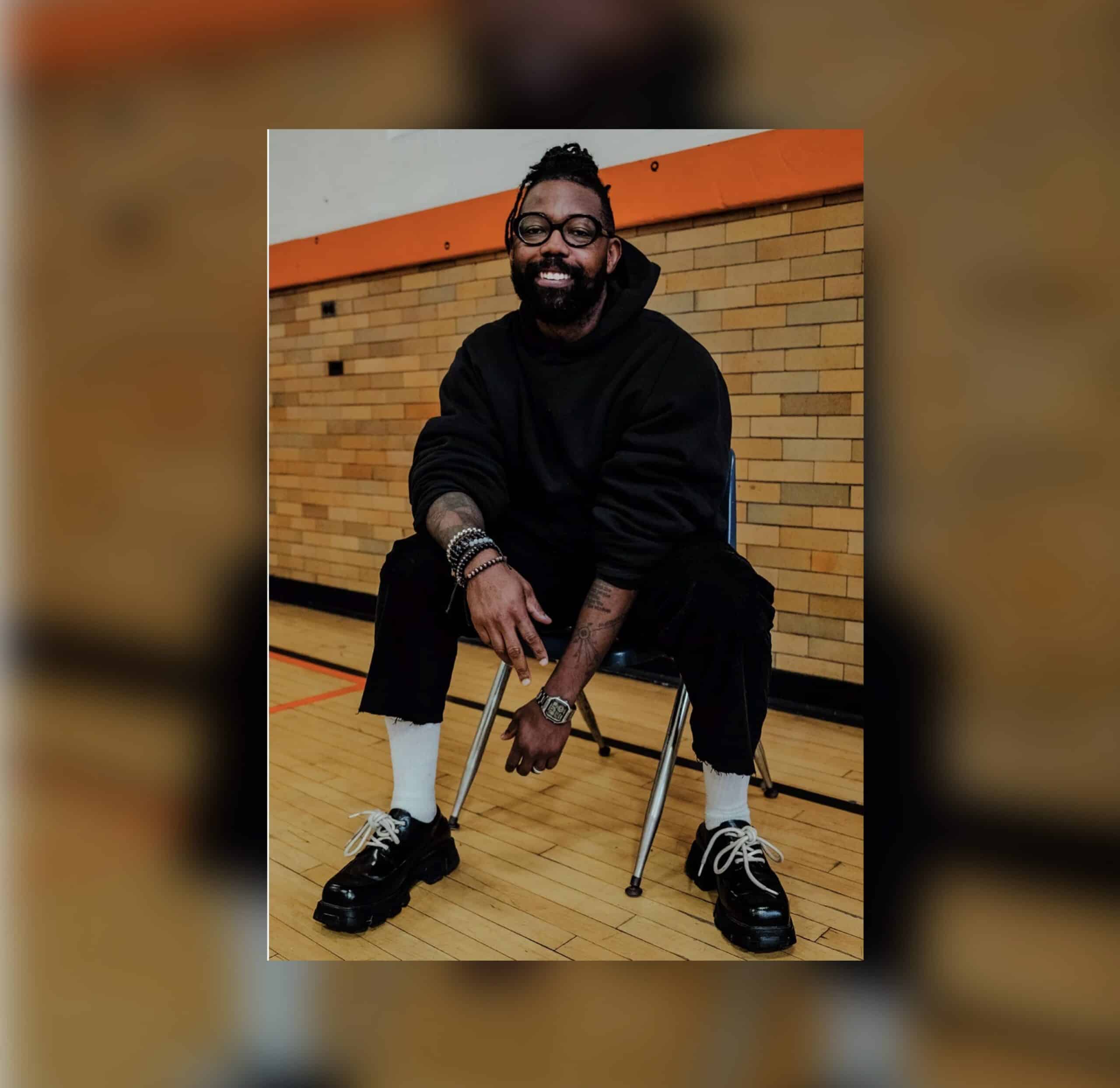
Before Damon Young became known nationally for his writing, he was known around Pittsburgh for something completely different: basketball.
And he could really play.
Young came up during a loaded era of Western Pennsylvania basketball, spending time at Peabody in the City League before returning to Penn Hills. A smart, skilled point guard with a feel for the game, Young was good enough to earn Division I opportunities and eventually chose Canisius.
I remember that version of Damon personally. When I was a freshman at Penn Hills, Damon was a senior. Even then, you could see how intelligent he was. He could control the game, create for teammates and see things develop before everybody else did.
Years later, most people know a different Damon Young.
He became an accomplished writer, author and cultural voice, building a career far beyond basketball. But the competitive nature, observation skills and ability to see things differently that helped make him a successful writer were already there when he had a basketball in his hands.
That’s what made me want to do this Q&A. Instead of focusing only on Damon Young the writer, I wanted to go back and talk to Damon Young the hooper.
We talked about City League basketball versus the WPIAL, his Penn Hills years, recruiting, choosing Canisius, the injuries that affected his college career, the loaded Western Pennsylvania basketball scene of the late 1990s, and how basketball helped shape the writer he eventually became.
And when I asked him to describe his game?
His answer was pure Damon Young: “My hoop game was just like my writing—dangerous as fuck.”
Here’s my Q&A with Damon Young.
Q: You experienced both sides of Pittsburgh high school basketball, you played at Peabody in the City League before transferring back to Penn Hills. What was the biggest difference between playing in the City League and the WPIAL back then?
A: Maybe the City League teams were more guard-centric, while the WPIAL teams tended to play a slower, more inside-out sort of game. But there wasn’t actually much difference in the competition level. There was talent everywhere. The biggest shift was logistical. Most of the City League games were played right after school ended instead of at nighttime, while the only team we’d play after school at Penn Hills was Woodland Hills.
Q: People who know Damon Young the writer might not even realize how good Damon Young the basketball player was. How would you describe your game to somebody who never saw you play?
A: My hoop game was just like my writing—dangerous as fuck. Seriously though, I played at my own pace and was able to dictate tempo instead of allowing it to dictate me. That came from playing so much basketball that nothing really could surprise or rattle me. And I was deceptive. Deceptively strong, deceptively quick, deceptively explosive–I’d catch lobs on people who didn’t even realize I could dunk.
Q: You were a really intelligent player, and obviously intelligence became a huge part of your career as a writer. Looking back, did you see the game differently than most players even then?
A: Passing was my best attribute, and that comes from anticipating behavior, and that just comes from playing so much basketball that you know what to look for. I was a good but not great athlete. And had good but not great size for a point guard. So my advantage had to be skill-based and cerebral.
Q: Who was the toughest player you had to guard in high school, and who gave you the most problems?
A: The player who gave me the most problems was my closest friend, Brian Carroll, who played at Schenley and then Loyola, MD. We never actually faced each other in high school, but when I lived in East Lib, we lived a block away from each other, and we played one-on-one literally hundreds of times.
Q: If you could go back and play one game from your Penn Hills career again, not to change the outcome, just to experience it one more time, which game would you choose and why?
A: Probably us beating New Castle in the playoffs my junior year. I think they were ranked #1 in the state, and we blew them off the court. Also, my dad is from New Castle, and my family is extremely heavy there. My cousin Dave is their all-time leading scorer, and my Uncle Danny is on that list somewhere too. So that added extra meaning to the game.
Q: What’s one basketball decision you made as a teenager that you’d handle completely differently knowing what you know now?
A: If I knew then what I know now, I would’ve embraced analytics and turned all those pull-up 16-and-17 footers I’d shoot into threes. Also, injuries severely affected my college career, and I would have been more mindful of the sort of flexibility and core strength work that prevents them.
Q: You were good enough to play Division I basketball. When did you first realize college basketball was realistically in your future?
A: Probably 8th grade. What I was unsure about was which level I’d end up playing at.
Q: Did you ever have a relationship with Coach Rocco, and did he have any involvement or influence in your college recruitment?
A: My first year at Penn Hills was Rocco’s first year as head coach. We always had a good relationship, and I honestly can’t tell you what impact he had on my recruitment. I don’t remember. I do remember though that most of the college attention I received came from AAU ball—particularly a summer with the Pittsburgh JOTS—and all-star games instead of WPIAL basketball.
Q: What ultimately made you choose Canisius?
A: There were a few schools that showed interest. Ivy and Patriot League schools like Penn and Bucknell. Robert Morris, a couple Mid-American Conference schools, and also, randomly, Marquette. Canisius just felt like the best situation. They were a winning program, and I thought I’d have a good chance to step in and contribute immediately.
Q: Once you got to Division I basketball, what was the biggest difference you immediately noticed between being a good high school player and playing at that level?
A: The best players at that level were the ones who devoted their lives to getting better at basketball. That’s eating/sleeping right, being in amazing condition, attacking drills, etc. The best players, especially at guard, were usually the ones who put in the extra work to be.
Q: If you could take your basketball IQ today and put it into your high school body, what would you do differently as a player?
A: This is a counter-intuitive answer maybe but I think I would have allowed myself to make more mistakes. More risks. More turnovers, even. There were times I’d be so hyper focused on making the exact right play that actually playing and experimenting and having fun came second.
Q: You and I shared a Penn Hills jersey, so I remember the basketball version of you. Do you ever miss being known as a hooper instead of Damon Young the writer?
A: It’s funny. I can tell when and where people met me in my life by what they think of first. People who met me before I turned 25 know basketball me first. People who became familiar of me after that know the writer first.
Q: Do you think playing basketball helped you become a better writer, whether it was learning how to observe people, handle criticism or understand competition?
A: Of all the most popular American sports, basketball makes you the most vulnerable. You’re not wearing any equipment, you’re essentially performing in your drawls, and there are no barriers or space even separating you from the crowd. Existing in that environment forces you to develop an elephant’s skin, and that definitely has helped me withstand criticism and also recognize when a critique is meant to be constructive.
Q: Does the competitiveness that made you successful in basketball show up in your writing career today?
A: Maybe? It’s funny–I’m probably more competitive as a writer than I was as a hooper.
Q: What’s something about Pittsburgh basketball in the late ’90s that somebody who didn’t actually live and play through that era could never understand?
A: The class of 1997 specifically isn’t mentioned the same way that other notable years are. But that class had the top ranked football team in the country (Penn Hills), the top ranked football player (Lavar Arrington), and more D-1 hoopers in one year than any year since. Top of head in Western Pa there was Courtney Wallace, Brian Carroll, Naron Jackson, Aaron Lovelace, Brant Mack, Archie Miller, the seven footer from Plum who went to Robert Morris, Ned Rolsma from Hopewell, Isaiah Stewart, a 6’9 kid from Upper Saint Clair who played somewhere (I forget), Alvin Anderson from George Junior Academy, and me. There were also people like Adam Kaufmann—who set D-2 records and definitely could have played D-1. We were deep, and I’m sure I’m forgetting people.
Q: You get one game, your life depends on it, and you can pick any five NBA players ever in their primes. What’s your all-time starting five?
A: Magic, Bron, Mike, Duncan, Kareem. (Would consider subbing Steph for Magic and Shaq or Dream for Kareem.)
Q: And who’s taking the last shot?
A: They’re beating everyone by 50, so no need for that.
Q: If your basketball career were a book you had to write today, what would the title be, and what would the story really be about?
A: What Doesn’t Kill You Makes You Blacker—which (coincidentally I’m sure) is also the title of my first book.