
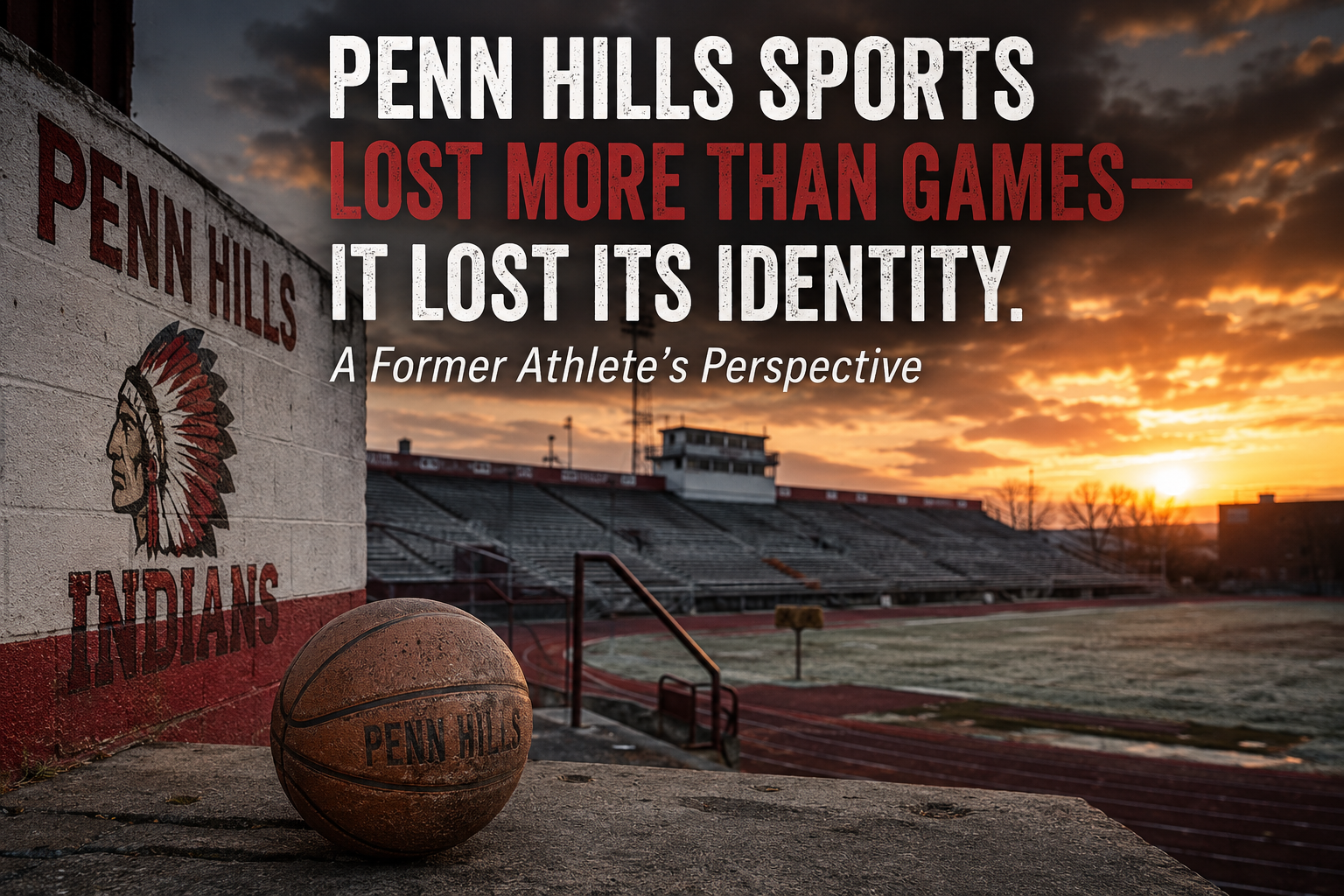
When I attended Penn Hills, there was a sense of pride that existed throughout the community.
My family went to Penn Hills. I went to Penn Hills. Back then, people identified with the school district. It wasn’t just where you went to school — it was part of who you were. Students grew up together, families stayed in the community, and there was a loyalty to Penn Hills that extended far beyond graduation.
Today, that feeling seems different. One of the biggest changes has been how transient the area has become. Years ago, many families stayed in Penn Hills for generations. Now, people move in and out of the district much more frequently. When communities become less stable, it’s harder to build the connections and traditions that once made school pride so strong.
Social media has also changed youth sports in ways many people never expected.
When I was growing up, athletes focused on their teams, their schools, and competing with the players in front of them. Today, social media has created a culture where parents and athletes are constantly comparing themselves to others. Rankings, highlights, followers, and exposure have become major talking points. In many cases, parents have become more invested in their children’s athletic careers than ever before, sometimes living through their kids instead of allowing them to simply enjoy the experience.
The result is that school loyalty often takes a back seat to individual opportunities.
Charter schools have also had a significant impact. Every student who leaves the district is one less student participating in the school community. Over time, those numbers add up. Fewer students often mean fewer athletes, fewer participants in extracurricular activities, and a smaller pool of young people available to sustain programs.
The challenges aren’t unique to Penn Hills. Many communities across Western Pennsylvania have seen population declines, changing demographics, and increased competition for students. But for those of us who remember what Penn Hills once represented, the changes are impossible to ignore.
Penn Hills produced great athletes, successful professionals, and generations of proud graduates. The district’s identity wasn’t built solely on winning games. It was built on community, tradition, and people who genuinely cared about representing Penn Hills.
The question moving forward isn’t whether Penn Hills can return to the exact way it once was. Times change, and communities evolve. The real question is whether the district can rediscover the sense of pride, unity, and identity that once made Penn Hills one of the most respected communities in Western Pennsylvania.
Because talent has never been the issue. The challenge is bringing the community back together.