
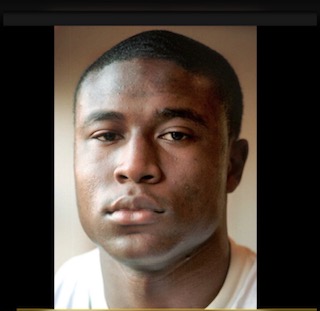
There are certain players you never forget playing against. David Young was one of them.
When people talk about the great players in WPIAL basketball history, David Young’s name is always in the conversation.
As the leader of New Castle’s powerhouse program, Young helped guide the Red Hurricanes to three consecutive WPIAL championships while establishing himself as one of the most accomplished players Western Pennsylvania has ever produced. Along the way, New Castle defeated my Penn Hills teams three different times in the playoffs, which gives me a firsthand appreciation for just how good they were.
What made Young special wasn’t just his talent. It was his ability to win.
He scored more than 2,100 points in his career, won three WPIAL titles, earned Pennsylvania Player of the Year honors, and became the all-time leading scorer in school history. After high school, he continued his career at Xavier before transferring to North Carolina Central, where he exploded for 20.5 points per game and caught the attention of NBA scouts. His outstanding senior season led to the Seattle SuperSonics selecting him with the 41st overall pick in the 2004 NBA Draft.
Young built an impressive professional career that took him around the world, playing in Europe, Asia, and other international leagues for more than a decade.
For this edition of Throwback Thursday, I caught up with David Young to discuss New Castle’s dynasty years, his battles in the WPIAL, the road to the NBA Draft, and the lessons he learned throughout his basketball journey.
Q: New Castle won three straight WPIAL championships during your career. What made those teams so special?
A: What made those teams special was our camaraderie, chemistry, and the bond we built over years of playing together. Most of us had been playing basketball together since fourth or fifth grade, some even earlier through three-on-three tournaments. By sixth and seventh grade, we were already extremely familiar with each other’s games. That history carried over into our summer program and created chemistry that was truly one of a kind. Nobody cared about individual stats, we just wanted to win. Everybody knew their role, knew where to be on the court, and trusted one another. We also had a great coach in Coach Sarandrea who understood how to maximize our talent. When you combined our talent with chemistry, unselfishness, and desire to win, it made us a force to be reckoned with.
Q: When you look back, what do you remember most about the rivalry games and playoff battles against Penn Hills?
A: What made the rivalry so intense was the level of talent and athleticism Penn Hills brought every time we played them. On paper, I always felt like Penn Hills was the bigger, more athletic, physically imposing team. We knew we weren’t going to out-jump or out-athlete them, so we had to play smart, execute our system, and rely on our chemistry. They had guys who could really score, like Drew Schifino, along with athletic wings like Jamar Hubbard. I even played against Drew’s brother, Jake. They were big, athletic guys who could flat-out hoop, and every matchup felt like a battle. That contrast between their athleticism and our execution is what made the rivalry so competitive.
Q: You became New Castle’s all-time leading scorer. Did you ever think about records while you were playing, or was winning always the main goal?
A: I never really thought about records while I was playing. I was fortunate enough to set scoring records while playing alongside three other thousand-point scorers, which says a lot about how well our team played together. Everything came within the flow of our system. I never went into games thinking about records or numbers. I just played, took advantage of opportunities within the offense, and the records came naturally.
Q: New Castle basketball has one of the richest traditions in Pennsylvania. What did wearing that uniform mean to you?
A: There was always a tremendous amount of pride that came with wearing that red and black and having New Castle across the front of our jerseys. We never played for the name on the back. We played for the name on the front and everything it represented. New Castle is a hardworking town filled with hardworking people, and we carried that same mentality onto the court every time we played. Representing our city and community meant everything to us.
Q: Who were some of the toughest players you faced in the WPIAL?
A: I played against a lot of great players during that era. Guys like Drew Schifino, Yuri Demetrius, Courtney Wallace, Lamar Castille, and Aaron Lovelace immediately come to mind. The WPIAL was loaded with talent, and it felt like every night you were facing someone who would eventually go on to play Division I basketball. Looking back, the level of competition was incredible.
Q: What was your recruiting process like coming out of high school, and why did you choose Xavier?
A: The recruiting process was exciting. After my junior year, I had interest from a lot of ACC, Big East, and other major Division I programs. I ultimately chose Xavier after Skip Prosser came to my home and sold me on his vision. Their up-tempo, pressing style was very similar to what we played at New Castle, and he told me I would have the opportunity to play right away. Looking back, if I could do it over again, I probably would have taken a fifth year of prep school because I think the extra development and exposure would have benefited me tremendously.
Q: You played alongside future NBA players at Xavier. What did that experience teach you?
A: It was definitely humbling. I went from being a 2,000-point scorer and the go-to guy at New Castle to playing alongside tremendous talent like David West, Romain Sato, and Lionel Chalmers. When Thad Matta took over, he saw me more as a defender, so I had to adjust to a completely different role. That wasn’t easy because scoring had always been a big part of my identity. The experience taught me how to adjust, accept a role, and contribute however the team needed me to.
Q: After transferring to North Carolina Central, your career took off. Why was that move the right decision for you?
A: Transferring to North Carolina Central was one of the best decisions I made. I went there wanting to enjoy basketball again, and it allowed me to get back to being myself. I’m a scorer, and once I became comfortable, especially in the second half of the season, I really hit my stride. That opportunity restored my confidence, allowed me to showcase my abilities, and ultimately helped launch my professional career.
Q: What was it like hearing your name called by the Seattle SuperSonics in the 2004 NBA Draft?
A: Outside of the birth of my daughter, it was the best day of my life. It’s a surreal feeling because that’s the dream you’ve worked toward through all the long days in the gym and the sacrifices you’ve made. Hearing my name called and seeing it on the board was an unbelievable moment. Even though my NBA experience was brief, I’ll always be grateful for the opportunity.
Q: Looking back, what do you remember most about the pre-draft process and NBA workouts?
A: I remember how competitive those workouts were. Coming from a small school, I felt like I had something to prove every time I stepped on the floor. I went into every workout with the mentality of competing and attacking. One of my most memorable experiences was working out for the Lakers. I played so well that Kobe Bryant and Shaquille O’Neal came over and complimented me while Phil Jackson watched. The Lakers even told my agent they were seriously considering taking me late in the first round. That’s a moment I’ll never forget.
Q: You played professionally all over the world. Which country or experience stands out the most?
A: Italy stands out the most. It was my first introduction to European basketball, and I loved everything about it—the basketball, the culture, the food, and the passionate fans. Italy will always hold a special place in my heart because it opened the door to so many incredible experiences.
Q: How did international basketball help you grow as both a player and a person?
A: It helped me grow tremendously as a person. Playing overseas forced me to become more independent and mature because you’re living in a different country, often away from family, and adapting to different cultures and languages. It taught me how to navigate the real world, respect different cultures, and become more self-reliant.
Q: What is the biggest misconception people have about playing overseas?
A: The biggest misconception is the level of talent and physicality. A lot of people assume overseas basketball isn’t as competitive, but that’s simply not true. The game can be extremely physical, and there are a lot of great players throughout Europe and other parts of the world. Another misconception is that everyone is making huge money. The reality is that salaries vary greatly depending on the country, league, and situation.
Q: What advice would you give today’s high school players who dream of playing professionally?
A: Keep God first, stay disciplined, and believe in yourself. Becoming a professional requires an incredible amount of work. You have to be willing to sacrifice, eliminate distractions, and put in the work when nobody is watching. If you want to be a professional one day, start developing professional habits now.
Q: When your basketball story is told years from now, what do you hope people remember most about David Young?
A: I want people to remember someone who worked hard, loved the game, and maximized his opportunities. I was a kid from a small town of about 21,000 people who beat the odds, became Pennsylvania Mr. Basketball, heard his name called in the NBA Draft, played professionally in 10 countries, and built a life through basketball. The game taught me lessons that became even more valuable than basketball itself. I want my story to show what can happen when a small-town kid dreams big, works hard, and refuses to let the odds define him. And at the end of the day, I want people to remember one simple thing: That boy DY could go.