
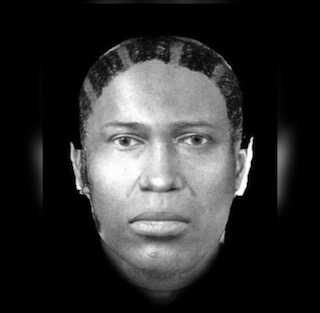
On February 2, 2008, five women were murdered inside a Lane Bryant store in Tinley Park, Illinois, in what remains one of the most chilling unsolved mass murders in modern American history. Eighteen years later, investigators still don’t know who committed the crime.
For many people following the case, one question continues to stand out: How can someone walk into a store, kill five people, leave behind witnesses, be captured on surveillance footage, and still never be identified?
Part of the answer may be the technology available at the time. Back in 2008, surveillance cameras were nowhere near what they are today. Most businesses relied on low-resolution security systems that produced blurry images and grainy video. While investigators were able to obtain footage of a vehicle believed to be connected to the case, the quality was so poor that critical details were impossible to determine.
No clear license plate. No identifiable facial features. No breakthrough.
At the time, investigators largely depended on eyewitness accounts, physical evidence, tips from the public, and traditional detective work. While those methods remain important today, modern technology has added tools that simply did not exist in 2008.
If the Lane Bryant murders happened today, investigators would likely have access to a much different investigative landscape. Modern surveillance cameras provide high-definition video capable of capturing facial features, clothing details, tattoos, and license plates with remarkable clarity. Businesses, homes, traffic systems, and doorbell cameras create an almost continuous digital trail in many communities. Cell phone location data has also become a major investigative tool. Detectives can often determine which devices were near a crime scene at a specific time and compare that information against known suspects. License plate reader systems now track millions of vehicle movements across the country, helping investigators reconstruct travel patterns in ways that were nearly impossible eighteen years ago.
Investigators also have access to advanced digital forensic tools, improved DNA technology, and artificial intelligence systems capable of enhancing video and identifying patterns that might have been overlooked years ago.
Would those technologies have solved the Lane Bryant murders? Nobody knows for certain.
Criminals still evade capture today despite all the advances in technology. However, it’s hard not to wonder whether clearer video, better digital evidence, and modern investigative tools could have generated the breakthrough that has remained elusive for nearly two decades.
The Lane Bryant murders remain one of America’s most haunting cold cases because investigators were never truly starting from zero. They had a suspect vehicle. They had witness accounts. They had surveillance footage.
What they didn’t have was the technology that investigators take for granted today.
Eighteen years later, the families of the victims are still waiting for answers, and one of the biggest questions surrounding the case remains whether the killer benefited from committing the crime at a time when the digital trail was far easier to erase.
Sometimes a case isn’t just about what investigators know. It’s about what technology allows them to see.