
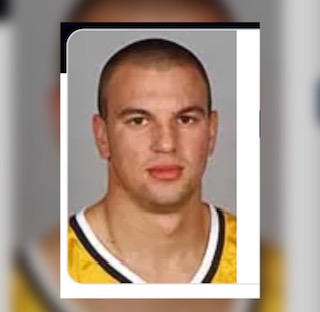
Not every member of the WVU Brotherhood arrived in Morgantown with scholarship offers, headlines, or recruiting rankings.
Some earned their place through hard work, sacrifice, and a love for the game. Nick Patella was one of those players.
As a walk-on during the John Beilein era, Patella experienced firsthand the culture, accountability, and daily grind that helped lay the foundation for West Virginia basketball’s rise. While fans remember the stars who filled the box scores, every successful program is built on players willing to push their teammates, compete every day in practice, and embrace their role.
Patella was one of those guys.
For this edition of WVU Brotherhood, we talk about earning a spot as a walk-on, playing for Coach Beilein, memories from those early WVU teams, and what being a Mountaineer still means to him today.
Q: What made you choose WVU and pursue a spot as a walk-on?
A: WVU was always the dream. Growing up in Elkins and attending countless football and basketball games with my friends, we would always say that if we could play anywhere, it would be West Virginia University.
Q: What do people misunderstand about the life of a walk-on at the Division I level?
A: I think a common misconception is that it’s easier because you’re not a scholarship player. In reality, you do everything scholarship players do—from weightlifting and conditioning to individual workouts and team practices. One challenge that may be different is learning not only our team’s offense and defense, but also the systems of many opponents we competed against. It opened my eyes to the many different ways the game can be played and helped me develop a deeper understanding of basketball.
Q: What was your first impression of Coach Beilein?
A: My first impression came when my family and I sat down with him in his office at the Coliseum. He was genuine, caring, and you could sense a genius about him. He was driven, determined, and confident—but never arrogant—about what he believed would work, whether it was his 2-guard offense or how he manipulated the 1-3-1 defense. Another thing I learned over time, but was apparent from that first meeting, was how hard he worked to remember everyone’s name, from the janitor to the chairman of the Big East Conference. Everyone matters and everyone has a story. Today, as a teacher and coach, I try to learn every person’s name because it truly matters.
Q: How did Coach Beilein’s culture differ from other programs you experienced?
A: His culture was unlike anything I had ever experienced. There were so many quotes that still live rent-free in my head, but more importantly, they weren’t just words—they were life lessons. “It’s amazing how much you can achieve when no one cares who gets the credit.” “Adversity causes some men to break and others to break records.” “The difference between ordinary and extraordinary is the extra.” Coach didn’t just say those things, he lived them. He shaped his players through his example, and those lessons have stayed with me long after basketball.
Q: What do you remember most about those early 2000s WVU teams?
A: When I arrived in the fall of 2002, there was a bit of chaos because of all the changes WVU basketball had recently gone through. But it was also the perfect time to find myself and become part of a new movement. I remember the excitement of beating Florida in Charleston, a game I was fortunate enough to play in and contribute to. I also remember the heartbreak of losing to Providence in the first round of the Big East Tournament at Madison Square Garden, finishing one game under .500 and knowing our season was over. The following year, Coach continued adding key pieces and we grew together as a team. After my sophomore season, which became a medical redshirt year because of a spinal concussion, I truly believe our overseas trip and time together helped bond the team for what was ahead. The 2004-05 Elite Eight run was the result of those earlier years. That team captured the hearts of people throughout West Virginia and across the country and helped propel WVU basketball to where it remains today.
Q: Which teammates had the biggest impact on you?
A: Two players immediately come to mind. The first was Jon Curran. He was a fellow walk-on from Clarksburg who took me under his wing. He was a senior when I arrived, then returned for a fifth year, so we developed a strong bond during that time. The second was J.D. Collins. Going against him every day in practice created a special connection because we played the same position. We had some incredible battles. He was a tremendous defender and ball-handler, and I learned so much simply by competing against him. I was at my best when he was at his best, and I truly believe I helped him and the team by bringing my best every day in practice.
Q: Was there a moment when you felt you truly belonged at the Division I level?
A: Absolutely. Ironically, it happened during a pickup game when I was guarding Drew Schifino. After Drew scored on me—as he did many times—J.D. Collins told me I needed to guard better. My response was something like, “I’m just a walk-on. J.D. stopped me immediately and said, “You are a member of this team and need to play like it.” From that moment forward, I never viewed myself differently. I realized my teammates didn’t see me differently, so why should I? It completely changed my perspective, and I felt my game improved dramatically after that. It’s a story I still tell kids today who feel inadequate or less than, because one moment of belief can change everything.
Q: What was a typical practice like under Coach Beilein?
A: Practices were incredibly organized and scripted down to the minute. It’s something I later adopted in my own coaching. There was no wasted time. We focused constantly on fundamentals—pivoting, passing, shooting, and footwork. It felt like we took charges every day because Coach viewed taking a charge as one of the ultimate acts of unselfishness. We celebrated charges and other selfless plays. Practices always included dry offense, defensive work, live competition, and detailed preparation for the next opponent. Coach always preached, “Failing to prepare is preparing to fail,” and he embodied that every day.
Q: What are some memories WVU fans never got to see behind the scenes?
A: Fans remember the wins, the Florida game, and the tournament runs. What they don’t see are the day-to-day moments that truly define a team. The training room. The locker room before and after practice. The personalities, hidden talents, personal stories, travel experiences, wrestling matches, and friendships that develop over time. Those relationships are what stay with you. For example, I’m still close friends with Tony Caridi and many of the behind-the-scenes people who dedicate their talents to WVU athletics. Those connections are just as meaningful as anything that happened on the court.
Q: What does “Once a Mountaineer, Always a Mountaineer” mean to you today?
A: It means that no matter where life takes you, you’ll always have a home in Morgantown. It means there’s an unspoken respect among those who gave everything they had for the best university in the country. There’s a pride that comes with being a Mountaineer that’s difficult to put into words. More often than not, it brings back memories that can bring tears of joy because those experiences and relationships last a lifetime.
Q: As a walk-on, you weren’t promised anything. Looking back, what did earning your place at WVU teach you about life?
A: I knew my leash was a little shorter than some others, and that was okay. Fair and equal are not always the same. My parents worked incredibly hard, so I always understood that anything worthwhile had to be earned. I’m proud to say I eventually earned a scholarship during my junior year. When my career-ending injuries occurred, I gave that scholarship back so it could go to Duriel “Juice” Price. In my heart, I knew he had earned one too. Coach recognized my hard work and growth, and I truly believe he had plans to use me more. Unfortunately, concussions changed that path. The lessons from that experience still guide me today: work hard, stay humble, expect nothing to be handed to you, lift others up, be vulnerable, never give up on your dreams, and remember that you never know when the last opportunity will come. So when you get your chance, give it everything you have.