
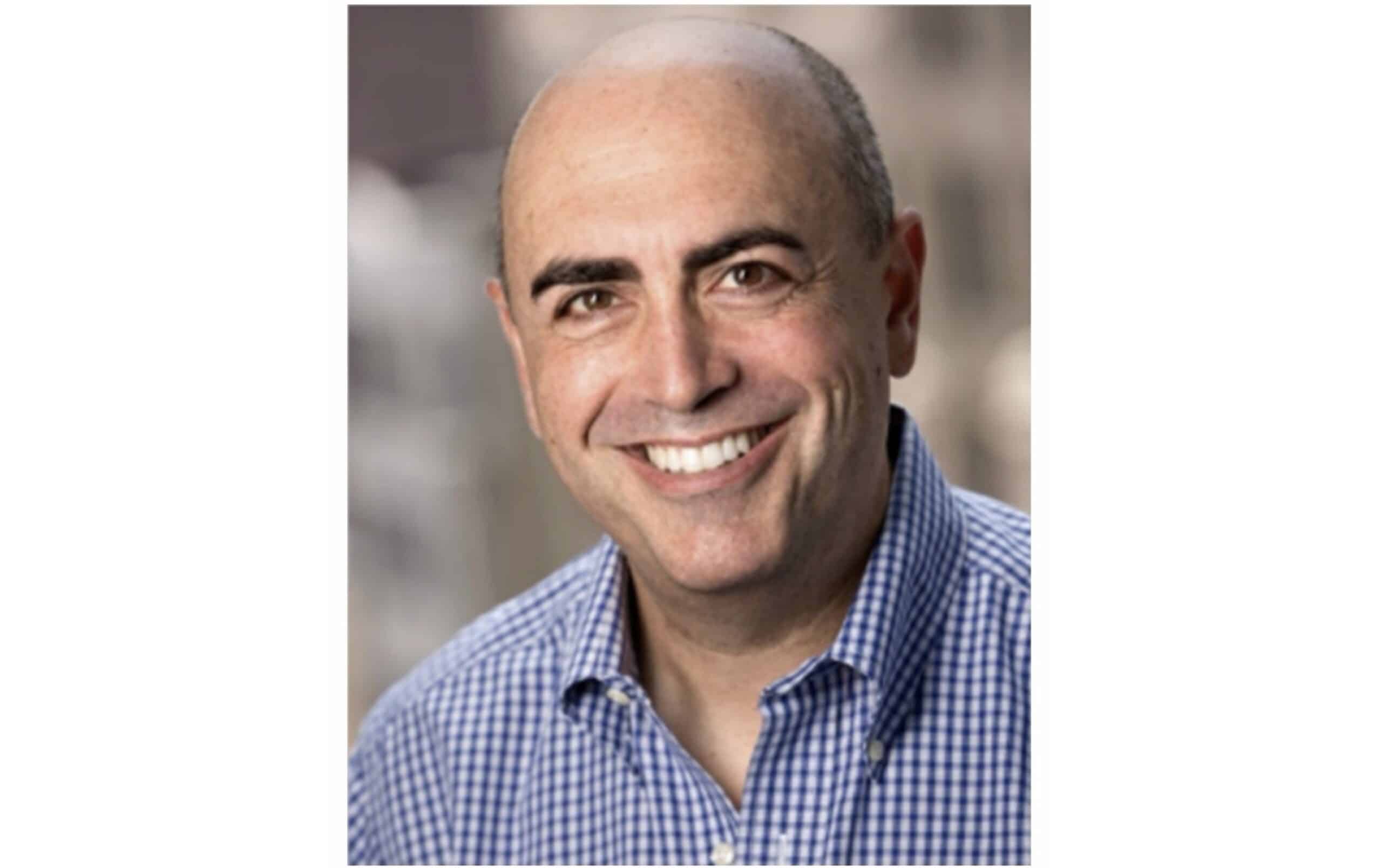
Greg Weinstein has spent much of his professional life trying to understand one of the most valuable commodities in the world: People’s attention.
Before becoming an entrepreneur in the artificial-intelligence space, Weinstein spent years in television and digital media, working at places including MTV, The History Channel and A+E Networks, where he started the company’s Digital Content Studio.
Later, he founded Audience Genomics, a data and analytics company that studied audiences and what makes social-media content work for brands including Universal Studios, AMC Television and Fenty Beauty.
But all of that experience eventually led Weinstein toward a completely different audience.
Not another Fortune 500 company. Not another television network.
The small-business owner. The restaurant owner trying to run a kitchen while remembering to post on Instagram. The attorney trying to practice law while figuring out what to put on Facebook. The barber, boutique owner, real-estate agent or entrepreneur who knows social media matters but doesn’t have a marketing department sitting in the next room.
That’s the problem Weinstein is trying to solve with Aggie, an AI-powered platform designed to essentially become a social-media assistant for businesses that don’t have the time, staff or expertise to constantly create content themselves.
And after speaking with Weinstein, what stood out to me is that Aggie isn’t simply about using AI to write social-media posts.
His vision is much bigger.
It’s about taking some of the advantages huge corporations have enjoyed for years and putting them within reach of the small business trying to compete with them.
For Weinstein, that mission is also personal.
It Started With His Father
Long before Weinstein was analyzing audiences for major companies, he was watching his father work. His dad sold pet supplies to local pet stores.
These weren’t giant corporations with enormous advertising budgets. They were independently owned businesses serving their communities.
Then the big-box chains started arriving. Weinstein saw firsthand how uneven the competition could become.
“I grew up watching my dad sell pet supplies to local pet stores,” Weinstein told me. “Each one was a small business, and then the big-box chains came in.”
The difference wasn’t simply the size of the stores. It was resources.
Big companies could employ teams of people whose entire job was advertising, branding and marketing.
The local business owner might be the CEO, salesperson, customer-service department, bookkeeper and marketer all at once.
“Big companies have teams of marketers,” Weinstein said. “Small businesses have the owner doing everything.”
That memory stayed with him throughout a career spent working on the other side of that equation.
“I spent my career building audiences that big brands take for granted,” Weinstein said. “Aggie is my way of leveling the playing field for the small guy—or gal.”
That sentence explains a lot about what Weinstein is trying to build.
Because Aggie wasn’t created simply because AI became popular.
The technology may be new. The imbalance Weinstein is trying to address isn’t.
Learning the Business of Attention
Weinstein’s career in television gave him an education in something every business is now fighting for on social media: attention.
At MTV, The History Channel and A+E, the scale may have been much larger than the average local business, but the fundamental challenge was surprisingly similar.
How do you make somebody care? How do you get someone to stop? And once you have their attention, how do you keep it?
“I’ve spent a huge part of my career trying to answer that exact question,” Weinstein told me.
One of his biggest lessons was learning the difference between what the person creating the content likes and what the audience actually wants.
“There’s a big difference between creating content that you think is cool or interesting and creating content that your audience thinks is cool or interesting,” he said.
That’s a mistake businesses of every size can make. A company can become so focused on what it wants to say that it forgets to ask why anybody else should care.
Television doesn’t give you that luxury.
“When you’re working in television, you learn very quickly that nobody owes you their attention,” Weinstein said. “You have to earn it.”
And earning it doesn’t necessarily mean creating the loudest or flashiest content. The best content usually makes the audience feel something.
“It might make you laugh, teach you something surprising, entertain you, or make you feel like somebody understands you,” Weinstein said.
The lesson, he believes, translates directly from major television networks to Main Street.
“That applies just as much to a local clothing boutique as it does to MTV or the History Channel.”
Then Came the Data
Weinstein eventually took his experience in media and audience development and went deeper into the science behind content.
Audience Genomics launched in 2018 and worked with major brands and organizations to better understand audiences and the types of content that connect with them.
When Aggie was introduced as the company’s first mass-market product, Variety reported that the venture was backed by a $3.2 million investment led by Stephen Esposito, managing partner at SPO Capital Investments. The technology was built using years of social-media data accumulated through Audience Genomics’ work.
But something important happened while Weinstein and his company were studying marketing.
They began working with smaller and midsize businesses. And those businesses kept communicating essentially the same problem.
They might appreciate sophisticated analytics. They might understand that social media mattered. They might even know what they should be doing. They just didn’t have enough time or people to actually do it.
That became the opening for Aggie.
“I Know I’m Not Posting Enough.”
When I asked Weinstein what he kept hearing from small-business owners, his answer was remarkably simple.
“I know I’m not posting enough.”
Behind that statement, Weinstein said, were usually three problems: Time. Creativity. Confidence.
Business owners don’t necessarily have hours every week to develop a content strategy.
Some don’t know what to post. Others have ideas but aren’t confident about whether the content looks professional or whether they’ll say the wrong thing.
“So it gives people lots of reasons to procrastinate,” Weinstein said.
Unfortunately, the importance of having an active social presence isn’t disappearing. It’s increasing.
“The problem is customers expect to see an active social media account just like they expect to see a quality website,” Weinstein said. “It’s one of the ways they decide if you’re legit.”
Think about your own behavior as a consumer.
You hear about a restaurant. You look it up. You check Instagram. You find a business page whose last post was eight months ago.
Immediately, questions enter your mind. Are they still open? Is anybody running this place? Why isn’t anything current?
That perception can exist even when the actual business is doing perfectly fine. The digital storefront has become an extension of the physical storefront.
Aggie was built to keep that storefront from looking abandoned.
“We built Aggie to take that weight off their shoulders,” Weinstein said, “and help keep their accounts active even if they’re not a social media expert.”
The Blank-Calendar Problem
There are already plenty of social-media tools.
There are scheduling programs. There are design platforms. There are AI writing tools. There are analytics dashboards.
So I asked Weinstein the obvious question: What makes Aggie different?
His answer gets to the heart of the product. “Most AI tools give you the ability to create content, but they still expect you to know what you’re doing, and what good content looks like,” Weinstein said.
In other words, giving somebody more tools doesn’t necessarily solve their problem. If you’re already overwhelmed, another blank content calendar isn’t particularly helpful.
Weinstein uses a great analogy.
The gym.
A gym can contain every piece of equipment imaginable. You can have thousands of exercises available to you. Technically, everything you need is sitting right there.
But you still have to know what exercises make sense for you. You still need a plan. And then you have to actually do it consistently.
“That’s where a personal trainer comes in,” Weinstein said. “They get to know you, figure out what works best for you, and make sure you’re actually doing it.”
Then he connected it to his company. “Think of Aggie like your personal trainer for social media.”
That’s probably the easiest way to understand what Weinstein is building.
Aggie isn’t designed to simply hand you the equipment. It’s supposed to do much of the thinking with you.
Give It Your Business. It Builds the Content.
The onboarding process is deliberately designed around simplicity.
Aggie studies the information a business already has online, including its website and existing social-media material, to learn what the company does, how it communicates and how its brand looks.
From there, it creates social-media content for the business rather than waiting for the owner to start with an empty page.
The owner can review it. Approve it. Change it. Or reject something they don’t like.
Aggie can then publish approved content across platforms including Instagram, Facebook, LinkedIn, X and others.
The company’s pitch is essentially: Aggie does the first draft. You make the final decision.
That’s an important reversal.
Most traditional tools begin with the business owner asking: What should I post today?
Aggie is designed to begin by saying: Here’s what you can post.
“We spent years developing technology that analyzes what brands say, how customers respond, and why,” Weinstein said “We’ve built that knowledge into Aggie so it can get to know your business, understand your customers, figure out what kind of content makes sense for you, and then actually create it.”
That last part—actually create it—is what Weinstein sees as the difference.
“That’s Exactly Why We Built It.”
I asked Weinstein what he would tell the business owner who says: I don’t have time for social media, and I don’t really understand it.
His response was immediate. “That’s exactly why we built it.”
“You shouldn’t have to become a social media expert just because you happen to own a business,” Weinstein said.
That’s a simple statement, but think about how much the job description of “business owner” has expanded.
Years ago, somebody could be exceptional at running a restaurant, cutting hair, practicing law, fixing cars or selling clothes. Today they’re increasingly expected to understand SEO, Instagram, Facebook, TikTok, online reviews, websites, email marketing, digital advertising and whatever platform becomes important next.
None of those things may have anything to do with the reason they started the business.
Weinstein compares Aggie’s role to what happens when a company hires a strong social-media manager or agency.
“They get to know the business, understand its customers, develop ideas, create content, and help the business stay relevant,” he said.
Aggie is attempting to replicate much of that process without requiring a small company to carry the cost of a traditional agency or another full-time employee.
“The idea is to let Aggie do what it does best, so you can focus on what you do best: running your business.”
This Isn’t Just for the Mom-and-Pop Shop
What’s especially interesting about Aggie’s business model is that the technology isn’t limited to one independent company.
Yes, Weinstein believes it can work for the single coffee shop or local boutique.
But the platform is also being positioned for franchises, multi-location companies and large institutions that serve thousands of small businesses.
Imagine a franchise with 40 locations. Corporate headquarters wants consistency. The individual location still needs content relevant to its community.
Those are two different needs.
Aggie is designed to learn the larger brand while creating content that can work at the local level.
Then there’s another market entirely: Banks and other institutions serving small businesses.
Aggie offers partnership and white-label opportunities that could allow another organization to make the technology available to its own business customers.
That’s potentially a powerful model.
A bank doesn’t simply help a small business process money. It could potentially help that business attract customers.
A franchise doesn’t simply hand a location a brand manual. It could give that location a system for maintaining the brand every day online.
That’s why Aggie’s potential market becomes much larger than simply selling another monthly software subscription to individual entrepreneurs.
The Bigger Vision: AI Means “Audience Intelligence”
The most revealing answer Weinstein gave me came when I asked where he sees Aggie going over the next few years.
Because his answer wasn’t really about social media.
“One of the things we’re hearing from customers is that the information we’re giving businesses about their customers has applications that go well beyond social media, into areas like sales, product development, and more,” Weinstein said.
Then he gave me a different definition of AI. “For us, AI means audience intelligence.”
That may ultimately be the most important part of Aggie’s long-term story.
A social-media post is an output.
The underlying intelligence—understanding who customers are, what interests them, what they respond to and what they might want—is potentially far more valuable.
If a business understands its customers better, that information can eventually influence more than its Instagram page.
It can affect advertising. Sales. Products. Messaging. Promotions. Customer retention. Even decisions about where the company should go next.
“The better you understand your customers,” Weinstein said, “the better you can serve them.”
Can AI Content Still Feel Human?
There’s also an obvious challenge facing every company trying to automate content.
If everybody uses AI, does social media eventually become one enormous collection of robotic posts that all sound the same?
That’s where Weinstein’s background becomes particularly important.
His entire career has revolved around audiences.
The objective isn’t simply to create more content. It’s to create content somebody might actually care about.
Aggie studies a company’s website, existing material and brand rather than starting from scratch with a generic prompt.
Fast Company also reported during Aggie’s earlier development that the company used human curation in its image process, with Weinstein explaining that imagery went through multiple levels of review.
Technology may be doing more of the work, but Weinstein’s philosophy still comes back to a human being sitting on the other side of the screen.
That’s the person whose attention has to be earned.
Want to See How Your Business Measures Up?
One thing I wanted to know was where someone should start if they’re interested in Aggie but aren’t ready to simply jump into another piece of software.
Weinstein’s answer was basically: See how you’re doing first.
Aggie recently launched a free tool called Social Media Grader.
A business owner enters an Instagram handle, and the tool analyzes the account, produces a score, identifies areas where the account is performing well and points out areas that could be improved.
The idea is to give owners something tangible rather than simply telling them they need better social media.
“I think the best way to convince somebody is to let them see for themselves,” Weinstein said.
From there, Weinstein said users receive recommendations for improving their social presence and an opportunity to experience Aggie.
The company is also offering live training because Weinstein understands something that often gets forgotten in conversations about artificial intelligence: Not everybody is comfortable with this stuff.
Some people are fascinated by AI.
Others hear “artificial intelligence” and immediately assume they’re going to need a computer-science degree just to figure out where to click.
“We recognize that not everybody is comfortable with AI or social media,” Weinstein said. “We want to make sure people actually know how to use it.”
That approach makes sense considering the customer Aggie is pursuing.
If the product is supposed to make social media less overwhelming, learning the product can’t become another overwhelming job.
From MTV to Main Street
There’s an interesting symmetry to Greg Weinstein’s career.
He spent years working inside major media companies learning how attention works. Then he spent years studying audience data and helping major brands understand consumers.
Now he’s trying to take those lessons somewhere completely different.
Main Street.
In many ways, it brings Weinstein back to those local pet stores his father once sold to.
The names have changed. The technology has changed. The competition has changed.
But the underlying battle is remarkably familiar.
Small businesses are still competing against organizations with more people, more money and more resources.
The difference is that today’s fight isn’t only happening inside a shopping center. It’s happening every time someone picks up a phone.
A neighborhood restaurant’s Instagram post can appear immediately before content produced by a billion-dollar corporation. A local clothing boutique is fighting for space in the same feed as Nike. The attorney with five employees is trying to establish credibility on the same platforms used by firms with enormous marketing budgets.
Everybody gets the same screen. They don’t get the same resources.
That’s the gap Weinstein wants Aggie to help close.
The Small Business Owner Shouldn’t Need a Second Job
After talking with Weinstein, that’s what I kept coming back to.
Social media was supposed to make it easier for businesses to communicate directly with customers.
In some ways, it did. But it also created another job.
Now somebody has to think of the post. Write the caption. Find the image. Create the graphic. Choose the platform. Schedule it. Respond to people. Study what worked.
Then wake up tomorrow and feed the machine again.
For a huge corporation, that’s a department. For a small business, that’s often one exhausted person looking at their phone at 10:30 at night.
Weinstein believes technology should be capable of changing that equation.
And that’s why Aggie is more interesting than simply another AI application.
It’s the culmination of a career spent studying how people consume content, what earns their attention and what makes an audience respond.
Weinstein learned those lessons at places like MTV, The History Channel and A+E. He refined them through Audience Genomics while working with major brands.
Now he’s trying to package that knowledge for the business owner who never had access to any of it.
His father’s generation of small businesses competed against big-box stores. Today’s small businesses are competing against big-box marketing departments.
Greg Weinstein wants to give them one of their own.
Except this one doesn’t need an office. It doesn’t call in sick. And it doesn’t ask the business owner to become a marketing expert first.
It simply lets Aggie do it.