
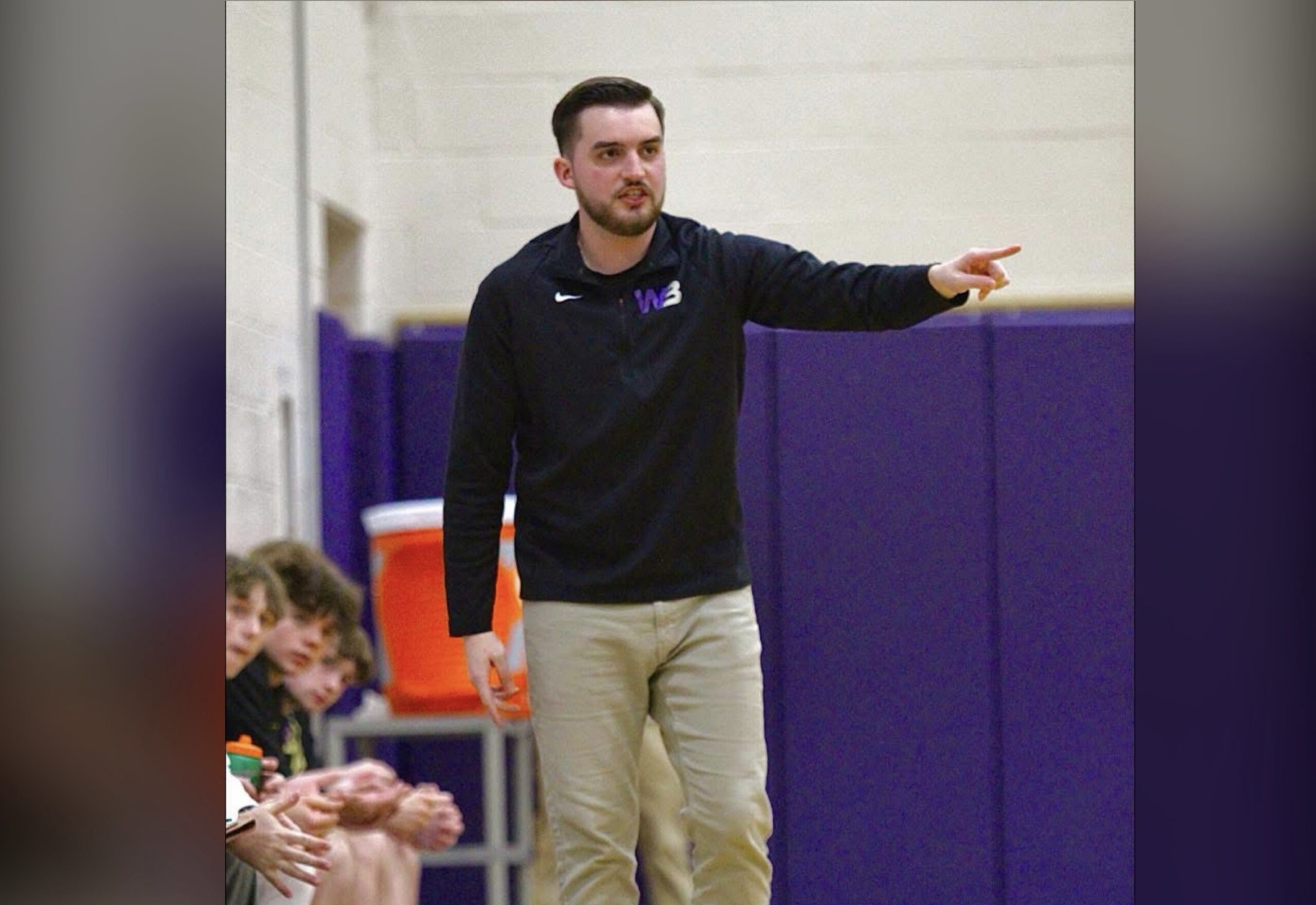
From the end of the bench at Ambridge to leading his own WPIAL basketball program, Puppich has a story rooted in perseverance, opportunity, and a dream of bringing a championship back to Western Beaver.
Everybody wants to talk about winning. Championships. Playoff appearances. Section titles. The number of victories a coach has accumulated throughout his career. That’s usually how we measure success in high school athletics.
But what about the coaches who inherit programs that aren’t accustomed to winning?
What about the coaches who walk into situations where participation numbers have declined, confidence is low, and simply convincing kids to believe in something again becomes the first challenge?
Those stories don’t always receive the same attention. And sometimes, those are the stories worth telling.
That’s what makes Western Beaver head basketball coach Matt Puppich interesting to me.
He’s not walking into a basketball powerhouse with a roster full of established stars and championship expectations. He’s trying to build something.
And perhaps the most fascinating part of his story is that he knows exactly what it feels like to be overlooked.
From the End of the Bench to the Head of a Program
When people think about successful basketball coaches, they often assume those individuals were outstanding players themselves.
That isn’t always the case.
Some of the best basketball minds develop their understanding of the game because they had to work harder than everybody else just to get an opportunity.
Puppich’s basketball journey began at Ambridge, where he played from 2014 through 2017 under longtime WPIAL coach Mark Jula.
But he wasn’t a freshman phenom. He wasn’t a highly recruited prospect. He wasn’t even guaranteed meaningful junior varsity minutes.
In fact, Puppich openly admits that when he entered high school, he wasn’t particularly good at basketball. He eventually found himself keeping statistics for the varsity team while continuing to work on his own game.
Think about that for a moment.
A kid who could barely get on the floor eventually became determined to earn his way into the varsity rotation. By his junior season, he was contributing.
He still remembers coming off the bench during a playoff game against West Allegheny and knocking down a three-pointer.
For some players, that might sound like an ordinary basketball moment. For Puppich, it represented years of work finally paying off.
By his senior season, he had earned a starting position.
He wasn’t necessarily the most talented player on the court, but he understood effort, preparation, and perseverance.
Those experiences helped him earn an opportunity to continue playing at Penn State Beaver. His college playing career was brief, but his basketball journey was far from over.
Sometimes the game has a different plan for you.
The Coaching Career He Never Expected
Puppich didn’t grow up dreaming about becoming a head basketball coach. In fact, coaching wasn’t something he initially envisioned for himself.
After leaving Penn State Beaver, he received a call about a middle school coaching opportunity.
At first, he viewed it as an opportunity to make a little extra money.
But something unexpected happened. The players began responding to him. They respected him. They listened. And most importantly, they started believing in what he was teaching.
That’s when he realized coaching could become something much bigger than a part-time job.
Over the years, Puppich gained experience as an assistant at Ambridge and Blackhawk, learning from coaches including Eric Astorino, Brooks Roorback, and Andy Podbielski.
He also carried lessons from his playing days under Jula.
Now, at just 27 years old, he’s responsible for leading his own varsity program. And he’s doing it at a school where building sustained basketball success presents challenges that people outside the program might never understand.
At Western Beaver, the First Victory Isn’t Always on the Scoreboard
One thing I’ve learned from being around athletics my entire life is that the final record doesn’t always tell the entire story.
Sometimes a team can win games without developing a strong culture. And sometimes a team can lose games while quietly laying the foundation for future success.
Western Beaver experienced a difficult season last year. Puppich doesn’t hide from that. In fact, he admits the losses still bother him.
But something he shared during our conversation stood out to me.
The program had finished the previous season with only seven or eight players. Last season, Western Beaver finished with 15.
That might not sound like a major accomplishment to someone accustomed to coaching at a large school. At a smaller school, however, those numbers can mean everything.
Because before you can build a winning basketball program, you have to convince kids that being part of that program is worth their time.
You have to create an environment where they want to show up. Where they want to compete. Where they feel like they belong. And where they believe the program is heading somewhere.
Puppich believes those things are beginning to happen.
He pointed to last season’s senior-night game against Laurel, a playoff team, as an example of the effort and togetherness he wants Western Beaver basketball to represent.
The scoreboard didn’t necessarily reflect everything he saw. But the commitment did. The fight did. And the relationships being developed did.
That’s where rebuilding begins.
The Reality of Coaching at a Small School
I think people sometimes underestimate how difficult it is to build a successful small-school basketball program.
At larger schools, coaches often have the luxury of bigger student populations and more athletes competing for roster spots. At a school like Western Beaver, the numbers are considerably tighter.
One or two talented classes can completely change the direction of a program. A few players deciding not to participate can have the opposite effect. And with Lincoln Park located nearby, Western Beaver faces another challenge when it comes to retaining athletes.
Puppich understands that reality. He isn’t criticizing young people for pursuing opportunities they believe are best for them.
But he wants to create an environment where Western Beaver athletes believe they can accomplish something meaningful without leaving their community.
That requires more than coaching the varsity team.
It requires developing relationships with the youth program. It requires strengthening the middle school pipeline. It requires creating an identity that younger players want to become part of. And it requires patience.
Because building a basketball program is different from simply coaching a basketball team.
A team is what you put on the floor this season. A program is what you leave behind for the next generation.
The Influence of Mark Jula and Ralph Blundo
One aspect of Puppich’s coaching philosophy that caught my attention was the influence of two respected WPIAL basketball figures.
His former high school coach, Mark Jula, helped shape his understanding of preparation, accountability, and the importance of knowing the game.
Puppich remembers Jula having a play for seemingly every situation. He also remembers being held accountable when expectations weren’t met.
Those lessons stayed with him.
He also admires what Ralph Blundo has built at New Castle. Year after year, New Castle remains competitive regardless of classification changes, roster turnover, or outside expectations.
That’s the type of consistency Puppich hopes to establish.
Not necessarily by copying another coach’s system, but by understanding what makes successful programs sustainable.
Preparation. Discipline. Relationships. Effort.
And an identity that doesn’t change simply because the roster does.
The Number 2007
Perhaps the most revealing part of my conversation with Puppich involved something hanging inside the Western Beaver gymnasium.
A championship banner. The year? 2007.
That’s the last section championship Western Beaver’s boys basketball program celebrates on its banner.
Nearly two decades have passed.
Players have graduated. Coaches have come and gone. Entire generations of students have walked through the building. But that number remains.
Puppich sees it every day.
And he has a goal. He wants another year hanging beside it. 2027.
Think about what that would mean.
Not simply another trophy or championship banner. It would represent a program that went from struggling to attract enough players to competing for a section championship. It would represent young athletes who stayed committed when winning wasn’t guaranteed. And it would represent a coach who believed in building something when there wasn’t much evidence that success was right around the corner.
Of course, wanting a championship and winning one are two very different things.
The WPIAL doesn’t hand out titles because a coach has a compelling story. You have to earn everything.
But I respect coaches who aren’t afraid to establish expectations, even when their programs are coming off difficult seasons.
The Players Who Could Help Change the Narrative
Western Beaver enters the upcoming season with several returning players Puppich believes can help move the program forward.
Nate Schwartz, Khai Hudson, and Luke Griesser are three names he expects to play significant roles.
Schwartz brings speed, scoring ability, and leadership at point guard while approaching the 1,000-point career milestone. Hudson provides athleticism, intensity, and a presence around the basket. Griesser represents the work ethic Puppich wants throughout his program, having earned a starting role late last season through continued improvement.
There is also optimism surrounding a promising freshman class and younger players who gained valuable experience a season ago.
Puppich believes Western Beaver could have more depth than it has enjoyed in recent years. And at the smaller classifications, depth can make a tremendous difference.
But the bigger question isn’t simply how many games Western Beaver will win. It’s whether the program can establish the consistency needed to compete year after year.
That’s the real challenge.
Why I Wanted to Tell This Story
I spend a lot of time highlighting the legendary players, championship teams, and accomplished coaches who helped make Western Pennsylvania athletics special.
And those individuals deserve every bit of recognition they receive.
But I also believe there’s another side of WPIAL sports that deserves attention. The young coaches. The rebuilding programs. The schools that aren’t constantly appearing in championship conversations. The people putting in countless hours trying to give kids something positive to believe in.
Matt Puppich fits that description.
What makes his story interesting isn’t that he’s already accomplished everything he set out to do.
He hasn’t.
It’s that his journey as a player gives him a perspective that many coaches might not have.
He knows what it’s like to sit at the end of the bench. He knows what it’s like to question whether you’re good enough. He knows what it’s like to work for an opportunity that might never come. And now he’s trying to teach those same lessons to the young men at Western Beaver.
One of his favorite messages to his players is simple: “Be comfortable being uncomfortable.”
That’s a lesson that extends far beyond basketball.
Because whether you’re trying to earn playing time, rebuild a struggling program, or overcome adversity in everyday life, growth usually requires going through something difficult first.
I recently had the opportunity to catch up with Western Beaver head basketball coach Matt Puppich for an in-depth conversation about his journey, his coaching philosophy, the challenges of small-school basketball, and his vision for the future.
Here’s our conversation.
One-on-One With Western Beaver Head Basketball Coach Matt Puppich
Q: For people around the WPIAL who may not know your story, tell us a little about Matt Puppich. What is your basketball background, and what eventually led you into coaching?
Matt Puppich: My basketball journey is something I’m really proud of. I played at Ambridge Area High School from 2014 through 2017 under legendary head coach Mark Jula. When I was a freshman, my game was nowhere near varsity level. Honestly, I was barely even at the JV level. But there was something about the grind that I really enjoyed. Coming in every day, putting in the work, and being part of something special kept me going. I barely played JV and eventually started keeping stats for varsity, but I loved every second of being around the program. As the years went on, I became determined to earn a spot on varsity. I continued improving and gradually started seeing more playing time. By my junior year, all that hard work finally paid off. I remember it vividly. I came off the bench in the playoffs against West Allegheny and hit a three-pointer. If you had seen my game just two years earlier, nobody, including myself, would have believed that was possible. By my senior year, I had earned a starting spot. I was an average player statistically, but you better believe I wanted to outwork and outhustle you. That mindset eventually gave me the opportunity to play at Penn State Beaver. Unfortunately, after a few months, I decided to leave because I struggled with managing my time wisely. Coaching was never something I really saw myself doing until shortly after leaving Penn State Beaver, when I received a call from my old middle school coach. He was moving up, and they needed someone to replace him. When I agreed, I honestly thought I’d just make a few extra dollars. But things changed pretty quickly. The players started looking up to me, respecting me, and buying into what I was teaching them. We ended up winning more games than that middle school had won in quite some time, and that’s when I realized coaching was something I wanted to pursue. Now, nine years later, I think the 18-year-old version of myself would be pretty proud of the journey my 27-year-old self has taken. From assisting at Ambridge and Blackhawk and learning under great coaches like Eric Astorino, Brooks Roorback, and Andy Podbielski to leading Western Beaver on my own, basketball has taken me down a path I never expected. What started as simply loving the game has turned into something much bigger. I wouldn’t trade the journey for anything.
Q: What attracted you to Western Beaver, and what does being the head basketball coach there mean to you?
Matt Puppich: When I was at Blackhawk, I was only a volunteer assistant because my work schedule didn’t allow me to commit full-time. But the coaches and players still wanted me around, and I’m glad they did because that experience helped me get to where I am today. I loved my time at Blackhawk. I actually work there now because of the relationships I developed with the kids. Before I started working there, though, I wanted to get back into a paid coaching position because I was traveling so much. One night, a good friend told me, “You have to begin at a small school like Western Beaver or Freedom, make your mark, and build your program.” The very next morning, I saw the Western Beaver job posting. It felt like fate. Being the head coach here is truly a blessing. They took a chance on someone who didn’t think anybody would take a chance on him. In return, this opportunity has helped me become a better man. It motivated me to return to school and pursue a career in education. It has given me a reason why.
Q: Last season was obviously a challenging one from a wins-and-losses standpoint. What did you learn about yourself and your players going through a season like that?
Matt Puppich: Last year eats at me every day. The seniors we had were guys who embodied exactly what my staff and I wanted from them: to leave the program as better men. We had games where we were right there and could have added more wins to our record. But the biggest lesson was learning to treat a loss as a lesson. I’ll admit that I’m my own worst critic. When we lose, I put the blame on myself. My thought process is always, “What can I do to prepare us better next time?” For the last eight months, that question has become, “How do I prepare this team to be ready and confident?” That mindset has motivated everyone in our gym. We want to become a team Western Beaver hasn’t seen in quite some time.
Q: When you’re trying to build a basketball program, especially at a smaller school, what has to come first before the wins start showing up?
Matt Puppich: There are three important things you have to do when taking over a program. The first is building culture. But before you can build culture, you have to establish trust. When I arrived, there wasn’t the type of structure or discipline I wanted in place. You have to show players love and respect from the beginning. When you do that, they’ll usually reciprocate it. They have to trust you, trust your process, and trust each other. Once that trust is established, you can begin building your culture. The second thing is developing a strong relationship with your youth program. The more you invest in youth and middle school basketball, the better prepared those players will be when they reach varsity. Eventually, you want to reload instead of constantly rebuilding. It also creates more excitement around the program and puts more fans in the stands. Lastly, you need a great coaching staff that supports you and keeps you grounded. Building a successful program is never a one-person job. I’m fortunate to have assistant coaches Chad Ours, Lee Schwarz, and Matt Ours alongside me. Their commitment to our players, knowledge of the game, and willingness to invest their time and energy have been instrumental in establishing our foundation.
Q: What did you see from last year’s team that might not have shown up in the final record?
Matt Puppich: I saw guys who genuinely enjoyed and loved playing basketball. The year before, the team finished with seven or eight players. Last year, we finished with 15. I always go back to senior night, our final game against Laurel, which was a playoff team. The heart I saw from everyone on that court, from the opening tip to the final buzzer, really put the season into perspective. It was about growth. We created a family bond that will last a lifetime. The record showed a lot of losses, but it also showed me the potential this program has, both now and in the future.
Q: You had some younger players get varsity experience last season. How important can those growing pains be when you’re trying to build something for the future?
Matt Puppich: Those younger players getting experience last season was huge for us heading into this year. We had three juniors starting, including two returning starters from the previous season. That gave them another year of varsity experience and allowed us to establish expectations for this season. We also had younger players come out for JV, some for the first time and others returning after a year or two away from basketball. That was something the program hadn’t consistently had in previous years. The growing pains came from not always having enough numbers or size to compete at the JV level. And that’s okay. The first word in “growing pains” is growth. To succeed, you’re going to get knocked down sometimes. What matters is whether you shake it off and come back ten times better instead of giving up.
Q: What does a Matt Puppich basketball team ideally look like? When people watch Western Beaver play, what do you want your team’s identity to be?
Matt Puppich: This is my favorite question because I could talk about it all night! The identity of a team I coach is giving 110 percent on every possession. There will always be fight. There will never be a time when we give up, and we’ll hold everyone accountable to that standard. I’ve always preached “next play.” Shake off mistakes because basketball gives you an opportunity to redeem yourself almost immediately. My teams are defense-first. You have to stop the guy in front of you, communicate, and understand help defense. Offensively, I want players who do the little things. Make the extra pass. Set screens. Move the basketball. Knock down open shots. That’s how I played, and it’s still how I play in men’s league! (Laughs.) I’m all about distributing the basketball and creating opportunities for teammates. But you also have to understand the flow of the game. If somebody has the hot hand, get him the ball. Defensively, dig in. Dive for loose balls. Take charges. Always help your teammate off the floor. And let your play do the talking.
Q: Small-school basketball comes with challenges that people on the outside don’t always understand. What’s the toughest part about building and sustaining a program at a school like Western Beaver?
Matt Puppich: The toughest part for any small school is simply the numbers. You might have a year or two when a lot of kids come out, and then another year when you only have 12 players. At Western Beaver, another challenge is having Lincoln Park right down the road. There’s always the possibility of losing a player to another opportunity. I’m always supportive of a kid trying to better himself and his education. But if we can build something special at Western Beaver, I want our kids to stay the course and create something here. Sustaining a program goes back to the youth level. If you generate interest early and develop players through middle school, you can maintain stronger participation numbers. You also build loyalty to the program. That’s how you create something that lasts.
Q: What do you think people outside the program may not understand about Western Beaver basketball and the kids you coach?
Matt Puppich: I don’t think people realize just how small our student population is. We’re one of the smaller Class 2A schools in the state. From my understanding, we’d potentially be classified as 1A, but the football cooperative arrangement with Lincoln Park affects our classification numbers. People on the outside might not realize just how challenging it can be to build a program with such a small student body.
Q: Heading into this season, where have you seen the most growth in your program, and what has you excited about this group?
Matt Puppich: One of the biggest things I’ve noticed is how much our guys are pushing themselves and each other. They’re beginning to see their hard work pay off. I’m especially excited about the growth of our underclassmen. The players who were with us last year have improved not only in their basketball skills but also in confidence and maturity. We also have a very promising freshman class coming in. These kids are coachable, hardworking, and mature for their age. The biggest adjustment has been getting used to varsity speed. Eighth-grade basketball and JV basketball are completely different from varsity. During summer league, I could tell the speed was a shock for some of them at first. But they’re adjusting. I believe this group has the potential to be deeper than Western Beaver teams have been in quite some time. I think our bench can impact games in several different ways. At the Class 2A level, that can be a huge advantage. It’s a good problem to have as a coach!
Q: Without putting too much pressure on individual players, who are some guys you believe WPIAL basketball fans should keep an eye on this season?
Matt Puppich: Our returning starters, Nate Schwartz, Khai Hudson, and Luke Griesser, are going to be the driving force behind our success. Nate is a high-motor point guard and one of the fastest players I’ve ever coached. He can score at all three levels and is a tremendous leader. He’s also getting closer to the 1,000-point career milestone. Khai is an outstanding athlete who plays above the rim and brings tremendous intensity. He’s going to be a major factor on the boards, and his outside jump shot continues to improve. Luke is the definition of a worker. Whether he’s in the gym sharpening his skills or in the weight room, he’s constantly trying to improve. He earned a starting role late last season, and that experience gave him confidence that should help him take another step forward. All three have developed into great leaders and ambassadors for our program. They’re going to play a major role in whatever success we have this season.
Q: The WPIAL has a great basketball tradition. Are there coaches or programs around Western Pennsylvania that you’ve studied or taken pieces from as you’ve developed your own coaching philosophy?
Matt Puppich: Obviously, Mark Jula, my high school coach, had a tremendous influence on my knowledge of the game. He had a play for everything, and he made sure we remembered those plays! I still remember them today. His teams were always prepared for exactly what they were going to face. He also held you accountable when you fell short, and he wasn’t afraid to tell you about it! (Laughs.) The best way I can describe it is that he taught me how to be a coach while I was still a player. I use many of his philosophies and designs to this day. Without his coaching style, I don’t think I’d be as strong-minded as I am. As far as programs go, I’ve always admired what Ralph Blundo does at New Castle. Every single year, regardless of classification or section, you can never count his teams out. His players give 110 percent and then some. He has a way of bringing out the best in his athletes. While I can’t copy his coaching style exactly, I pay attention to how he treats his players and how he manages to be both a role model and a coach. That’s something I really respect.
Q: Beyond basketball, what do you want a player to take with him after spending four years in your program?
Matt Puppich: I hope every player leaves our program as a confident, good-hearted, and positive person. Two sayings have been important to me since I started coaching. The first is, “Be comfortable being uncomfortable.” I believe that builds confidence. Once players see their progression and realize what they’re capable of, they start believing in themselves. The second saying is, “Be the reason somebody smiles today. When I was an assistant coach, I always tried to be that type of person. Sometimes a simple joke or checking in on somebody can go a long way. I want my players to be those types of people. Of course, we expect them to come together, play hard, and represent our program the right way. But ultimately, I want every player to walk away a better person than when he arrived.
Q: If we’re having this conversation again at the end of the season, what would make you say Western Beaver basketball took a significant step forward?
Matt Puppich: This year, I want our record to reflect our progress. I don’t want it to be just about words or what we’re doing behind the scenes. I want us to become a playoff team and potentially contend for a section championship. Every day, I look at the basketball banners hanging in our gym. There’s only one section championship year up there. My dream is that, 20 years later, we can put 2027 right beside it. That’s what we’re working toward.
Q: Long term, what is your vision for Western Beaver basketball? What do you believe this program can become?
Matt Puppich: My vision is to create an environment where kids can come into the gym and feel free from their anxieties and worries. I want basketball to be something positive in their lives. At the same time, I want us to become a tough-minded, physical team that competes every time we step on the floor. I believe that by strengthening the connection between our youth, middle school, and varsity programs, we can keep more kids at Western Beaver and build something sustainable. I don’t want this to be about one good season. I want to create something that can last for many years.
Closing Thoughts: Building Something That Lasts
After talking with Matt Puppich, one thing became clear to me.
This isn’t simply about a young coach trying to improve his win-loss record. It’s about a young man who understands what basketball can do for someone who isn’t necessarily the most talented player in the gym.
And I can appreciate that.
Having played Division I basketball, professionally overseas, and later coaching at the high school and college levels, I’ve seen the game from several different perspectives.
I’ve been around talented players who never reached their potential. I’ve also seen players with limited natural ability accomplish things nobody expected because they were willing to work.
That’s why Puppich’s story caught my attention.
He wasn’t handed anything as a player. He had to earn his opportunities.
And now he’s trying to teach that same mentality to the kids at Western Beaver.
I also respect that he’s not making excuses about the challenges of coaching at a smaller school.
He understands the limitations. He understands the competition. And he understands that the only way to change the perception of a program is to start changing what happens inside it.
But here’s something else I believe.
Not every successful high school coach will become a household name. Not every coach will accumulate hundreds of victories or fill a gymnasium with championship banners.
Some of the most important coaches in Western Pennsylvania are the ones working with kids who might otherwise never experience what it feels like to be part of something meaningful.
They’re teaching discipline. They’re teaching accountability. They’re teaching young people how to respond when things don’t go their way.
And those lessons can last much longer than anything that happens on a basketball court.
Puppich has a long way to go before Western Beaver becomes the program he envisions. He knows that.
But I like the fact that he has a goal that means something to his school.
2007. 2027. Twenty years apart.
One championship already hanging in the gym. Another one he’s hoping to earn.
Whether that happens remains to be seen.
But every great program started with somebody believing it could become something more. And sometimes, before you can change the scoreboard, you have to change the culture.
That’s exactly what Matt Puppich is trying to do at Western Beaver.