
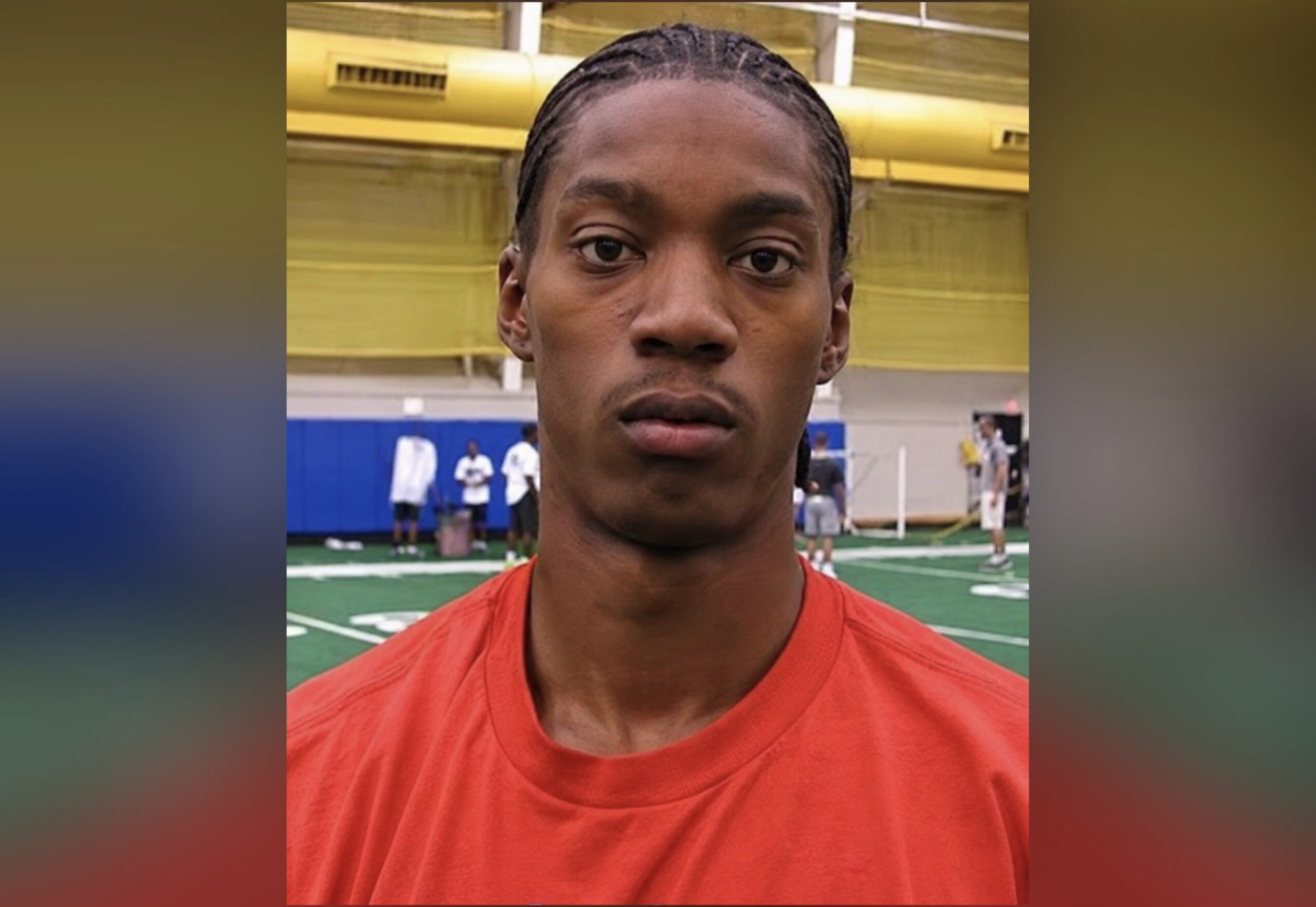
When you talk about the greatest athletes to ever come out of Aliquippa, Pennsylvania, you’re entering a conversation that includes some of the biggest names in football history.
Mike Ditka. Ty Law. Sean Gilbert. Darrelle Revis. And Jonathan Baldwin.
That’s an incredible amount of talent to come out of one small community in Beaver County.
But here’s something I’ve always believed about Jonathan Baldwin. When we’re talking strictly about physical ability, size, speed, strength, and overall athleticism, Baldwin has a legitimate argument as the greatest athlete Aliquippa has ever produced.
Now, before anybody starts arguing, understand something.
I’m not talking about who had the greatest NFL career. That’s an entirely different conversation.
Darrelle Revis is a Pro Football Hall of Famer and one of the greatest cornerbacks in NFL history. Ty Law is another Hall of Famer who accomplished extraordinary things at the professional level.
But I’ve always believed people have a difficult time separating what somebody accomplished in high school from what they eventually accomplished in college or the NFL.
Those are three different conversations.
And when we’re discussing Jonathan Baldwin as a high school athlete, we’re talking about somebody who possessed a combination of physical gifts that you rarely see, especially at that age.
At approximately 6-foot-5 and 230 pounds, Baldwin had the size of a basketball forward, the speed of an elite skill-position player, and the explosiveness to dominate above the rim or in the air.
He wasn’t simply a talented football player. He was an exceptional all-around athlete.
And what makes his story even more interesting is that he grew up in a community where being exceptional wasn’t necessarily enough.
In Aliquippa, greatness was expected.
Growing Up in the Shadow of Legends
There aren’t many communities in America where a young athlete can grow up surrounded by people who have already accomplished exactly what he’s dreaming about.
Aliquippa is different.
Baldwin grew up knowing about Mike Ditka’s roots in Linmar. He spent time around Ty Law, even trying on the former NFL star’s Super Bowl rings while witnessing firsthand the work that went into earning them. He watched athletes such as Verquan Kimbrough train and saw that same dedication in members of his own family, including Charles Fisher.
For Baldwin, those weren’t distant celebrities whose accomplishments existed only on television. They were people from his community.
That exposure helped shape his understanding of what it took to succeed.
By the time Baldwin became a Quip, he wasn’t learning about the program’s expectations.
He had already grown up around them.
When Talent Meets Opportunity
Some athletes spend their entire high school careers wondering whether they can compete against the best players in the country.
Baldwin didn’t have to wonder very long. As a freshman, he began attending football camps and competing against older players.
He wasn’t simply holding his own. He was beating them.
At a University of Pittsburgh camp, Baldwin recalls running a 4.3-second 40-yard dash and earning a scholarship offer. Michigan followed with an offer the next day. Before his high school career was finished, he had attracted interest from some of the most recognizable programs in college football.
Miami. Notre Dame. Florida. Michigan. USC. Ohio State. Baldwin had options that most high school athletes could only dream about.
Yet his decision ultimately came down to something bigger than football.
His son was going to be born during his freshman year of college, and Baldwin wanted to remain close enough to be present in his life. He chose Pitt.
It’s an important part of his story because we often discuss recruiting decisions strictly in terms of football.
Sometimes the biggest decisions an athlete makes have very little to do with what happens between the lines.
Becoming a Star at Pitt
Baldwin arrived at Pitt with enormous expectations as a five-star recruit.
And it didn’t take long for his teammates to understand why he had received so much attention.
He remembers his first seven-on-seven session, when he lined up with the first group and ran past one of the fastest defensive backs on the roster.
But what stands out about Baldwin’s recollection isn’t simply how talented he was. It’s how seriously he approached getting better.
He spent extra time working with quarterbacks Pat Bostick, Bill Stull, and Tino Sunseri, developing chemistry and refining his game.
His basketball background also gave him a unique advantage.
Baldwin viewed contested catches the same way a dominant rebounder views a missed shot. If the ball was in the air, he expected to come down with it.
That mentality helped him become one of the most dangerous receiving threats in college football.
During his three seasons at Pitt, Baldwin recorded 128 receptions for 2,337 yards and 16 touchdowns. He finished among the program’s top 10 career receiving yardage leaders at the time, an accomplishment he still takes tremendous pride in.
And considering the talented players who have worn a Pitt uniform, that’s no small achievement.
Baldwin eventually decided to forgo his senior season and enter the NFL Draft. In April 2011, the Kansas City Chiefs selected him with the 26th overall pick.
He had officially gone from a young kid growing up in Aliquippa to a first-round NFL Draft selection.
The NFL Career That Didn’t Follow the Script
This is where Baldwin’s story becomes particularly interesting.
When a player gets drafted in the first round, expectations immediately change.
Fans expect production. Organizations expect results. And years later, people often judge the entire career based on statistics without considering everything that happened along the way.
Baldwin’s professional career didn’t develop the way he envisioned.
He dealt with an early injury, coaching changes, shifting offensive philosophies, and questions about his role within the organization. From his perspective, those circumstances affected his opportunity to establish himself.
He also believes a different environment and better management of his knee issues could have changed the direction of his career.
Of course, football is filled with talented athletes who believe things might have turned out differently under other circumstances.
That’s part of the reality of professional sports.
But what interests me about Baldwin isn’t simply what happened in Kansas City or later in San Francisco.
It’s how quickly public perception can change. A player can spend years establishing himself as one of the most talented athletes in the country, become a first-round draft pick, and still have people evaluate his entire athletic career through the lens of a relatively short NFL experience.
I don’t believe that’s a fair way to evaluate somebody’s complete athletic journey.
His professional career is part of his story. It isn’t the entire story.
Finding a New Competitive Outlet
When football ended, Baldwin faced another challenge that many former professional athletes understand.
What comes next?
For somebody who had spent most of his life competing at the highest levels, transitioning into an entirely different profession required adjustment.
Baldwin says it took approximately six months to determine his next direction. He eventually purchased his first two businesses and began learning what it meant to compete outside of athletics.
There were challenges. There were mistakes. And there were lessons that couldn’t be learned from studying a playbook.
But the discipline and competitive mentality he developed through football gave him something to build upon.
Today, Baldwin continues applying those lessons to business and life beyond the game.
More Than an NFL Stat Sheet
One thing I’ve learned from being around sports my entire life is that people remember athletes differently depending on what stage of their careers they watched.
Some remember the high school phenom. Others remember the college star. And some only remember what happened professionally.
Jonathan Baldwin is a perfect example of why those distinctions matter.
The young man who dominated at Aliquippa was an extraordinary athlete. The receiver who starred at Pitt was one of the most talented players in the program during his era. And the former first-round NFL Draft pick has a story that extends far beyond his professional statistics.
You can debate where Baldwin ranks among Aliquippa’s greatest football players. You can debate his NFL career.
But when we’re discussing the most physically gifted athletes Western Pennsylvania has produced, his name absolutely belongs in that conversation.
I recently had the opportunity to catch up with Baldwin for an exclusive 15-question interview about growing up in Aliquippa, choosing Pitt, his NFL experience, the athletes who impressed him most, and the lessons he’s learned since leaving football.
From Aliquippa to Pitt to the NFL, the former first-round draft pick reflects on his remarkable athletic journey, the business of professional football, and life after the game.
And some of his answers offer a perspective that fans rarely get to hear.
Q: Jonathan, growing up in Aliquippa, football is more than just a sport. It’s part of the community’s identity. What was it like representing the Quips, and how did that environment prepare you for everything you accomplished afterward?
Jonathan Baldwin: Growing up in Aliquippa, I heard that Mike Ditka was from Linmar. I had family up there and spent a lot of time there as a kid, so that meant something to me. I used to stay at Ty Law’s house, put on his Super Bowl rings, and watch how hard he worked out. Everybody sees the rings. I got to see what he did to earn them. I saw that same work ethic in my family with Charles Fisher. I remember seeing Verquan Kimbrough running through the streets when I was in elementary school, and as I got older, I’d see Ty running figure eights at the school. My house was the hangout spot, so I grew up around a lot of dogs. Josh Lay, Monroe Weekly, Quanear Gaskins, O.C. Foster — the list goes on and on. But I knew early on that winning was the expectation. By the time I put on that Quips jersey, I already knew what was expected of me because I’d grown up watching guys live it.
Q: You were one of the most physically gifted athletes to come through Western Pennsylvania. At what point during your high school career did you realize you had the talent to compete with the best players in the country?
Jonathan Baldwin: I knew my freshman year. I started going to camps, and they’d put me in one-on-ones with the juniors. I was cooking those guys. I ran a 4.3 at Pitt’s camp, left with an offer, and got an offer from Michigan the next day. At that age, with my height and speed, that told me I could compete with anybody in the country. I also knew what it would take to turn that talent into a career. I’d grown up watching guys from my own town do it. They were obsessed with the work, and they didn’t give themselves the option to quit when things got hard. I picked up that mentality early and carried it with me.
Q: Aliquippa has produced some incredible football players over the years, including Mike Ditka, Sean Gilbert, Ty Law, Darrelle Revis, and yourself. What is it about that small community that continues to produce elite football talent generation after generation?
Jonathan Baldwin: In Aliquippa, you grow up knowing somebody who did what you’re trying to do. That changes what you believe is possible. You see how those guys compete, how hard they work, and what they expect from each other. Then you get old enough to make those same choices for yourself. The recipe was right there in front of me, and I chose to follow it.
Q: You had opportunities to attend major college football programs across the country but ultimately chose Pitt. What influenced that decision, and how important was staying close to home?
Jonathan Baldwin: I had opportunities to go to Miami, Notre Dame, Florida, Michigan, USC, Ohio State — pretty much anywhere I wanted. But my son was going to be born during my freshman year, and I knew the kind of father I wanted to be. Staying close gave me a chance to be there for him the way I envisioned. Pitt also showed me a lot of love throughout the process, from the very beginning. I felt like they believed I could help move the program forward, and I wanted that responsibility. I got to play with some great players, and a lot of those guys are still my friends and brothers today.
Q: During your career at Pitt, you developed into one of the most dangerous wide receivers in college football. What do you remember most about those years, and which opposing defensive back gave you the toughest competition?
Jonathan Baldwin: I remember our first day of seven-on-seven. They put me in with the first group, and I ran right by the fastest DB on the team. I came in as a five-star receiver, so the guys wanted to see what I was about, and I wanted to show them. What I’m proudest of is the work I put in after that. I worked my tail off in the offseason and got a lot of extra reps with Pat Bostick, Bill Stull, and Tino Sunseri. I wanted to get better, and I wanted them to get better with me. I can’t think of a DB who made me feel like it was going to be a long day. My mentality was always the same: Get me the ball, and I’ll produce.
Q: Your combination of size, speed, and athleticism made you a difficult matchup for defensive backs. When you look back at your playing days, what separated you from other receivers, and what part of your game do you believe people underestimated?
Jonathan Baldwin: I looked at a jump ball the same way I looked at a rebound. If I’m 6’5” and you’re 5’8”, I expect to get that rebound every time. I averaged double-digit rebounds in basketball, so going up over somebody and getting the ball was something I’d done for years. On the football field, I was 230 pounds, ran a 4.3, and had a 44-inch vertical. A helmet and shoulder pads didn’t change the matchup. Once I saw the ball in the air, I knew exactly who was guarding me and what I could do against him. I expected to come down with it. That was my mentality my entire career.
Q: In 2011, the Kansas City Chiefs selected you in the first round of the NFL Draft. What was going through your mind when you heard your name called, knowing how far you had come from Aliquippa?
Jonathan Baldwin: Draft night was surreal. I had a block party in my neighborhood in Aliquippa, the mayor was at my house, and I was surrounded by family and friends. I turned down the green room experience because I wanted to put on for my city and share that moment with the people I grew up around. As a kid, I watched the draft every year. My dad used to pretend he was the commissioner and say, “With the first pick in the NFL Draft, the Pittsburgh Steelers select Jon Baldwin, University of Pittsburgh.” He’d done that so many times over the years. When the Chiefs actually called my name in 2011, I was sitting in my living room, and all those memories of hearing my dad say it came right back. It was a special day, to say the least.
Q: Playing in the NFL is something millions of young athletes dream about, but very few experience. What was the biggest adjustment going from being a star at Pitt to competing against professional defensive backs every day?
Jonathan Baldwin: The biggest adjustment was how smart the veteran DBs were. They understood leverage, they picked up on your tendencies, and they knew little tricks that could throw off the timing of a route. A bigger DB can still miss a tackle or get beat deep. What made the veterans tough was that they knew how to use whatever advantage they had. You had to be more deliberate about how you set them up because they were studying you just as much as you were studying them.
Q: Looking back at your NFL career, do you believe you were placed in the right situations to maximize your abilities? And if you could change one thing about your professional career, what would it be?
Jonathan Baldwin: My career got off to a rocky start. I got hurt in an incident with a teammate where I felt I had to defend myself. By the time I came back, I felt like I barely had any time with the coach who drafted me before he was fired. The offense became more run-heavy after that. I remember working with Brian Daboll every day during camp while Dwayne Bowe was holding out. I felt like I was clearly the No. 1 receiver at that point. The day Dwayne came back, I went from first to fourth on the depth chart, even though my production in practice hadn’t dropped. That showed me how much the politics of football can affect your opportunity. I still believe that if I’d landed in Green Bay and gotten the care I needed for my knees, my career could’ve looked a lot different. I believed I had the ability to be the kind of receiver Julio Jones became, and I still believe that.
Q: Throughout your football career, you played alongside and competed against some exceptional athletes. Who were the most talented players you ever shared the field with, whether at Aliquippa, Pitt, or in the NFL, and what made them stand out?
Jonathan Baldwin: At Aliquippa, I’d say Mike Washington, who went on to play at Hawaii. He was a human joystick. He was a smaller receiver, and he could have his way with anybody. At Pitt, I’d say Dion Lewis and Shady McCoy. I saw a lot of Shady in the way Dion played. Dion was smaller, but he was strong and could run through you. I’m still close with both of them, and Dion and I talk pretty much every day. In the NFL, I’d say Vernon Davis. During special teams periods, he’d go off to the side and catch passes. He was fast, strong as hell, and made a ton of plays. Seeing what he did with those extra five or ten minutes told me a lot about why he was that good.
Q: Today’s high school athletes deal with recruiting rankings, social media attention, NIL opportunities, and enormous expectations before they ever step on a college campus. What advice would you give a highly recruited WPIAL athlete about handling that attention and making the right decisions?
Jonathan Baldwin: Stay humble and go somewhere you have a real opportunity to make a difference. It’s easy to get caught up in the glitz and glamour of recruiting, then get on campus and realize you’re buried on the depth chart. If you end up in the portal, coaches are going to ask what you’ve done in college. Your high school accolades can only carry you so far. Look for a stable program, ask how they decide who plays, and find out where you’ll have a fair chance to compete early. You need to show up ready to play. I’d want to know that the staff is going to put the best players on the field, regardless of what anybody’s NIL deal looks like.
Q: When you look at the current landscape of WPIAL football, particularly the talent coming out of Aliquippa, do you believe today’s players are as physically and mentally prepared for college football as players from your generation?
Jonathan Baldwin: Players coming out of high school today have more tools than we had. They have access to better training, more film, and more information. How prepared they are mentally depends on who’s helping them make sense of it all. At 17 or 18, you’re figuring out how to compete in college while people are talking to you about money, playing time, and the portal. I hope those kids have somebody in their corner who can tell them the truth, especially when it’s something they don’t want to hear. College football is a different beast now, and good mentorship matters more than ever.
Q: You’ve experienced football at every level, from Aliquippa to Pitt to the NFL. When you look back on your journey, what accomplishment means the most to you personally, and why?
Jonathan Baldwin: One of the things I’m proudest of is finishing in Pitt’s top 10 in career receiving yards. Think about the receivers who have come through that program. Cracking that list was a goal of mine, and I did it in three years while sharing an offense with guys like Shady McCoy and Dion Lewis. I wanted to be No. 1, and I believed I could get there if I came back for my senior year. Coming back carried a real risk, and I decided to enter the draft. I still take pride in what I accomplished at Pitt and in where my name sits among the guys who played there.
Q: When people mention Jonathan Baldwin 20 or 30 years from now, what do you want them to remember most about you, not just as a football player, but as a person?
Jonathan Baldwin: I want people to remember that I did things the right way. I didn’t smoke or drink, I stayed grounded, and I took pride in outworking everybody. Whether I was on the football field, on the hardwood, or on the track, I wanted to be the best and leave everything out there. I never thought being a good athlete put me above anybody. I showed people love and respect, and I still get that same love back to this day. Years later, people might forget how many yards you had or how fast you ran. They remember how you treated them. That’s what matters most to me.
Q: Jonathan, you’ve transitioned into business since your playing career ended. How difficult was it to find your identity outside of football, and what lessons from your athletic career have helped you succeed in business?
Jonathan Baldwin: It took me about six months after football to figure out what I wanted to do next. I knew I was too young to just sit around, so I jumped right in and bought my first two businesses. I learned a lot, and some of those lessons came the hard way. Football taught me how to prepare, how to compete, and how to come back the next day when things didn’t go my way. Business challenged me to learn what made a company work and how to make better decisions as an owner. Once I started putting those things together, I could feel that same competitive fire I had as a player.