
There’s something special about playing for a WPIAL football championship.
For the players, it’s an opportunity to accomplish something they’ve dreamed about since they first put on shoulder pads.
For the coaches, it’s the culmination of months of preparation, countless practices, and the challenge of getting an entire group of young men working toward the same goal.
And for communities throughout Western Pennsylvania, championship football has always been about more than what happens on the field.
Penn-Trafford understands that tradition.
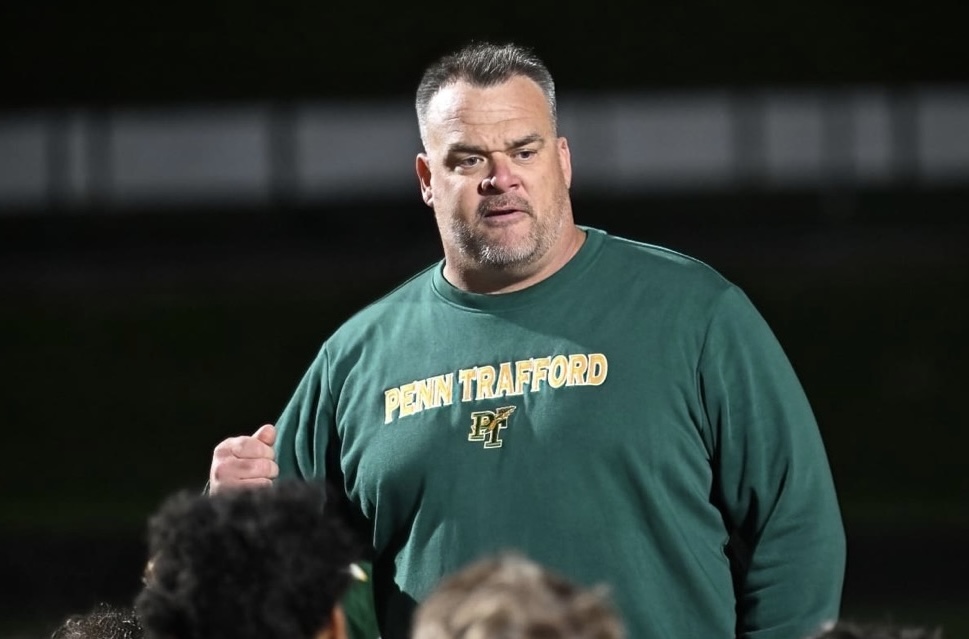
The Warriors are preparing to face a talented Pine-Richland team in the WPIAL Class 5A championship game at Acrisure Stadium, and head coach John Ruane has his program back on one of Western Pennsylvania’s biggest stages.
But what makes Ruane’s story interesting to me isn’t simply his success as a coach.
It’s where his understanding of football began.
From Gateway to the Penn-Trafford Sideline
Ruane played high school football at Gateway during the mid-1990s, an era I consider one of the most competitive periods in WPIAL history.
I grew up watching and eventually competing against athletes from that generation.
There was no social media promoting every talented player, no endless highlight clips, and no recruiting rankings dominating conversations. You learned about great players through newspaper coverage, word of mouth, and what happened under the Friday night lights.
And there were some outstanding football teams throughout Western Pennsylvania. That environment helped shape Ruane’s appreciation for toughness, preparation, and accountability.
Those qualities have become important parts of the program he’s established at Penn-Trafford.
What I find interesting about successful coaches is how their playing experiences influence the way they approach the game years later.
Some coaches build their programs around complicated schemes. Others emphasize developing talent and allowing their athletes to make plays.
Ruane understands the importance of adapting to the personnel he has while maintaining a consistent standard throughout his program.
That’s not always easy to accomplish in high school football, where your roster changes every season.
But it’s one reason Penn-Trafford has remained competitive.
A Championship Standard
In 2021, Ruane guided Penn-Trafford to WPIAL and PIAA Class 5A championships, establishing one of the greatest seasons in school history.
That team demonstrated what could happen when talented players, experienced coaches, and an entire community came together.
Now, several years later, the Warriors have another opportunity to compete for a WPIAL title. Standing in their way is Pine-Richland, a program with its own championship tradition and an abundance of talent.
Championship games are rarely decided by reputation alone. Execution, preparation, and the ability to handle pressure often determine which team leaves the stadium celebrating.
And Ruane knows exactly what that environment requires. He’s experienced it before.
One thing that stands out to me about Penn-Trafford is the consistency of its program.
High school football changes from year to year. Players graduate, new leaders emerge, and coaching staffs must adjust to different strengths and weaknesses.
Yet the Warriors continue finding ways to compete at a high level.
That doesn’t happen by accident.
It takes a strong coaching staff, community support, and a developmental system that prepares younger players for the expectations they’ll face at the varsity level.
More Than a Football Coach
I’ve always believed the best coaches understand that their responsibilities extend beyond winning games.
Football can teach young men about discipline, accountability, sacrifice, and dealing with adversity. But those lessons only matter if players carry them into their lives after graduation.
That’s something Ruane clearly values.
And while championship trophies will always be part of his coaching legacy, the impact he has on the young men who come through his program may ultimately mean even more.
I also appreciate that he hasn’t forgotten where he came from.
During our conversation, Ruane reflected on the great players he faced during his Gateway years, including one Penn Hills standout who doesn’t always receive the recognition he deserves. That caught my attention because I remember that era very well.
With the Class 5A championship approaching, I wanted to give Ruane an opportunity to discuss his team, his coaching philosophy, and what representing Penn-Trafford means to him.
Here’s our exclusive Q&A.
Q: Coach, you played at Gateway during the mid-1990s, an era many consider one of the greatest in WPIAL football history. Looking back, what made football during that period so special, and how much did those experiences influence the coach you eventually became?
John Ruane: I was fortunate to play in the Quad East in the ’90s and see a lot of great players and teams. It was the pre-social media era, so you had to be there to know or watch 11 p.m. highlights. But that era had a lot of toughness to it. Our staff tries to push that on our kids as much as anything.
Q: Penn-Trafford has another opportunity to compete for a championship. What would winning this upcoming title mean to you personally, your players, and the entire Penn-Trafford community?
John Ruane: Our staff is excited for our kids to experience a championship game at Acrisure. It means a lot to our kids to see that all their commitment and work pays off, and we get another week together. We have unreal support from our community every week. The years we have gone to the final, the parking lot and stands have been packed with green and gold. Our kids will be excited to see it.
Q: You’ve already experienced the excitement of leading Penn-Trafford to WPIAL and PIAA championships in 2021. How does this year’s team compare to that championship group, and what makes this particular team special?
John Ruane: I’m not big on comparing teams, but I will say that this team is as tight-knit and ego-less as we have had. That was a top trait of our ’21 team. Everyone knows their role and embraces it. I think our style of play is very similar to that team, too.
Q: When we played high school sports in the 1990s, the WPIAL had four classifications. Today, there are six in football. Do you miss the old four-classification system, and do you believe expanding to six classifications has helped or hurt the overall quality of WPIAL football?
John Ruane: Yes and no. I think that 5A has been fantastic for the past 11 years. There have been a lot of teams winning the title and a lot more making it there. There is parity. I see the arguments outside of 5A. But in speaking with other 5A staffs, most are pretty happy. It’s been competitive overall.
Q: Penn-Trafford has established itself as one of the most respected football programs in Western Pennsylvania. What’s been the biggest challenge in building a program that consistently competes at a championship level, especially when expectations continue to rise?
John Ruane: Just adjusting to the kids coming through the system every year. It’s our job as a staff to analyze the kids all offseason and figure out what they do best, and then match a style to the personnel. Each year is different. That’s really the fun and challenging part of coaching, adapting to your personnel rather than forcing them to adapt to you. Obviously, you have a system in place as a basis, but you have to know your kids. We also have a great feeder system via midgets and middle school. They do a great job of teaching the basics of that system before they get to us.
Q: You’ve coached against some outstanding teams and coaches throughout your career. Who is one WPIAL coach, past or present, who you believe doesn’t receive nearly enough recognition for what he’s accomplished?
John Ruane: Near impossible question because there have been so many. But one that comes to mind is T.J. Plack at Peters. The 8-10 year run they have had is really underrated. They’re well prepared, their kids are tough, and they play the game right.
Q: High school football has changed tremendously with social media, recruiting exposure, transfers, and increased parental involvement. What’s the biggest difference between coaching today’s generation of athletes and the environment you experienced as a player in the 1990s?
John Ruane: I think it depends from school to school. We are pretty low-key with all of the above at PT, so these things aren’t too big of a factor. Social media is great for many reasons, especially kids’ exposure and fanfare. It’s also an ego-driver, and way too many people have a voice. Our parents at PT are great. They trust our staff and let us coach. I have definitely seen and heard horror stories, though.
Q: Championship games often come down to preparation, discipline, and handling pressure. With such a big game approaching, what’s your message to your players about embracing the moment without allowing the magnitude of the game to overwhelm them?
John Ruane: We are playing an outstanding team. The focus has to be on them and only them. We can’t get caught up in hype or being in awe of the yellow seats and the whole scene of the stadium. As far as discipline, nothing can be taught now. That’s hopefully the culture we have instilled all the years these guys have been a part of our program.
Q: When you look back at your playing days at Gateway, is there one opponent, player, or game that still stands out to you? Someone or something that people today might not realize was special during that era?
John Ruane: I was a senior when Penn Hills won the state. They had maybe the biggest defensive line I’ve seen. Lot of talented players as well. One guy that really stood out and was all over the field was Jeremy George. He didn’t get the hype of some of the D1 guys, but he was a great player with a motor.
Q: Coach, years from now, when your coaching career is over, what do you hope former players say about John Ruane? Beyond championships and wins, what kind of impact do you want to leave on the young men you’ve coached and the Penn-Trafford community?
John Ruane: I’ve been lucky to be surrounded by loyal and great coaches for a long time. We aren’t the players’ parents, but I think we’d all like to be seen as people who somehow contributed a little to these guys becoming great husbands, dads, and men. We always try to make connections between football life and real life. If nothing else, I hope they learned that you are only entitled to what you earn.