
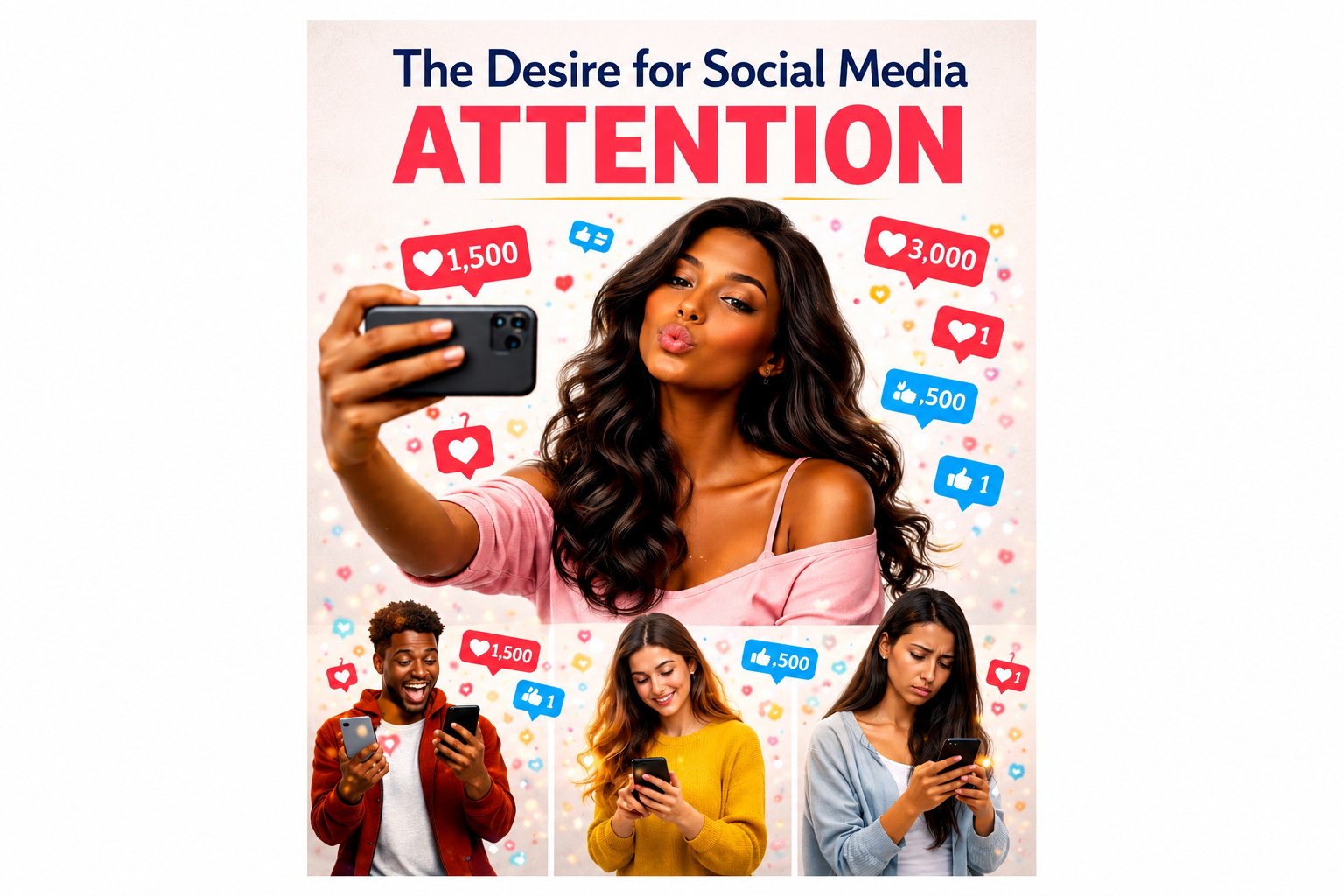
Everybody wants attention now.
Not success.
Not peace.
Not growth.
Attention.
Some people will do almost anything for it. Social media changed human behavior in ways people still don’t fully understand. Attention used to be something earned naturally through talent, accomplishment, leadership, humor, intelligence, or influence. Now attention itself has become the goal.
People don’t just want to live anymore — they want to be seen living.
That’s why people record everything. Every dinner. Every argument. Every gift. Every workout. Every vacation. Every act of kindness. Every relationship moment. Every emotional breakdown. Nothing feels complete unless it gets posted, validated, liked, shared, or talked about.
The scary part is that attention works like a drug.
The likes.
The views.
The comments.
The reactions.
The reposts.
All of it creates a temporary emotional high. And once people get used to that feeling, they start chasing it constantly. That’s why some people can’t stay off their phones. That’s why people post things they don’t even believe. That’s why outrage spreads faster than positivity. Attention became currency and the internet rewards extreme behavior.
The loudest people usually get noticed first. The most controversial opinions spread the fastest. Drama travels quicker than peace. People figured out that being outrageous often gets more engagement than being normal, disciplined, or mature. So now people perform online instead of living authentically.
Some relationships are more about appearances than connection. Some people don’t even enjoy moments unless others witness them. A lot of people are secretly competing for visibility while pretending not to care.
You see it everywhere. People filming strangers for content. Parents exploiting their kids online. Athletes focused more on highlights than fundamentals. People creating fake lifestyles to look successful. Men and women posting indirect relationship drama for validation. People turning personal pain into content. And the addiction gets worse because attention is inconsistent.
One post gets 50 likes. Another gets 5,000. That unpredictability keeps people hooked. It becomes emotional gambling. Every notification gives people a small dopamine hit, which is why some people check their phones hundreds of times a day without even realizing it.
Meanwhile, real life suffers. Attention can make people abandon peace. Some people can’t even sit in silence anymore. They constantly need stimulation, validation, or reactions from others. Being alone with their own thoughts feels uncomfortable because they became addicted to external acknowledgment.
The wild part is that attention and respect are not the same thing. A lot of people are highly visible but deeply unhappy. Some of the most peaceful people barely post at all. Some of the wealthiest people move quietly. Some of the happiest relationships aren’t constantly displayed online. Real success often moves in silence, but silence doesn’t feed the addiction.
And once attention becomes your source of self-worth, you become controlled by other people’s reactions. Now your mood depends on engagement. Your confidence depends on views. Your happiness depends on validation. Your identity depends on an audience. That’s dangerous.
The internet convinced people that visibility equals value. It doesn’t. Some people are famous online and completely lost in real life. Some people get millions of views but have no discipline, no peace, no structure, and no genuine relationships. Attention can make people look important without actually building anything meaningful.
And the addiction affects everybody differently. Some people chase sympathy. Some chase controversy. Some chase lust. Some chase envy. Some chase status. Some chase approval. But at the core of it all is the same thing: the desire to feel seen.
There’s nothing wrong with wanting recognition. Humans naturally want connection and acknowledgment. But when attention becomes the main goal, people slowly lose themselves trying to entertain an audience that will move on tomorrow anyway.
That’s why so many people today are mentally exhausted. They’re performing constantly. The people who usually have the most peace are the ones who no longer need the internet to confirm their value. They can enjoy moments without posting them. They can accomplish things quietly. They don’t need strangers validating every move they make.
Because at some point, you realize something: Attention is temporary. Peace is real.