
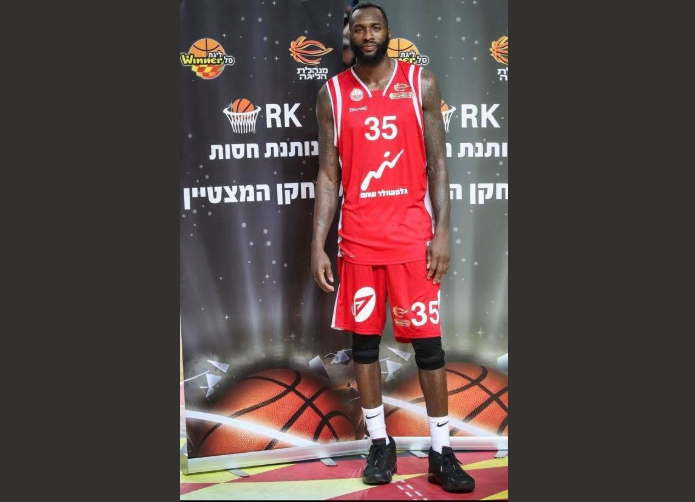
Pittsburgh basketball history is filled with players whose names deserve to be remembered beyond the neighborhoods and gyms where people first watched them play.
Jakim Donaldson is one of those names.
Donaldson came out of Oliver High School in Pittsburgh’s City League before heading to Edinboro University. His journey there wasn’t the typical story of a highly recruited star arriving on campus with everything already mapped out.
He had to earn it.
Donaldson went from being a walk-on to becoming one of the greatest basketball players in Edinboro history. By the time his college career was finished, Donaldson had collected 1,100 rebounds, making him Edinboro’s all-time career leader. He also finished with 1,355 points and 185 blocked shots, becoming one of the rare players in program history to surpass both 1,000 points and 1,000 rebounds.
His senior season completed an incredible transformation when Donaldson earned first-team NABC All-American honors.
And Edinboro wasn’t the end of the story. Donaldson took his game overseas and turned basketball into a lengthy professional career, playing in countries including Portugal, Spain, France and Israel.
In Spain, Donaldson became much more than simply another American import. He established himself as an accomplished professional, earning multiple LEB Oro MVP honors during his career and helping Canarias win the LEB Gold championship.
It’s the type of basketball journey that deserves more recognition back home.
A kid from Pittsburgh. Oliver High School. A college walk-on. An All-American. And eventually a professional basketball player who spent years competing thousands of miles away from the city that produced him.
But statistics and accomplishments only tell part of Donaldson’s story.
For DrewSchifino.com, I wanted to go deeper into the journey: growing up in Pittsburgh, playing in the City League, arriving at Edinboro without guarantees, becoming an All-American, adjusting to life overseas and what all those years in basketball ultimately taught him.
So I went directly to Jakim Donaldson.
Q: Before basketball took you around the world, what was life like growing up in Pittsburgh, and what do you remember most about your childhood?
A: I played almost every sport as a child—soccer, baseball, football, track, swimming, fencing, bike riding, everything except basketball, really.
Q: What did playing basketball at Oliver High School mean to you, and how would you describe City League basketball during your era?
A: Playing at Oliver was a dream come true. Thankfully, Coach Keefer didn’t cut players, or I would have never developed. Oliver was the first organized team I played for, and I played JV until my senior year! That’s why it’s important to give every kid who shows up a chance, no matter their skill level. Some kids develop faster, and some develop later, like me. Our era was “get it how you live.” There was no social media and limited internet, so we had to earn our respect the hard way—amongst our peers, on the neighborhood courts and on the school courts. It was rough, rugged, high-flying bully ball with a lot of trash talking.
Q: Who were some of the best players you competed against growing up in Pittsburgh?
A: This list is so deep that I don’t want to leave anyone out. And like I said, I didn’t get off the bench until I was 17. For sure, the whole Pittsburgh Hoops Classic, the Schenley and Peabody squads from ’99–’07, Kenny Tate, Blake Johnson, Eddie Benton, John Saunders, Brooque Williams, Daren Tielsch, Bryant McAllister, Eddie Pete, Mike Mott, Jason Hood, Boo Jackson, Rod Rutherford, Wayne Bransom, Dwayne Pettus, Lamar Castille, Lamar Rudolph, Toby and Chevy from South, Rich Richburg, Mike Miller, Darrelle Revis, Lance Jeter, Herb Pope, Silk from the Jungle, and my Oliver guys—Anthony Rivers (RIP), Jason Raiford (RIP), Danny Nelson (RIP), Darryl Haymon, Edwin Biggs, Dwayne Morris, Steve Tarrant, Damon Olds, Gil Cummings, Dave Robinson and Dave Williams. I don’t think we ever played against each other, but you were great also, Drew.
Q: Your Edinboro story is incredible because you went from a walk-on to an All-American. Take me back to the beginning—how did you end up at Edinboro, and did you believe at the time that your career could become what it eventually became?
A: Edinboro and Norfolk State were my last two schools that could pay for all of my schooling academically through grants and loans. Edinboro was a lot more affordable. My high school coach, Coach Keefer, sent them my tape, and they welcomed me to try out. I had actually met Coach Walkavich previously at the Pittsburgh Hoops Classic, where I had a pretty good game. So I followed those signs up there, and the rest was history.
Q: Was there a specific moment at Edinboro when you realized, “I can really play at this level”?
A: Yes. As soon as I was blocking everyone’s shot at tryouts, I knew I could compete at that level.
Q: You finished your career as Edinboro’s all-time leading rebounder. What made you such an elite rebounder, especially against players who may have been bigger than you?
A: Rebounding controls so much of the game, defensively and offensively. Personally, my game has always been predicated on rebounding. I knew guys loved to shoot, and most guys shot under 50 percent, so that was a great opportunity for me to get their misses and do what I wanted with the ball after that.
Q: When you look back at your Edinboro career, what accomplishment or moment are you most proud of?
A: I have so many proud moments and accomplishments at Edinboro. From walking onto the team and eventually going into the Hall of Fame, to having my jersey retired, winning the PSAC championship in 2005 and graduating—it has all been a blessing, and I’m very grateful.
Q: After college, you took the difficult route of pursuing professional basketball overseas. How did your first opportunity happen, and what was going through your mind when you left Pittsburgh to play professionally in another country?
A: I knew I wanted to keep playing, get paid for it, and I loved traveling. Simple, right? Now, the journey to actually landing at that destination was a little more difficult. Long story short, an agent named Ron Sutton out of Lansing, Michigan, called me. He said he was an agent who had followed my career, had connections overseas and thought I could play. I never even met the guy face-to-face, but he got me connected to Spain, Turkey and then Portugal, where I finally stuck—all in my first year.
Q: You eventually played professionally in Portugal, Spain, France and Israel. Which country or team holds the most special place in your heart, and why?
A: Four countries in 16 years, which means I stuck around those countries for a while. I loved playing European basketball in all of those countries, but I was in Spain the longest. I played six years in Tenerife on the Canary Islands and one year in Menorca. Tenerife was amazing—from the culture to the weather, food, people, fans and the team. I basically built my career from a small town on a small island in Tenerife called La Laguna. I won three championships there and three MVPs, starting in the third division and working our way up to ACB. Today, they remain one of the best clubs in Europe.
Q: A lot of people see “professional basketball overseas” and think it’s automatically glamorous. What are some of the sacrifices and struggles that people back home don’t understand?
A: My book is in the works about that. Just starting out was super stressful. I wanted to quit multiple times. From being away from family and my support system, to two-a-days, cold showers, sleeping on teammates’ couches, getting cut, not getting paid, having my luggage stolen, language barriers, and being alone on holidays and my birthdays. And that’s before you even get to the basketball stuff with coaches and teammates. This was all before FaceTime, WhatsApp and Skype, so we had to use landline phone cards to call back home.
Q: You became highly successful in Spain and earned major individual honors there. What allowed your game to translate so well to European basketball?
A: God really blessed me, I believe, because I stuck it out through everything I went through during my first year. The basketball club in Tenerife was what I had always envisioned professional basketball to be. La Laguna de Tenerife supported me on and off the court, from the top to the bottom, and really made me feel welcomed and like family. From there, it was just about showing up every day with a motor and a smile on my face.
Q: What was the biggest adjustment you had to make—not as a basketball player, but as a young man living in different countries and cultures?
A: It’s really important to know the laws of the countries you go to. Brittany Griner and others are examples of that. There was also adjusting to different languages, driving habits, stick-shift cars, food and cultures on your own. Making new friends and being close to teammates was important, especially for me, even though I like to keep to myself. Those team-bonding activities were really important.
Q: During all those years overseas, were there ever moments when you seriously considered coming home and giving basketball up? If so, what kept you going?
A: My first year, for sure. Having what I thought was a guaranteed contract, then getting cut and sent to three foreign countries with no money, trying out for less money than I was initially offered, and sleeping on random teammates’ couches when they didn’t really want me there was anything but a vibe. But I knew that once the right coach saw my talents beyond my size, I would stick.
Q: Pittsburgh has produced plenty of talented basketball players who never reached their full potential. What do you think separated you and allowed you to turn your talent into such a long professional career?
A: It was a blessing in disguise being a late bloomer. I was kind of young for my grade, so I didn’t have the pressure of being too good too early and flaming out. I took things from all those Pittsburgh greats you mentioned and just kept grinding and believing. I saw how some guys would get comfortable, believe the hype and stop working before they ever made a dollar. I promised myself I would do the opposite—with all due respect.
Q: How did playing overseas change the way you viewed Pittsburgh once you came back home?
A: I believe changing the gun laws to where no one has them would save a plethora of lives, improve the quality of life and even impact the national debt all at once. We’re just too naive, and we love our guns and killing each other too much. It’s promoted and marketed here like no other place. But playing overseas also taught me that there is a whole big, wide world outside of Pittsburgh. It’s not where you’re from—it’s where you’re at.
Q: What advice would you give a young Pittsburgh player today who isn’t receiving major Division I offers but still dreams about playing professionally?
A: Just keep doing the small things and study guys like Kobe Bryant, RIP. It’s a lot harder to do than it is to say, but if you grind before and after everyone else is sleeping, you will get better and give yourself a chance to take your game further than those who are only doing the basics. That applies no matter what your talent level is.
Q: If you could talk to the young Jakim Donaldson walking onto Edinboro’s campus for the first time, knowing everything you know now, what would you tell him?
A: Watch the company you keep.
Q: When people in Pittsburgh talk about Jakim Donaldson 20 years from now, what do you want them to remember about you—not only as a basketball player, but as a man?
A: Kids are our future. Giving them confidence and guidance goes a long way. It can save their lives and better their families’ lives. I’ve hosted a FREE three-day basketball camp that offers much more than basketball for 15 straight years now, alongside some other Pittsburgh greats like Mike Mott, Mike Dixon, John Saunders, Tim Keefer and other family and friends. It usually receives little to no funding or publicity. We dedicate it in loving memory of my youngest brother, Jehru Meari Donaldson, and other fallen family members, friends and teammates. That truly is more valuable than anything I’ve ever done on the court. And I was a certified problem on the court all over the world without a scholarship offer coming out of high school. Giving hope where there is hopelessness is priceless. I know firsthand because that’s what my father gave me before anyone else did.