
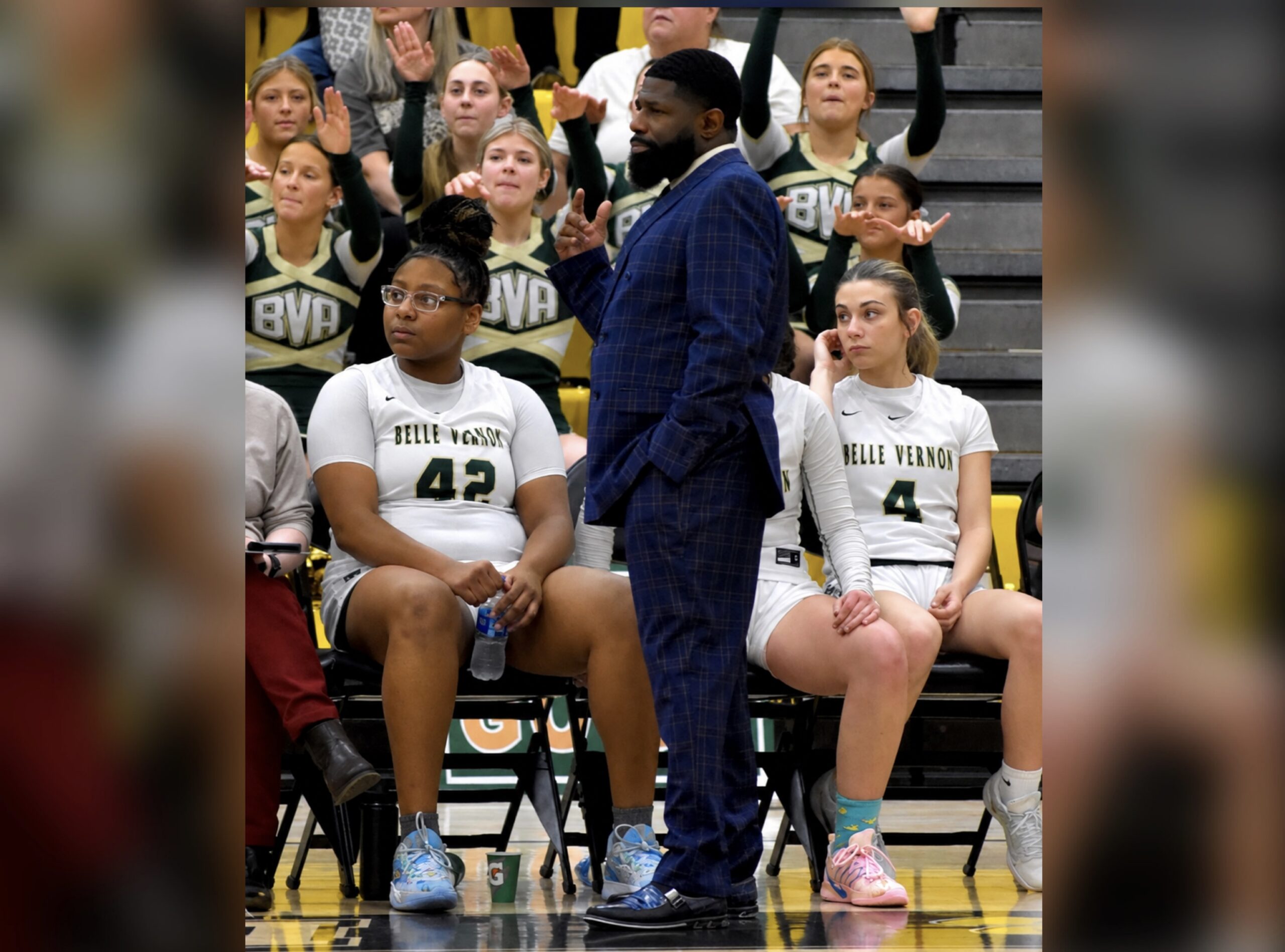
Last season was a breakthrough year for Belle Vernon girls basketball.
The Leopards finished 23-5, captured the program’s first section championship since 1999 and advanced to the second round of the PIAA playoffs.
For head coach Cornelious Nesbit, however, the goal was never to build a team capable of having one memorable season.
It was to build a program.
Nesbit has coached at Gateway and Shaler, worked on the AAU circuit and developed a reputation as a demanding, defensive-minded coach. At Belle Vernon, he believes the foundation is beginning to show.
With a talented young core returning and expectations rising, Nesbit talked with DrewSchifino.com about changing the culture at Belle Vernon, developing young talent, the lessons learned from last year’s playoff run and why the Leopards believe they’re capable of even more.
Q: Last season you guys went 23-5 and brought Belle Vernon its first girls basketball section championship since 1999. What did that season do for the confidence and expectations of your program?
Nesbit: Last season was about more than just winning 23 games or a section championship. It was about changing the mindset of an entire program. We showed our players, our school and our community that Belle Vernon girls basketball can compete at a high level. Winning the first section title since 1999 was special, but what I’m most proud of is that these young ladies started believing in themselves and in what we’re building. The expectations have definitely changed. We’re no longer trying to prove we belong. Now we’re trying to prove we can consistently compete for championships. But with higher expectations comes greater responsibility, and that’s something I remind our players of every day.
Q: You’ve now had a couple years to establish your culture at Belle Vernon. Does this finally feel like your program and your identity as a team?
Nesbit: Absolutely, but I think culture is something you never stop building. When I first arrived, I wasn’t just trying to change how we played basketball. I wanted to change how we approached everything — practice, preparation, accountability and how we treated one another. I wanted our players to understand that wearing Belle Vernon across their chest means something. We’re starting to see that ownership now. The players are holding each other accountable, they’re buying into our standards, and they’re understanding that success isn’t something you’re given. It’s something you earn. That’s when you know the culture is becoming real — when it doesn’t always have to come from the head coach.
Q: When you first took the job, you talked about the young talent in the program. How rewarding is it to now see some of those young players developing into major contributors?
Nesbit: That’s probably one of the most rewarding parts of coaching. When I took this job, I saw the potential in these young ladies, but potential doesn’t mean anything unless you’re willing to put the work in. To watch their confidence grow, their basketball IQ improve and their understanding of what it takes to win develop has been special. What makes me proud isn’t just the points they score or the recognition they receive. It’s seeing them mature as teammates, leaders and young women. As a coach, you want to leave players better than you found them, both on and off the court.
Q: You’ve always had a reputation for being a defensive-minded coach. What does a Cornelious Nesbit basketball team have to do defensively for you to walk away from a game satisfied?
Nesbit: First of all, we have to compete. Defense is about effort, toughness, discipline, communication and having pride in stopping somebody. I want teams to feel us defensively. I want them uncomfortable. I want every possession, every pass and every shot to be contested. We’re going to pressure the basketball, protect the paint, rebound and make teams work for everything they get. But what satisfies me most is seeing five players connected defensively. You can have all the talent in the world, but if you’re not willing to defend, you’re going to have a hard time playing for me. Offense might get you attention, but defense gives you a chance to win championships.
Q: You’ve coached at Gateway, Shaler and now Belle Vernon. How has your coaching philosophy changed from when you first became a head coach to where you are today?
Nesbit: I think the biggest difference is that I’ve learned coaching is about more than X’s and O’s. Early in my career, I was so focused on teaching the game, competing and winning. Those things are still extremely important, but experience has taught me the value of relationships, communication and understanding the individual needs of your players. Every team is different, and every player responds differently. I’ve learned when to push, when to listen and when a player needs encouragement instead of criticism. My standards haven’t changed, but the way I teach and communicate those standards has evolved. I’ve also learned that you can’t coach every team the same way. You have to adapt to your personnel without compromising your identity. I’m still demanding, still passionate and still defensive-minded, but I believe I’m a much better teacher and leader today than I was when I first started.
Q: Belle Vernon has a strong sports culture with successful football, softball and boys basketball programs. Do you feel like the girls basketball program is starting to establish itself as another program people around Western Pennsylvania need to pay attention to?
Nesbit: I absolutely believe that, and I think our young ladies have earned that recognition. Belle Vernon has a tremendous athletic tradition, and we want girls basketball to be part of that conversation. But respect isn’t something you ask for. It’s something you earn through your preparation, your performance and your consistency. Last season opened some eyes, but one successful season doesn’t establish a program. Doing it year after year does. We want to build something that lasts, where competing for section championships and making deep playoff runs becomes the expectation rather than the exception. We don’t just want to be a good girls basketball team at Belle Vernon. We want Belle Vernon girls basketball to be one of the programs people talk about when they discuss the best in Western Pennsylvania.
Q: Lyla McConnell had an impressive freshman season at point guard. What makes her special, and where have you seen the biggest growth in her game?
Nesbit: What makes Lyla special is her understanding of the game at such a young age. She has a natural feel for the point guard position, sees the floor extremely well and has the ability to make the players around her better. She doesn’t get rattled easily, and that’s something you can’t always teach. The biggest growth I’ve seen is in her confidence and leadership. She’s learning that being a point guard isn’t just about running plays or getting assists. It’s about controlling the tempo, understanding situations and being an extension of your coach on the floor. She’s also becoming more comfortable looking for her own offense when the opportunity presents itself. Her ceiling is extremely high, and the exciting part is that she’s still developing.
Q: You also had young size with Aubrey Brown and Isis Almighty. How much does having that type of size and youth change what you can do on both ends of the floor?
Nesbit: It changes a lot because both of those young ladies bring more than just size. They’re athletic, they’re physical and they give us versatility. Defensively, they allow us to protect the paint, rebound at a high level and be more aggressive with our perimeter pressure because we know we have a presence behind us. Offensively, they give us opportunities to score inside, create second-chance opportunities and make teams defend us differently. With Isis, her strength, athleticism, rebounding and ability to make good decisions around the basket are huge assets. Aubrey brings tremendous upside with her ability to impact the game on both ends. The exciting part is that neither one is close to being a finished product.
Q: Your team didn’t revolve around one player last season. How important are balance and unselfish basketball to the way you want your teams to play?
Nesbit: It’s extremely important because I’ve always believed that the hardest teams to defend are the ones where you can’t focus on stopping just one player. We want players who are confident in their abilities but also understand that the success of the team comes before individual recognition. Some nights one player might score 20 points, and the next night somebody else might lead us. That’s the beauty of having a balanced team. But being unselfish goes beyond passing the basketball. It’s setting screens, making the extra rotation, communicating, rebounding and celebrating your teammate’s success. I tell our players all the time: Everybody wants to be part of a winning team, but not everybody is willing to make the sacrifices it takes to become one.
Q: You lost a tough WPIAL quarterfinal game to Elizabeth Forward after beating them twice during the regular season. How much does a loss like that stay with a team during the offseason?
Nesbit: That one hurt, and I think it should hurt. When you beat a team twice during the regular season, you have confidence going into that third matchup. But playoff basketball is different. What happened in December or January doesn’t guarantee anything in February. Elizabeth Forward deserves credit because they made the plays they needed to make. For us, that loss was a reminder that you can’t take any opponent, any possession or any opportunity for granted. I don’t want our players dwelling on the loss, but I do want them remembering how it felt. There’s a difference between being disappointed and being motivated. The question isn’t whether that loss hurt. The question is: What are we willing to do to make sure we’re better prepared the next time that opportunity presents itself?
Q: You eventually reached the second round of the state playoffs before losing to Blackhawk. What did your players learn from playing against that level of program in March?
Nesbit: I think they learned what championship-level basketball looks like. When you play a program like Blackhawk, you see the importance of execution, discipline, toughness and attention to detail. At that level, you can’t afford to take possessions off or make the same mistakes over and over. I think our players also learned that we belong on that stage. We don’t have to be intimidated by anybody, but we have to respect the preparation and consistency it takes to compete against those programs. Those experiences are valuable, especially for a young team. We want our players to understand that getting to the state playoffs is an accomplishment, but our goal is to continue advancing once we get there.
Q: You’ve also been heavily involved in AAU basketball. How has that experience helped you as a high school coach when it comes to evaluating and developing players?
Nesbit: AAU basketball has been a tremendous part of my development as a coach. It gives me an opportunity to coach and evaluate talented players from different schools, different systems and different backgrounds. When you’re competing against some of the best talent regionally and nationally, you learn very quickly what separates good players from great players. It also helps me understand the recruiting process and what college coaches are looking for. My experiences with the WPA Bruins and now SLAAM have allowed me to build relationships and continue learning the game. I think the biggest benefit is being able to bring that knowledge back to my high school players and help them understand what it takes to compete at the next level. For me, it’s never just been about winning AAU games. It’s about developing players and helping create opportunities for young ladies.
Q: Girls basketball has continued to grow nationally. Are you seeing more skill, athleticism and overall interest in the girls game here in Western Pennsylvania than you did 10 or 15 years ago?
Nesbit: Without question. The girls game has grown tremendously, and I think we’re seeing the benefits of that right here in Western Pennsylvania. The skill level is better, the athleticism continues to improve, and young ladies are being exposed to high-level basketball at much earlier ages. You’re seeing more players who can handle the basketball, shoot from the perimeter and play multiple positions. Social media, college basketball, the WNBA and the growth of AAU have all helped bring more attention to the game. But what excites me most is that young girls now have more opportunities and more role models to look up to. I’ve been coaching girls basketball for a long time, and I think the future of the game is extremely bright. We just have to continue investing in these young ladies and giving them the same opportunities, resources and recognition they deserve.
Q: What player on your roster do you believe could surprise people this season or make a jump that people outside the program aren’t expecting?
Nesbit: Payton Walsh has the ability to really impact a game from a defensive standpoint. Her toughness, energy and willingness to compete defensively are things that can change the momentum of a game. Skylar Salay gives us that inside presence with her rebounding and defensive mindset. She’s someone who understands the importance of doing the dirty work and making things difficult for opponents in the paint. Morgan Hamed has the ability to provide us with an offensive spark off the bench with her shooting. Having someone who can come into a game and knock down shots gives us another weapon offensively. Amiah Black brings another playmaker to the floor. Her basketball IQ, ability to read the game and make good decisions will help us create opportunities for her teammates. What excites me about these young ladies is that they all impact winning in different ways. Everybody talks about the leading scorers, but championship teams need players who embrace their roles and make winning plays.
Q: When people come watch Belle Vernon girls basketball this season, what do you want them to immediately recognize about your team?
Nesbit: I want them to recognize our toughness, our energy and how hard we compete. I want people to walk out of the gym saying, “Man, those girls play hard.” We’re going to defend, we’re going to communicate, we’re going to share the basketball, and we’re going to play for each other. I want our players to have an identity that doesn’t change based on who we’re playing or what the scoreboard says. You’re going to see a team that takes pride in representing Belle Vernon and understands that the name on the front of the jersey is bigger than the name on the back. When you play Belle Vernon, I want you to know you’ve been in a basketball game. Nothing is going to come easy against us.
Q: What would make this upcoming season a successful one for you — another section championship, a WPIAL title run, a deeper state playoff run, or is it bigger than wins and losses?
Nesbit: I’m not going to shy away from our expectations. We want to win another section championship. We want to compete for a WPIAL championship, and we want to make a deeper run in the state playoffs. I believe we have the talent and experience to put ourselves in that position. But I also understand that championships aren’t won because you talk about them in October. They’re won through the work you put in when nobody’s watching. For me, success is also about how much we grow as a team, how we respond to adversity and whether our players are willing to sacrifice for something bigger than themselves. I want these young ladies to experience winning, but more importantly, I want them to understand what it takes to become winners in life. Last season we made history by winning a section championship for the first time since 1999. I’m proud of that, and nobody can ever take that away from those young ladies. But I didn’t come to Belle Vernon just to have one great season. I came here to build a program that competes for championships year after year. We respect what we accomplished last season, but we’re not going to live off it. That team created a standard. Now it’s our responsibility to raise it. Last year we made history. This year we’re chasing something even bigger. But nothing will be given to us. Everything has to be earned.