
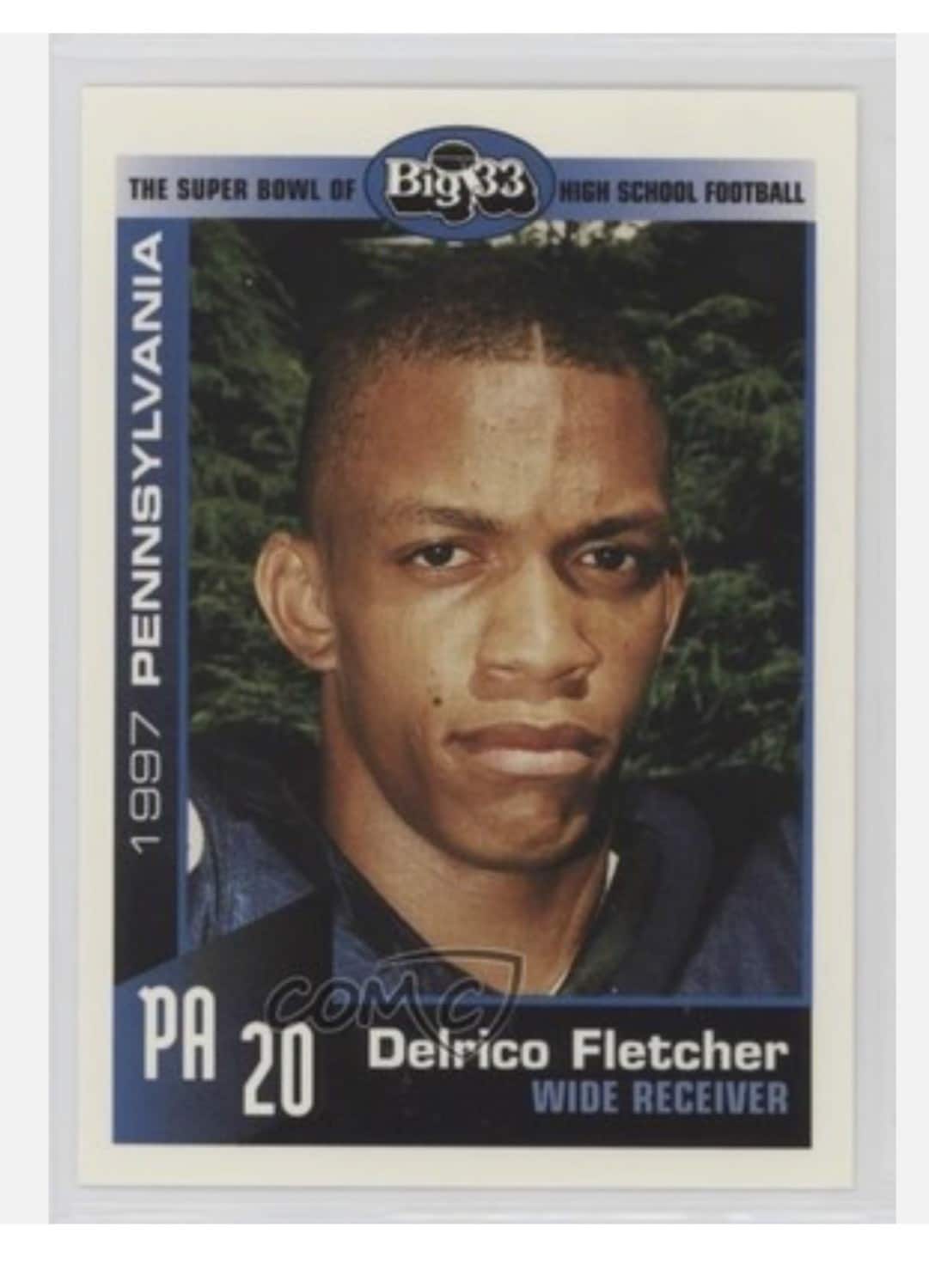
Some athletes are simply built different.
Delrico Fletcher was one of those rare competitors who excelled in multiple sports at the highest level. At Woodland Hills, he made his mark as a standout in both football and basketball, earning a reputation as one of the area’s premier all-around athletes.
His success didn’t stop in high school. Fletcher went on to play Division I football at Rutgers, proving that his talent could shine on a much bigger stage.
Western Pennsylvania has produced countless great athletes, and Delrico Fletcher deserves to be remembered among them.
Q: What was it like growing up and playing sports in the Woodland Hills community?
A: It was great, but as you get older, you start to see behind the veil a little bit. The support from most of our community was amazing. Many small neighborhoods came together to make one great community.
Q: When did you first realize you had a real future in athletics?
A: I didn’t realize it until I got my first letter from Pitt during my 10th-grade year. It’s crazy because my OGs saw it way before I did. Sheldon Flowers was the first to tell me I could go to the league, and he wanted to be my agent (RIP). William Timbers and Larry Jones also made me realize everything I was dreaming about was possible. Raiford Beasley and Larry Whitehearst invested a lot of time in helping me get better and better.
Q: You were known as a standout in both football and basketball. Which sport came more naturally to you?
A: To be honest, playing wide receiver and DB and playing the 2 and 3 in basketball were very similar to me. My favorite sport was basketball, but I never actually got to work on my basketball game because of football. When I first met George Novak and told him I would be playing basketball, he didn’t think I was good enough because he had never seen me play. But in the Burgh, especially back then, football was king. I knew my best opportunity to leave the hood was football.
Q: What made playing at Woodland Hills special during your era?
A: The fans, the community, and the standard to be great. Penn Hills was loaded. McKeesport had just won the state championship when I was in 10th grade, and I wanted to do something special at Woody High. We came up short in the 1997 state championship, but we were the start of the change and the run of domination that came over the next 10–12 years.
Q: How intense was the Woodland Hills football culture back then?
A: It was intense because we knew who we had to play, and you knew there was always someone, maybe two people, behind you who could take your spot. When I started as a sophomore, I knew someone else probably thought it was their position, but I had to earn that spot. There were Division I athletes everywhere.
Q: What do you remember most about those Woodland Hills basketball games?
A: Basketball was different because the fans were right there. There were no helmets and nowhere to hide. The trash talk was top-notch. The fact that you could run into somebody you were about to play at Monroeville Mall or downtown made those rivalries even better.
Q: Who were some teammates or coaches who had a big impact on you?
A: I’m like most athletes who are lucky enough to play at a high level. There are many coaches and teammates who played a part in my success, so I want to thank Coach George Novak, Coach Larry Whitehearst, Coach Matt Furganic, Gary Ingelido, Mr. Larry Hughey, Raiford Beasley, Coach Terry Shea, Coach Greg Schiano, Melvin Cobb, AJ Anderson, Madei Williams, Mike McMahon, Marquise Rainey, Reggie Funderburke, and Steve Harper. There are many more names who deserve to be on this list, so if I missed you, just know I appreciate you.
Q: What was your recruiting process like coming out of high school?
A: Absolutely crazy. I definitely didn’t think I was going to Rutgers because I had offers from bigger football schools, but they offered me the chance to play right away. When Walt Harris became the coach at Pitt, it seemed like they practically lived in my house in Braddock. The coaches were in my kitchen almost every day. My other choice would have been WVU. Whatever happened on those recruiting trips stays there.
Q: Why did you choose Rutgers?
A: It felt like home, and they offered me the opportunity to play early. It was outside of Pittsburgh but still close enough for my family to come watch me play.
Q: What was the biggest adjustment going from WPIAL football to Division I college football?
A: Learning the game more and getting stronger and faster. I had the height as a freshman, but I definitely needed to get stronger as soon as possible.
Q: What was your proudest moment at Rutgers?
A: One of my biggest accomplishments was winning the Paul Robeson Award for the senior who showed outstanding leadership on and off the field. I had been through a lot at Rutgers—I left, came back—and that award meant a lot to me, especially after I researched who Paul Robeson was and what he accomplished.
Q: What did college football teach you about discipline, toughness, and preparation?
A: College teaches you really quickly that if you’re not disciplined, prepared, and tough, you probably won’t play. The quicker you learn those three things, the better your college experience will be.
Q: Looking back, what do you miss most about competing?
A: You always miss the competition. I don’t think there’s another field where you can duplicate the competitiveness it takes to play sports at a really high level. The WPIAL rivalries and the Big East rivalries were unmatched. The trash talk, the fans, the communities, everybody was involved. It was a special time.
Q: How do you feel when people bring your name up as one of Woodland Hills’ great athletes?
A: It’s cool when people bring my name up. I just smile and laugh. I appreciate it. I was blessed to play both football and basketball at Woodland Hills and leave my name in the record books in both sports. I’m a true athlete, so obviously I think I’m the best to ever do it. Some people will disagree, and that’s fine, that’s sports. But when you turn on the tape, there aren’t many people who did it for three years in three sports and made the impact I did.
Q: How important is it for kids to play multiple sports instead of specializing too early?
A: Play all the sports. Just be careful about overtraining because a lot of these kids’ bodies are falling apart before they even get the chance to showcase their talent to the world. I’m watching a lot of parents live through their kids, and they were trash. I’d say learn the game, develop your body, and have fun.
Q: What life lessons did sports teach you that still help you today?
A: I’m still the biggest team player. I’ve never been selfish. I always look out for other people, and I learned that through sports.
Q: What do you want people to remember most about your athletic journey?
A: It was my journey, and everybody’s journey is different. I played at a high level, earned a degree from a great institution, and met a lot of great people along the way. I’m very blessed and thankful.
Q: When you look at Woodland Hills athletics today, what do you hope the younger generation understands about the tradition?
A: I want the younger generation to understand that there were people who came before them and sacrificed so they could enjoy some of the benefits they have today. There will also be kids coming after them, so always remember that. Do your very best, represent yourself and your family the right way, and play your ass off no matter what sport you’re playing.
Q: What message would you give to the Woodland Hills community and everyone who supported you along the way?
A: To my Woodland Hills community, friends, and family, I just want to say thank you. It was an amazing ride playing sports in front of all of you, talking about the games around the neighborhood, and trash talking with friends who went to other schools. It was a special time. Thank you for all your support and love, and watch out for the next chapter because it’s going to be my best one yet.