
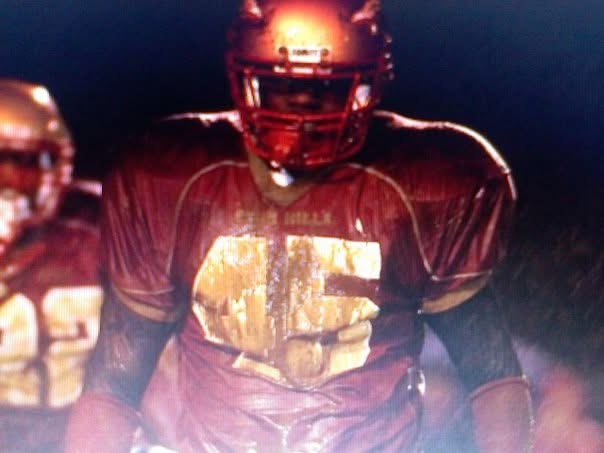
When people talk about the great eras of Penn Hills football, the conversation usually starts with the stars everybody remembers.
The big names. The Division I recruits. The players who went on to college football and beyond.
But the thing about Penn Hills during its strongest eras was that there wasn’t just one guy you had to worry about. There were dudes everywhere.
And Joe Rash was one of them.
Rash was a big, physical defensive lineman who became one of the anchors of a Penn Hills defense that helped the Indians become one of the better teams in Western Pennsylvania during the mid-2000s.
By his senior year in 2006, Rash was 6-foot-2 and around 260 pounds, had developed into a legitimate Division I prospect and was coming off a season in which he recorded seven sacks.
Penn Hills finished 11-2.
Rash earned second-team Class AAAA Associated Press All-State honors, was a three-time all-conference selection and was named to the East Elite Team. Over his three varsity seasons, Penn Hills went 29-6.
That’s production. That’s winning.
And that’s Penn Hills football.
Part of a Different Era
I know that era personally.
Penn Hills football wasn’t lacking athletes. You could look across the field at practice and see players who would eventually play college football. You could look across Western Pennsylvania and see Penn Hills kids competing against some of the best talent in the state.
Rash fit perfectly into that environment.
He wasn’t somebody who needed a lot of attention to make his presence felt. He was physical, strong and disruptive. And people who played with him remember exactly what he brought to the field.
When I recently interviewed former Penn Hills and Pitt standout Brandon Ifill, he mentioned Rash alongside Aaron Williams and Eric Taylor as older players he watched play and dominate on both sides of the football.
That’s the kind of respect that matters to me. Respect from the guys who were actually there.
A Legitimate Division I Prospect
This wasn’t revisionist history, either. College programs knew about Joe Rash.
Recruiting looked completely different in 2006 than it does today. There was no Twitter highlight going viral overnight. No Hudl link being passed around social media. No constant stream of commitment graphics.
You had to get your name in front of college coaches the old-fashioned way.
Rash did.
Scout.com rated him among Pennsylvania’s top prospects, and by the end of his Penn Hills career, he had earned the opportunity to play Division I football.
He ultimately chose Akron. And he didn’t go alone.
Penn Hills teammate Aaron Williams was part of Akron’s 2007 recruiting class as well, giving two Penn Hills players an opportunity to continue their football careers together.
From Penn Hills to Akron
Rash redshirted his first season at Akron in 2007.
Then he started earning his way onto the field.
As a redshirt freshman in 2008, Rash appeared in all 12 games and started the final three. He finished with 12 tackles, including a tackle for loss, and recovered a fumble. His best statistical performance came in the season finale against Temple, when he recorded five tackles, including four solo stops.
For a kid coming out of Penn Hills, that mattered.
He had gone from being one of the better defensive players in the WPIAL to earning starts at the Division I level.
His college career wasn’t without adversity.
Rash appeared in three games in 2009 before injuries cost him the remainder of the season. Injuries continued to affect him, including keeping him out of Akron’s 2010 spring game.
But he had made it.
Penn Hills to Division I football.
Football Was Already in the Family
There’s another interesting part of Rash’s story. Football wasn’t foreign to his family.
His father, Louis Rash, played defensive back at Mississippi Valley State and later spent time in professional football with the Pittsburgh Steelers, Philadelphia Eagles and Green Bay Packers, according to Akron’s official biography.
So Joe wasn’t growing up completely unfamiliar with what higher-level football looked like.
But having a father who played doesn’t earn you an All-State selection. It doesn’t record seven sacks for you. It doesn’t make you a three-time all-conference player. And it certainly doesn’t get you onto the field at a Division I program.
Joe still had to play. And he could play.
“One of Them Ones”
That’s really why I wanted to do this Q&A.
One of the things I’m trying to accomplish with DrewSchifino.com is preserving Western Pennsylvania sports history through the people who actually lived it.
Not just the household names. Not just the guys who made the NFL. Not just the names everybody still talks about 20 years later.
I want to talk to the players who were really outside.
The ones opponents had to prepare for. The ones teammates respected. The ones who helped make certain programs and certain eras what they were.
Joe Rash fits that description.
And his story also gives us a chance to revisit one of the more interesting Penn Hills teams of that era.
The 2006 Indians.
An 11-2 football team loaded with talent that came extremely close to accomplishing something much bigger.
Nearly 20 years later, Rash remembers that team vividly. He remembers the personalities. He remembers the defense. He remembers the rivalries. He remembers recruiting. He remembers Pitt and West Virginia. He remembers choosing Akron. And he definitely remembers the one game Penn Hills wishes it could have back.
So instead of me telling his story for him, I wanted Joe Rash to tell it himself.
Here is my Q&A with former Penn Hills and Akron defensive lineman Joe Rash.
Q: Take me back to the 2006 Penn Hills team. What made that group special, especially defensively?
A: What made us special was how close we were off the field. We went everywhere together. We weren’t just teammates when we stepped onto the field. We were genuinely tight, and I think that carried over into the way we played for each other.
Q: That defense had a lot of talent. What was the mentality of that unit, and who were some of the guys you felt never got enough recognition?
A: We always joked that we were like the Ravens because we ran the ball a lot offensively and our defense was always trying to hold teams under 21 points. As far as guys who didn’t get enough recognition, Andre Freeman and Brandon Carter are two who immediately come to mind. In my eyes, those guys never got enough credit for what they brought to that defense.
Q: You guys had a great season, but it ended against Upper St. Clair. When you look back at that game 20 years later, what stands out most? Do you still feel like Penn Hills let one get away?
A: Absolutely. If I’m being completely honest, what stands out is that we let an inferior team beat us. That game is a perfect example of why you can’t let a team you believe you’re better than hang around. We felt like they had no business beating us, but we allowed them to stay in the game, and it cost us. We definitely let one get away.
Q: How good was that Upper St. Clair team from the perspective of somebody who was actually on the field against them?
A: They were a decent team. I wouldn’t say they were the most talented team we played, but they were disciplined. They didn’t make many mistakes, they didn’t commit a lot of penalties, and they had a few calls go their way. They did what they needed to do, and the rest is history.
Q: You were getting major college attention early, including offers from Pitt and West Virginia. What was recruiting like for you at that age, and how close were you to choosing either Pitt or WVU?
A: I had been getting a lot of attention since my sophomore year, but my grades weren’t where they needed to be. I was very close to going to Pitt. If I’m being honest, one of the biggest reasons I didn’t go there was because I had an opportunity to play college football with one of my best friends, Aaron Williams. I met Aaron during my first year playing for Penn Hills when we were around 12 years old, so getting the chance to continue playing together meant a lot. West Virginia was definitely a possibility too, but my dad didn’t want me going there at all. I was a huge Steve Slaton fan. Me and my dad actually got into a heated argument leaving my Akron visit because I didn’t commit right then—I still wanted to go to West Virginia.
Q: You ultimately ended up at Akron. What made Akron the right choice for you at the time?
A: I had a great time on my visit, and it was close to home. I also already knew a lot of people who were attending Akron, both within the football program and outside of it. It just felt comfortable and like a place where I could see myself.
Q: What was the biggest difference you noticed going from being a standout player at Penn Hills to playing Division I football?
A: College football is much more militant. Everything matters. You can actually be more talented than somebody else, but if that person is doing everything right off the field and you aren’t, it can and will be used against you. Talent alone isn’t enough at that level.
Q: Penn Hills football has always had a certain toughness and pride attached to it. What did putting on that red and gold mean to you?
A: It meant a lot. To me, there’s no better program around here. Penn Hills talent is scattered throughout the WPIAL and City League. Everybody recruits and takes kids from Penn Hills, and that still happens today. But eventually, that crown is going to come right back where it’s supposed to be.
Q: When you look at high school recruiting today—with social media, rankings, camps and highlight clips everywhere—how different is it from what you experienced coming out of Penn Hills?
A: It’s extremely different. It’s a lot easier to get recognized now, which is a good thing. More kids are getting noticed and receiving opportunities. But at the same time, recruiting has become kind of a circus, so I have mixed feelings about it. A lot of kids are getting attention, but some of them aren’t actually being prepared for what college football requires. When they get there and aren’t ready for the discipline and structure, it can become a disaster.
Q: When people look back at Joe Rash and that era of Penn Hills football, what do you want them to remember about you and the 2006 team?
A: I want people to remember that we were a hard-nosed group. We were going to make it tough on any offense we lined up against. As for me personally, I just want people to know I was one of them ones. You don’t have to call me the greatest or anything like that. Just know that when I was out there, I was always a factor.
Q: Who was the best player you ever played with at Penn Hills, and what made him different?
A: The best player I ever played with at Penn Hills was 100% Ed Collington. I don’t care what anybody says. He was different because he was a big running back who was also fast and elusive. He could run between the tackles or get outside. He was like an X-Men mutant out there—like somebody created him in a lab. A close second would be Aaron Williams. Aaron was undersized, but he was always around the football. That kid had a nose for making tackles unlike any teammate I ever played with.
Q: Who was the toughest player or team you faced during your high school career, and what made that matchup so difficult?
A: The toughest player, in my opinion, was Rontez Miles. I think he’s the best high school safety to come out of the WPIAL since I graduated. The toughest team was that 2006 Woodland Hills team. On paper, that was the best team I ever played against. To this day, I still don’t understand how we beat them, if I’m being honest. They were basically a mirror image of us—tough, great running game and a crazy defense. It was like looking in the mirror. And that little electric running back, Marcel Farrish, was a handful. They were tough!
Q: If you could take that 2006 Penn Hills team and line up against any great WPIAL team from any era, who would you want to play—and why?
A: Upper St. Clair. The 2006 team. Because we let a chance at greatness slip away. We should’ve been etched in stone and remembered as WPIAL and PIAA champions, and we let that opportunity get away from us against them. If I could have one game back, that’s the one.