Some people talk about taking risks. Others actually walk away from comfort, money, and stability to chase something bigger.
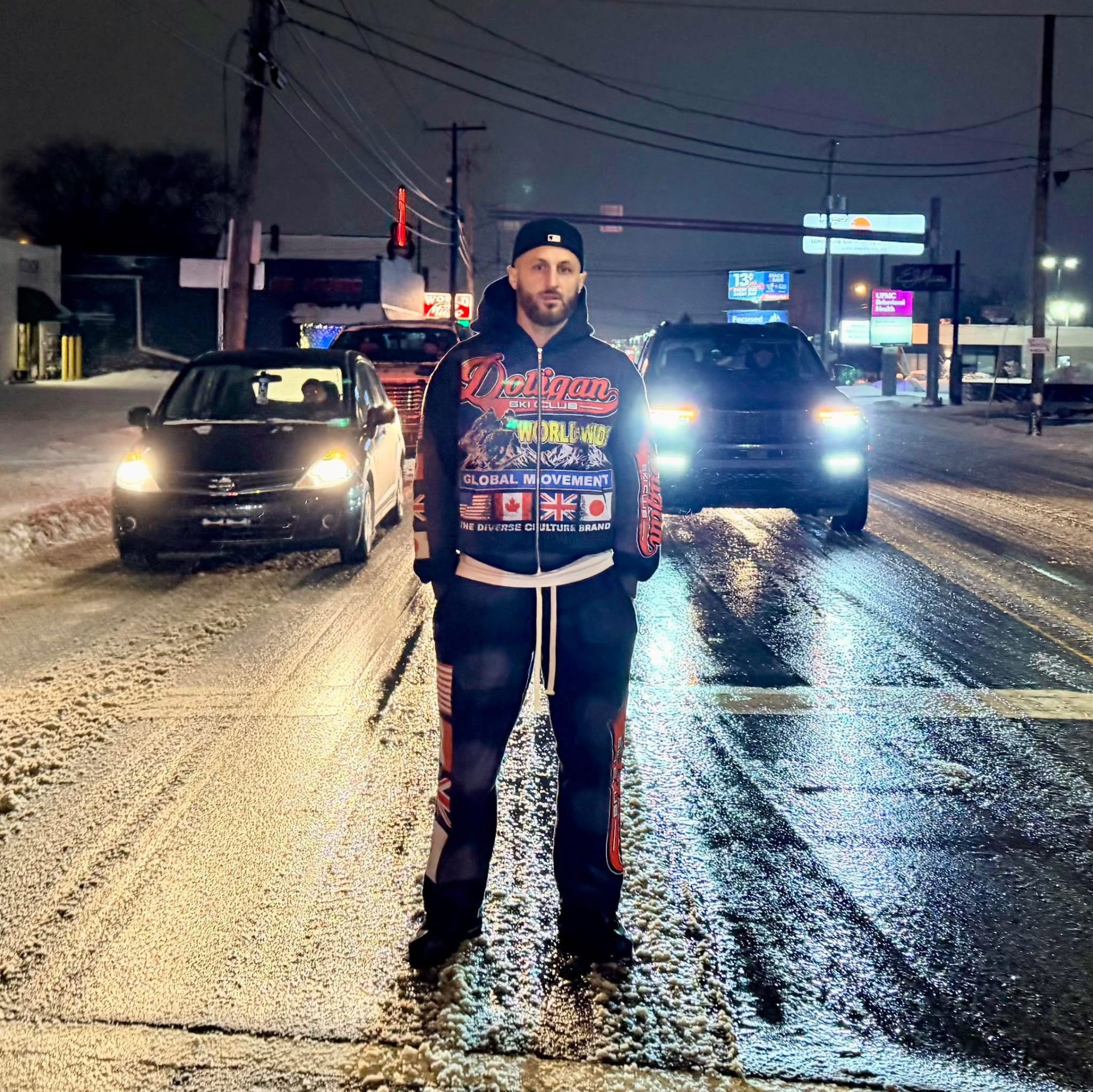
For Erie, PA entrepreneur Sean Madigan, the idea for Dotigan started long before the brand ever existed. The name came from a lyric in a Jay-Z song — “S Dot Again” from “Streets Is Talking.” After hearing the line, friends started calling him “S Dot” and “S Dot Again” because it sounded close to Sean Madigan. The nickname stuck, and eventually so did the vision.
But life took Sean in another direction first.
Before Dotigan ever became reality, Sean built a successful career in the car business, eventually becoming a finance manager making what he described as “a shit ton of money.” From the outside, everything looked successful. But internally, something was missing. So nearly 10 years ago, at the height of his financial success, he walked away from it.
Instead of playing it safe, Sean invested everything into building Dotigan from the ground up. And unlike many startup clothing brands that launch with a single T-shirt and an Instagram page, he wanted Dotigan to feel complete from day one. That decision came with sacrifices. He spent months developing a full collection, different designs, and multiple pieces before officially launching the brand on August 18, 2017.
The slogan behind the company — “The Diverse Culture Brand” — wasn’t just marketing. It represented Sean’s real life.
Growing up and moving through different environments, Sean never felt tied to just one culture or scene. One night he might be at a keg party in the suburbs, another night in the hood shooting dice with friends. He wanted Dotigan to represent something versatile enough to fit everywhere because that reflected who he was.
“For me it was always hard to dress because I was always around different crowds and different cultures,” Sean said. “When I started Dotigan, it felt like I could wear it anywhere.”
Like most businesses, the early years came with struggles. Building a brand from scratch wasn’t glamorous. But everything changed during the aftermath of the George Floyd tragedy.
Sean decided to create and give away free “F*** Racism” T-shirts as a statement bigger than fashion. What started as a simple idea quickly turned into a movement. Nearly 1,700 shirts were given away, with lines wrapping around blocks as people from all backgrounds showed up to support the message.
“That day was dope because you saw all walks of life standing together for the same message,” Sean said. The moment helped push Dotigan into a new level of visibility and community support — and the brand has continued growing ever since.
Now years later, Dotigan has become more than clothing. For many people, it represents identity, culture, unity, and taking chances on yourself even when the safe route makes more sense.
Q&A With Sean Madigan
What made you finally take the leap and leave the car business?
I had been talking about starting Dotigan for years and I knew if I didn’t commit to it 100% it was something I would just keep talking about and not act on. I felt in my heart it was time to give it a try.
Were people supportive at first or did they think you were crazy?
I would say a little bit of both. People that love you never want to see you go backwards and fail. I knew it was going to be tough, but I have always had strong support from family and friends.
Why was it important for Dotigan to represent different cultures instead of just one audience?
To me one audience has always been different cultures and walks of life. I always try to see everyone as one even though we all come from different races and ethnic backgrounds. I wanted to create clothes that everyone felt good in. That has always been my goal.
Did you ever have moments where you thought the brand might fail?
I would be lying if I said I didn’t. I’m almost 10 years into this and still have those thoughts from time to time. Sometimes those thoughts can make you go harder so I don’t think it’s a bad thing, it’s just human nature to think what If I fail.
What did that “F*** Racism” giveaway day mean to you personally?
For me the day we gave away those shirts it was fulfilling to see all walks of life wanting to wear that shirt. It’s one thing to not be racist but it’s another thing to be willing to wear that saying on a tee shirt and show people how you really feel. So for me it felt like somewhat of a come together moment when our country was at odds with each other.
Did you realize at that moment the brand was becoming bigger than fashion?
Definitely. It felt like more of a movement at that time. People were calling from different states asking how they could get a tee. A mother and her kids wore them at a march in Washington DC and pictures of them were featured on a national news website. It definitely let people know what Dotigan represented more than just clothes.
What’s the biggest misconception people have about owning a clothing brand?
That’s it’s easy. There is so much more than just making a cool logo or design. I think a lot of businesses not just clothing looks easy from the outside but behind the scenes there is so many things going on that aren’t easy at all.
What advice would you give somebody scared to leave comfort and chase something creative?
You just got to do it. Sounds simple but it really is. Once you convince yourself you can do it nothing else matters. Even if you fail it’s still going to make you grow. I saw a quote the other day that said the most important skill you can develop is the ability to figure it out and I think if it’s something you really want to do and love you will figure it out.
What’s your long-term vision for Dotigan?
I think just continue to grow organically. Keep making dope shit that people want to wear. Keep getting better at making clothes. I try to not look too far ahead and just focus on what’s in front of me now, that has worked best for me throughout this journey.
What does success look like to you now compared to 10 years ago?
10 years ago, success was just starting the brand and coming out with the brand. There was no responsibility for running a business, it was just can I actually create clothes and put them out and people will buy them? So just actually doing what I said I was going to do 10 years ago was a success to me. Now it’s different because we have a following. At the end of the day, I love what I do, and I appreciate the people that rock with the brand. That is what success means to me.