
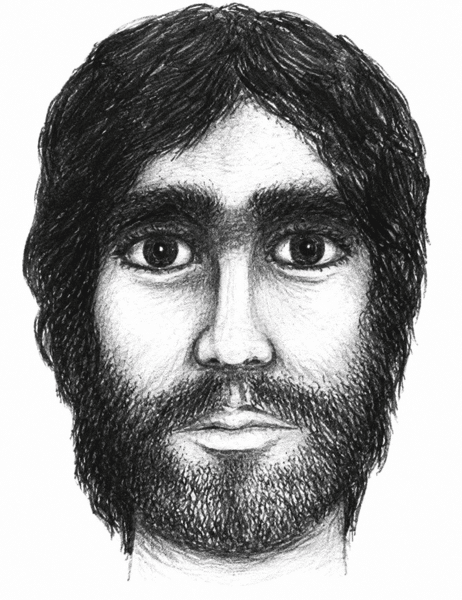
When people think of infamous serial killers, names like Ted Bundy, John Wayne Gacy, and the Zodiac Killer often come to mind.
But decades before true crime became one of America’s most popular forms of entertainment, Western Pennsylvania had its own terrifying mystery.
During the mid-1970s, a series of murders involving young women shook Washington County and surrounding communities. The similarities between the cases led investigators and local residents to believe a serial killer was hunting victims throughout the region.
The media eventually gave the unknown suspect a chilling nickname: The Washington County Strangler.
Nearly 50 years later, the mystery remains one of the most haunting unsolved crime stories in Pennsylvania history. A Community Living in Fear.
Between 1976 and 1977, multiple young women were found murdered throughout Washington County and nearby areas. Many of the victims were young. Several had been strangled. Others were discovered in remote locations after being reported missing.
As the bodies continued to be found, fear spread throughout the region. Parents worried about their daughters. Young women became more cautious about traveling alone. Rumors circulated throughout neighborhoods, schools, and workplaces.
The belief that a serial killer was operating in Western Pennsylvania quickly gained traction.
The Victims
Among the women connected to the investigation were:
- Susan Rush
- Brenda Lee Ritter
- Roberta Elam
- Barbara Lewis
- Debra Capiola
Each case carried its own tragic story, but investigators believed similarities between the murders could point to a single offender. The public wanted answers. Unfortunately, those answers never came. Was There Really a Washington County Strangler?
For years, investigators worked under the theory that one serial killer may have been responsible for multiple murders. The similarities appeared difficult to ignore.
However, as forensic science improved and DNA technology advanced, investigators began to reconsider that theory. Evidence suggested some of the murders may have been committed by entirely different offenders. What was once believed to be the work of one killer suddenly became much more complicated.
Instead of a single monster terrorizing Western Pennsylvania, authorities began considering the possibility that multiple killers were operating during the same period.
If true, it would explain why some of the cases shared similarities while others did not. The Case That Changed Everything. One of the murders eventually produced a significant breakthrough.
Advances in DNA testing helped identify a suspect connected to the murder of Debra Capiola, bringing resolution to one case that had haunted investigators for decades.
Yet while one family received answers, several other cases remain unsolved. The result is a mystery that continues to frustrate investigators and fascinate true-crime researchers.
Questions That Remain
Nearly half a century later, many questions remain unanswered:
- Was there truly a Washington County Strangler?
- Were multiple killers operating in Western Pennsylvania during the same time period?
- How many of the murders were actually connected?
- Could modern DNA technology eventually solve the remaining cases?
For the families of the victims, these are not simply historical questions. They are questions that have lingered for decades.
Why These Stories Matter
True crime often focuses on the killer. But the real story is about the victims. Young women lost their lives. Families lost daughters, sisters, and loved ones. Entire communities lived with fear and uncertainty.
The Washington County Strangler remains one of Western Pennsylvania’s most chilling mysteries because the story is still unfinished. And until every victim receives justice, the questions surrounding these murders will continue to echo throughout the region.
Nearly 50 years later, the mystery remains. The only certainty is that someone knows what happened. The question is whether the truth will ever be fully uncovered.