
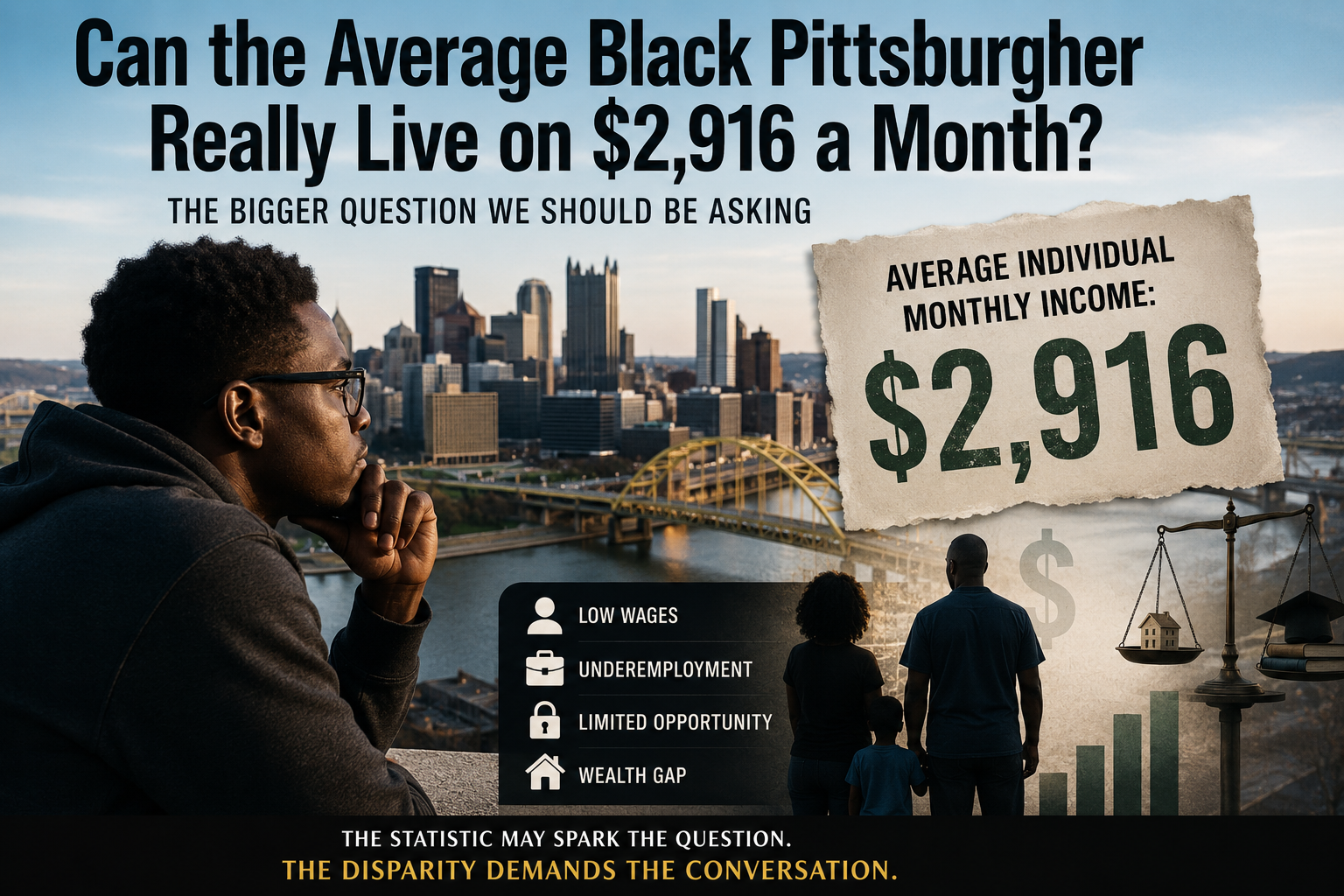
Someone recently asked me whether I believe the average Black person in Pittsburgh earns just $2,916 a month as an individual. If we’re talking about individual monthly income, then yes, I could believe it.
Pittsburgh has long struggled with some of the largest racial wealth and income disparities in the country. While the city is nationally recognized for its healthcare, universities, technology sector, and revitalization, not everyone has shared equally in that economic growth.
Many Black Pittsburghers work full-time jobs that simply don’t pay enough to keep up with today’s cost of living. Housing costs continue to rise. Groceries are more expensive than ever. Childcare, transportation, utilities, and healthcare all place additional pressure on working families. Others are underemployed, working multiple part-time jobs, or facing barriers to higher-paying careers.
The bigger question isn’t whether the number is shocking. The bigger question is why these disparities continue to exist. Is it access to quality education? Workforce development? Generational wealth? Neighborhood investment? Hiring opportunities? Small business access? Economic mobility?
Those are the conversations that matter.
This isn’t about making excuses or assigning blame. It’s about recognizing that economic disparities are real and asking what solutions can create more opportunity for future generations. Whether the average monthly income is exactly $2,916 or slightly higher or lower doesn’t change the larger issue. Too many people are working hard and still struggling to get ahead.
Pittsburgh has incredible potential, but a city’s success shouldn’t only be measured by new buildings, thriving business districts, or billion-dollar investments. It should also be measured by whether everyday working people have a genuine opportunity to build stable, financially secure lives.
That’s the conversation worth having.