
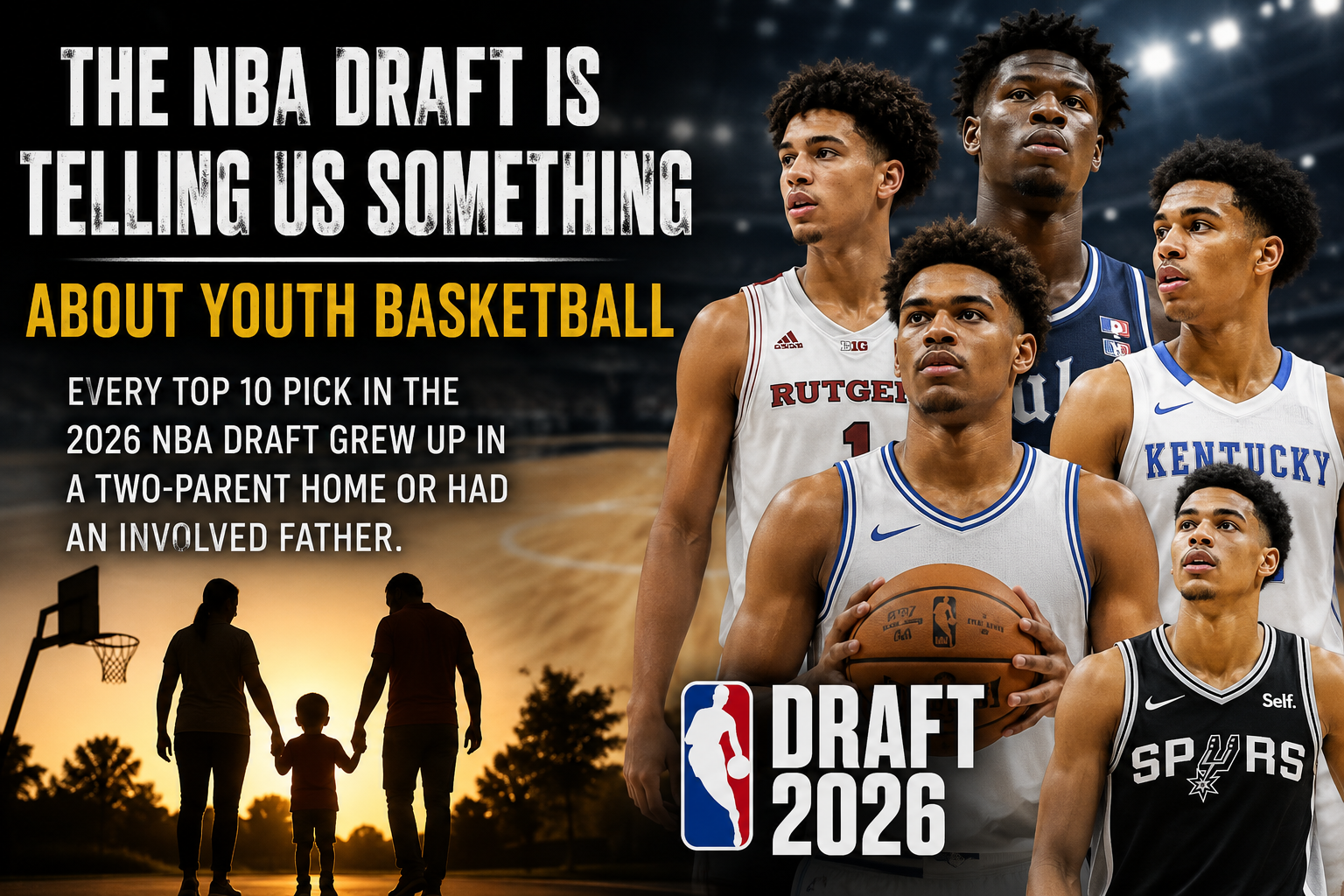
The 2026 NBA Draft revealed an interesting trend. Every one of the top 10 picks either grew up in a two-parent household or had an actively involved father who played a significant role in their upbringing. That doesn’t mean a child can’t succeed without both parents. Every family’s story is different, and countless athletes have overcome incredible adversity to reach the highest level.
But I don’t think this is just a coincidence. I believe it reflects how much basketball has changed.
Years ago, basketball was often viewed as the sport where inner-city kids from difficult backgrounds could rise to the top. Many NBA legends grew up in poverty, unstable homes, or neighborhoods filled with violence. Basketball was their escape.
Today’s game is different. The road to the NBA has become more expensive, more structured, and more demanding than ever before.
Elite players often begin specialized training before they reach middle school. They travel across the country on AAU circuits, hire personal trainers, attend elite camps, work with nutritionists, and in many cases transfer to nationally recognized prep schools. Those opportunities require more than talent, they require consistent support from parents or other committed adults.
That support doesn’t always come from two parents living under one roof. Single mothers, grandparents, guardians, coaches, and mentors have helped countless young athletes succeed. But one thing seems increasingly clear: having an engaged, dependable adult who provides structure, accountability, and stability is becoming more important as the pathway to the NBA grows more competitive.
Basketball hasn’t become less accessible because kids from tough neighborhoods have lost talent. It’s become less accessible because the system itself has changed. The game now rewards long-term planning, financial resources, travel opportunities, and year-round development in ways that didn’t exist decades ago. That’s one reason we may be seeing fewer stories of players emerging from the most difficult circumstances and more stories of athletes who benefited from stable family support throughout their development.
The lesson isn’t that one type of family guarantees success. It’s that as youth basketball continues to evolve, stability and consistent support appear to matter more than ever.
Talent still opens the door.
But today, it often takes a strong support system to help a player walk through it.