
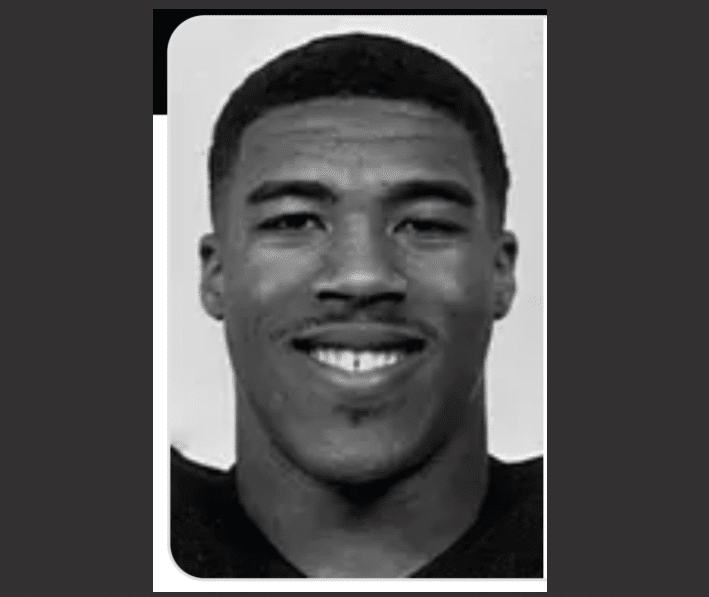
Some football players are remembered for their statistics. Others are remembered for championships.
Mike Logan built a legacy that includes both, but what truly defines his career is consistency, toughness, and representing Western Pennsylvania with pride every step of the way.
Long before he was celebrating a Super Bowl championship with the Pittsburgh Steelers, Logan was making a name for himself just outside the city at McKeesport High School, one of the WPIAL’s proud football programs. From there, he headed south to Morgantown, where he became one of the most respected defensive backs of the Don Nehlen era and an important part of West Virginia football history.
His journey would eventually come full circle.
A Mountaineer Through and Through
When Mike Logan arrived at West Virginia in 1993, the Mountaineers were building one of the nation’s toughest defenses. Over four seasons, Logan developed into one of the Big East’s premier defensive backs while also becoming one of the best return specialists in school history. He finished his Mountaineer career with 140 tackles, eight interceptions, 18 passes defended, and nearly 900 kick return yards. As a senior, he earned First-Team All-Big East honors at cornerback while also receiving all-conference recognition as a return specialist.
His biggest moments often came when West Virginia needed them most. As a freshman, Logan intercepted Boston College quarterback Glenn Foley on the game’s final play to preserve WVU’s undefeated regular season and send the Mountaineers to the Sugar Bowl.
Later in his career, he delivered another unforgettable defensive performance against East Carolina, recording an interception before forcing and recovering a crucial fourth-quarter fumble that helped secure another Mountaineer victory.
Those are the kinds of plays teammates never forget.
Earning the NFL Dream
After establishing himself as one of the Big East’s best defensive backs, Logan heard his name called in the second round of the 1997 NFL Draft when the Jacksonville Jaguars selected him with the 50th overall pick.
He spent four seasons in Jacksonville, steadily developing into a dependable NFL defensive back.
By 2000, Logan was producing one of the best seasons of his career, finishing with 60 tackles, two interceptions, and his first NFL sack.
Coming Home
For many Western Pennsylvania kids, playing for the Steelers is the dream.
Mike Logan got to live it. In 2001, he signed with Pittsburgh, returning home to wear the black and gold. His biggest statistical season came in 2003 when he recorded a career-high 94 tackles while helping anchor one of the NFL’s toughest defenses.
Then came 2005.
The Steelers made an unforgettable postseason run before defeating the Seattle Seahawks in Super Bowl XL. Logan became a Super Bowl champion with the very team he grew up watching as a kid from McKeesport.
Very few athletes get to experience something that special.
A Career Worth Celebrating
Logan played 10 seasons in the NFL between Jacksonville and Pittsburgh, appearing in 116 regular-season games while recording more than 300 career tackles, five interceptions, and seven forced fumbles.
In 2014, West Virginia University honored his impact on the program by inducting him into the WVU Sports Hall of Fame.
The Brotherhood Lives On
One thing that has become clear throughout this WVU Brotherhood series is that Mountaineer greatness isn’t measured only by statistics.
It’s measured by loyalty. Leadership. Resilience.
Mike Logan represented West Virginia with intensity every time he stepped onto the field. Whether it was making game-saving plays in Morgantown, earning respect in Jacksonville, or helping bring a Lombardi Trophy back to Pittsburgh, he showed exactly what it means to wear the Flying WV.
His story reminds us that some journeys don’t just end where they began. Sometimes, they come full circle.
Q: Growing up in McKeesport, what first made you believe football could become more than just a game?
A: A lot of people assume I grew up in McKeesport because the late, great, Myron Cope gave me the nickname “McKeesport Mike”, but I didn’t. I was raised in West Mifflin. Whitaker Projects, to be exact. It was there that the game of football started as a dream. Honestly, football didn’t become more than just a game to me until after my junior year at WVU. That’s when I really started to understand that this game might create opportunities for me beyond anything I had imagined growing up.
Q: What made West Virginia feel like home and made you decide to go there?
A: Pittsburgh was home! I wanted to go to Pitt. However, they didn’t offer me a full scholarship. So, I decided to go to their biggest rival and kick their ass for four years. But once I stepped on campus at WVU, I was embraced by the coaches, administration, and my teammates. They eventually became family. That’s when Morgantown started to feel like home. Coach Don Nehlen coached some of the greatest players in WVU history.
Q: What’s the biggest lesson you still carry from playing for him?
A: Coach Nehlen taught me to believe in myself. Whenever I started to become overwhelmed or doubt myself, he would speak life into me. I’m forever grateful to him because he consistently told me that I could play in the NFL. Sometimes you need somebody you respect to see something in you before you’re able to see it in yourself.
Q: You battled injuries, including breaking the same arm multiple times at WVU. How did those setbacks shape your mentality?
A: That’s really where Coach Don Nehlen spoke life into me. I can’t lie, I was defeated when I kept breaking my arm. Three times in 23 months. There were moments when I thought maybe football wasn’t part of my calling. But Coach encouraged me to get up every single time and to continue putting in the work. That ultimately paid dividends throughout my career because I continued to carry the label of being “injury prone.” The physical and mental work I learned during rehab is probably one of the main reasons I was able to play in the NFL for over a decade.
Q: Looking back, what was your favorite moment wearing the WVU helmet?
A: There were many, but if I had to single out one, it would probably be during the 1993 undefeated season. We were playing Boston College and losing as the clock was winding down. We needed somebody on defense to make a big play. I was a redshirt freshman playing on a team full of accomplished upperclassmen, but those guys looked at me as their equal. The expectation was that everybody in that huddle was accountable and capable of making the play. Lo and behold, Steve Perkins stripped the ball from their running back, and I was there to scoop it up and give the ball back to our offense. We ended up scoring the go ahead touchdown. Then, as time expired, I intercepted a Hail Mary pass in the end zone to finish the game. It was a special moment to have my teammates celebrating me after completing that comeback and preserving an undefeated season. I’ll never forget it.
Q: What did it mean to hear your name called in the second round of the NFL Draft by Jacksonville?
A: I was elated! But I was also surprised! I actually expected to hear my roommate Canute Curtis’ name called before mine. He was projected as one of the top prospects. After my individual workouts, my agent had told me my name was moving up teams draft boards, but I didn’t really have expectations about where I would be selected. I just wanted to hear my name called. When I finally heard it, a dream that started 17 years earlier became reality instantly.
Q: You played for both the Jaguars and your hometown Steelers. Was there a different feeling putting on a Steelers uniform as a Pittsburgh kid?
A: Most definitely! I mean as a kid born in the 70s in Pittsburgh, I think it was every kid’s dream to put on the Black and Gold. When that dream came to fruition, I was almost in disbelief. Running out of that tunnel wearing the uniform I grew up idolizing was everything. I wasn’t just playing for an NFL team. I understood the history, the people, the city, and what that uniform meant. I was one of them. Winning Super Bowl XL is something most players never experience.
Q: What emotions do you remember most from that championship season?
A: The confidence we carried! And the willingness to sacrifice self for the greater accomplishment of the team. There were so many storylines behind the curtains that we shared as players. Some of those experiences helped us become the team that eventually won the “One for the Thumb.” In today’s world of social media and constant access, I don’t know if you’ll ever see another team make a run exactly like that without everything behind the scenes being broadcast for attention. We had things that belonged to us and only us. I think that mattered when things got tough for us during our run.
Q: What teammate at WVU or in the NFL made you a better player without even realizing it?
A: At WVU, Rashaan Vanterpool. He was from New York and was a helluva wide receiver and return specialist. I went against him every day in one-on-ones. Then we’d try to outdo each other on every kick or punt return. That competition made both of us better. At one point, we were among the nation’s best in punt and kickoff return averages. We competed, but we also pushed each other. In the NFL, it was Troy Polamalu. Troy made me a better player and a better person. Simply by allowing me to observe how he presented himself on and off the field. He didn’t have to give loud speeches. But if you were paying attention, you learned from him.
Q: Fans remember your toughness. What did playing defensive back in the NFL teach you about preparation and discipline?
A: Playing defensive back is tough. I believe it’s one of the hardest positions in football, both mentally and physically. There are so many intricate details that the average person watching the game may never realize. If you’re not disciplined and you’re not prepared, you don’t have a chance in hell of being a great defensive back. Talent alone won’t do it. At that position, everybody sees your mistakes. You have to develop the discipline to forget the last play, understand the next situation, and trust your preparation.
Q: Today’s athletes deal with NIL, the transfer portal, and social media. How different do you think your journey would have been in this era?
A: If I’m being truthful, I probably wouldn’t have had a journey. I was young and wild. I was 17 years old when I stepped onto a college campus. I needed to go through the struggles. I needed structure. I needed people who wouldn’t allow me to run every time things became uncomfortable. With the transfer portal, social media, and all the options athletes have today, I’m not sure I would’ve stayed somewhere long enough to be developed. I don’t think I would’ve made it. The struggle was part of my development.
Q: What’s one story from the locker room at WVU that fans have never heard?
A: I don’t share many intimate personal details about the locker room because that’s just it, it’s the locker room. We used to have a code. I know that code may not be respected as much in today’s culture, but that’s who we were back then. Now, some stories probably DO need to be told. But I ain’t the one tellin’.
Q: When people talk about “The Brotherhood” at West Virginia, what does that phrase mean to you?
A: The Brotherhood at WVU was built through the struggles we went through together. I remember summers in Morgantown when we barely had food, but we collectively found ways to eat. Wasn’t no such thing as, “Mine is mines and yours is yours.” We shared food. We shared finances. We shared fellowship. We struggled together, and because of that, we learned how to take care of one another. That’s something I’ll always respect and remember. That’s Brotherhood to me.
Q: Looking back on your entire career, what accomplishment makes you proudest, even if fans rarely mention it?
A: That I remained a great teammate to everyone I played with, even when they weren’t always a great teammate to me. When I entered the NFL, it was during a time when bringing in another player to compete for someone’s job was viewed as “taking food off of another man’s table.” I didn’t receive help from everybody when I was drafted. I understood why, but I also remembered how it felt. So, when I gained knowledge and experience, I was always willing to share what I had learned with other players. Even players who might eventually compete for my position. Years later, I received an unexpected form of homage for that when Troy Polamalu mentioned me during his Pro Football Hall of Fame speech. That meant more to me than people probably realize. It confirmed that being a good teammate and pouring into somebody else can become part of your legacy.
Q: Finally, if a young athlete from Western Pennsylvania reads this interview, what’s the one piece of advice you’d want them to remember?
A: It’s okay to chase the dream of becoming a professional athlete. But find the purpose in the pursuit. Greatness may be measured by statistics on the field, but in life, you’ll be remembered by how you led, who you helped, and how you served.