
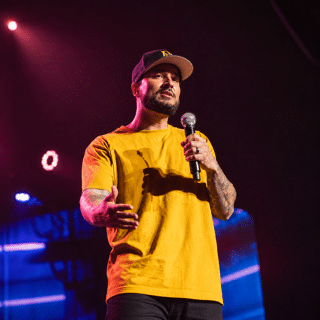
People are often judged forever by the worst chapter of their lives. We see what somebody did at 14, 16, 19 or 21 years old and sometimes decide that must be who they are forever.
But people can change. I know that because I’ve watched it happen with my friend Mario Parrotta.
Mario and I go back to school. I knew him before the speaking engagements, before sharing his testimony on social media, before walking into jails, rehabilitation centers, churches and schools trying to help other people.
I knew the younger Mario. And like a lot of young people trying to figure out who they are, he made mistakes. The difference is Mario doesn’t hide from his. He talks about them. Not because he’s proud of them, but because he believes somebody else might recognize themselves in his story before making the same choices.
Chasing an Image
Mario describes much of his younger life as trying to become somebody he now believes God never created him to be.
He was naturally shy. He wasn’t the star athlete getting attention through sports. But like many young men, he wanted acceptance and, maybe even more importantly, respect. So he searched for it elsewhere.
He began smoking marijuana at 11. He was arrested for the first time at 14 and locked up at 15. Violence, drugs, alcohol and crime became part of his life. But underneath the image he projected was something completely different.
Insecurity. Emptiness. A young man without a real sense of identity who cared deeply about how other people perceived him.
That’s something we don’t discuss enough when talking about troubled teenagers. Sometimes what looks like toughness is actually insecurity wearing a mask.
Eventually, Mario became trapped by the person he was pretending to be.
When the Lifestyle Becomes Real
There was a moment when everything nearly changed permanently.
Mario remembers hiding underneath a blanket in a dark basement with blood still on his hands. Outside, police surrounded the house. He could hear dogs and communication over police radios.
And Mario prayed.
Not the type of prayer he remembered from attending church with his mother as a child. This was desperation. He begged God not to let another person die. Mario admits something important about that prayer: at the time, much of his fear was about himself.
He didn’t want his own life to be over. That moment showed him where the road he was traveling could eventually lead. But even that wasn’t immediately enough to change him.
The cycle continued.
At 19, during another dark period fueled by alcohol and emptiness, Mario says he put a loaded shotgun to his own head and questioned whether his life had any purpose. His problem wasn’t necessarily that everything around him was terrible. He simply couldn’t find meaning in any of it.
Temporary pleasures kept producing temporary relief, followed by the same emptiness.
A Decision That Changed Everything
At 21, another experience forced Mario to confront himself. A woman he was involved with became pregnant. Mario didn’t want to become a father. He admits he failed to support her when she needed him, and the pregnancy ended in abortion.
For years, it became one of the decisions that weighed most heavily on him.
Today, as a father of three, Mario doesn’t try to soften his role in what happened. He looks back at the young man he was and sees somebody afraid of responsibility.
Shortly afterward, Mario says he experienced something he still struggles to completely explain.
Whether it was a dream or vision, he remembers experiencing overwhelming darkness and a feeling of complete separation from everyone, including God. He woke up terrified and crying.
Something changed.
Initially, however, Mario approached faith almost like a transaction. Go to church. Do enough good. Balance out the bad. Maybe earn his way into heaven.
He eventually realized that wasn’t Christianity at all.
The Woman Who Helped Open a Door
Around 22, Mario began dating Mary, the woman who would eventually become his wife.
As Mary became more interested in joining the Catholic Church, she entered RCIA, the process through which adults learn about the Catholic faith and prepare to enter the Church. She needed a sponsor.
Mario agreed. He thought he was helping her. Instead, he says God used the experience to reach him. For perhaps the first time, Mario began seriously questioning the beliefs he had spent years either ignoring or dismissing. Was Jesus real? Could the Bible be trusted? What historical evidence existed? Why should he believe any of it?
Mario doesn’t discourage those questions today. Actually, he encourages them.
What changed was that he finally started searching for answers instead of simply forming opinions without investigating them.
As he studied Christianity, Scripture, the early Church and the historical claims surrounding Jesus, skepticism gradually turned into belief. And eventually something became more powerful to Mario than his fear of punishment: Grace. The idea that despite everything he had done, forgiveness was still available to him.
That’s where Mario says the real transformation began.
Change Didn’t Happen Overnight
This wasn’t some movie scene where Mario woke up the next morning as an entirely different person. Transformation took time. Drugs, sex, violence, fighting and the lifestyle surrounding them had become normal.
Initially, Mario focused on everything Christianity seemingly told him he couldn’t do anymore. Eventually, his perspective changed. Instead of obsessing over rules, he began focusing on developing a relationship with God.
And slowly, his desires changed with it.
His faith stopped being driven primarily by fear and became rooted in love. For someone who spent years searching for identity through other people’s approval, Mario finally believed he understood who he was.
He didn’t need to perform anymore.
Then His Faith Was Tested
Changing your life doesn’t protect you from tragedy. Mario learned that in devastating fashion.
Four years ago, he walked into a room and discovered his younger brother Jimmy dead from a fentanyl overdose. Then, just one week after burying his brother, Mario’s seven-year-old son Santino was diagnosed with Moyamoya, a rare disease affecting blood flow to the brain. Within a month, Santino needed brain surgery.
It’s one thing to talk about faith when everything is going well. It’s another thing to bury your little brother and then immediately face the possibility of something happening to your child.
Mario had spent years quoting Scripture. Now he had to live it.
He didn’t receive an explanation for why his family was experiencing so much pain. What he says he found instead was peace and strength during circumstances where neither should have seemed possible.
Turning Pain Into Purpose
Jimmy’s death ultimately pushed Mario toward another chapter of his life. He had already talked with people about Christianity, but now he felt compelled to reach more of them.
So he started sharing his story publicly. Doors began opening. Rehabilitation centers. Jails. Churches. Schools. Conferences. Faith groups. Social media. The same experiences that once brought shame became tools Mario could use to reach someone else.
That’s an important distinction.
Mario doesn’t tell teenagers about drugs, violence, arrests and crime to make his younger life sound exciting. He tells them because he knows where that road can lead.
There is nothing glamorous about hiding in a basement wondering whether somebody is going to die. There is nothing glamorous about being locked up at 15. There is nothing glamorous about putting a gun to your own head at 19.
And there is nothing glamorous about spending years trying to impress people while privately feeling empty.
People Are More Than Their Worst Chapter
That’s why I wanted to tell Mario’s story. We live in a world where everybody has receipts. Old pictures. Old arrests. Old posts. Old mistakes. And sometimes we become so committed to reminding people who they were that we refuse to acknowledge who they’ve become.
Accountability matters. Transformation doesn’t erase the consequences of the past or undo pain caused to other people. But accountability and redemption can exist together.
Mario isn’t asking anyone to pretend his past didn’t happen. His entire message depends on acknowledging that it did. He’s saying that your past doesn’t have to become your permanent identity.
The teenager who once searched for respect through violence now walks into places filled with people fighting some of the same battles he once fought. The young man who struggled to understand his own purpose now tries to convince other people that their lives have purpose. The person who admits he once lived largely for himself is now a husband, father and man trying to use his experiences to serve others.
Whether you’re Christian or not, there’s something valuable in that transformation. People can grow. People can confront themselves. People can choose differently. And sometimes the person society is ready to throw away at 15 can become the person trying to save another 15-year-old from making the same mistakes.
Mario would give the credit for that transformation to one person. Jesus Christ.
As Mario sees it, he didn’t simply clean himself up. He was given a new life. And that’s why he tells his story.
Not to glorify the person he used to be.
But to show people that who you were doesn’t have to determine who you become.