
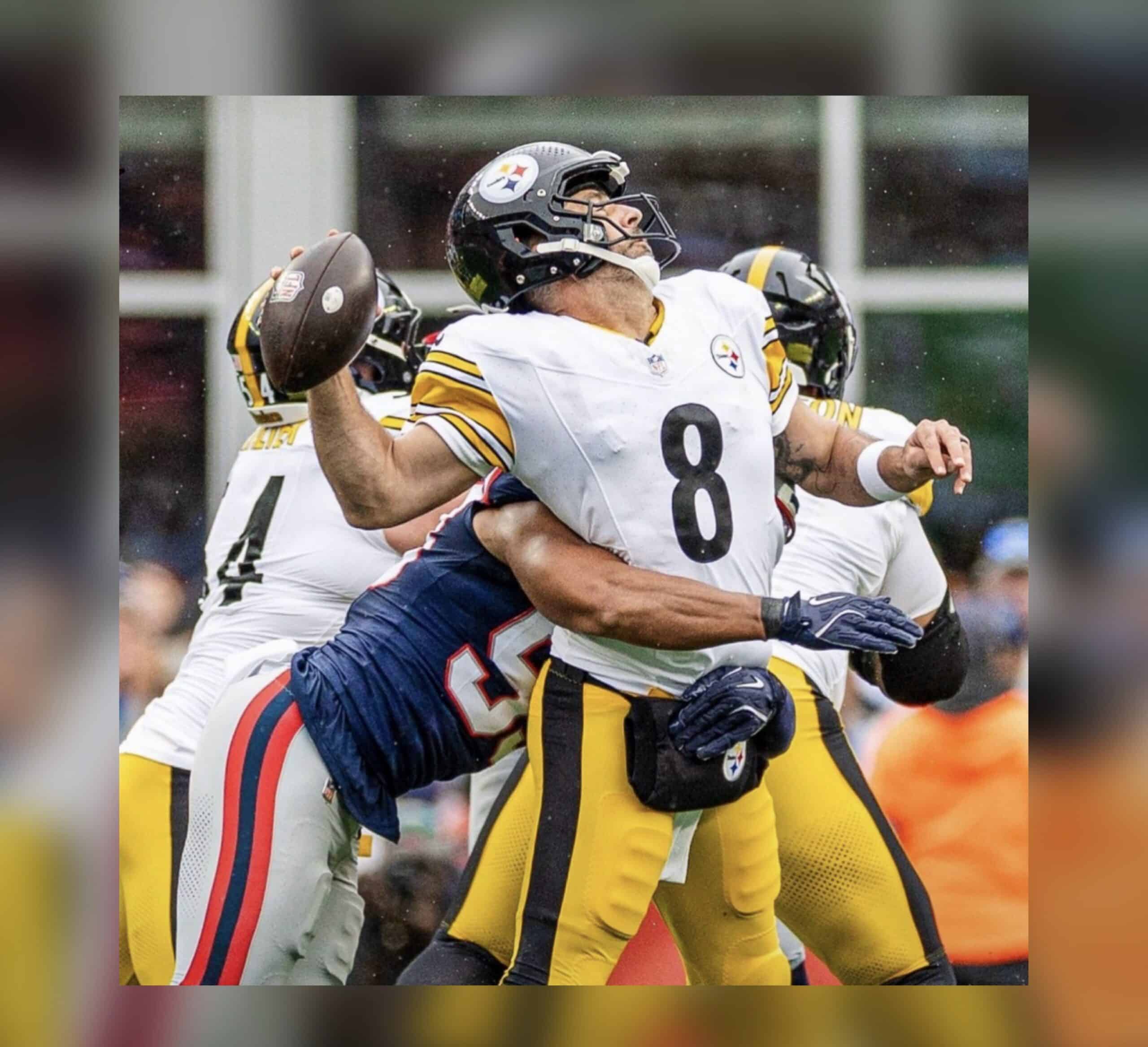
The Pittsburgh Steelers went into New England looking to build on their season-opening victory over the Atlanta Falcons.
Instead, they left with a 20-3 defeat, a 1-1 record, and some serious questions about an offense that looks nowhere near ready to compete with the NFL’s better teams.
The final score was ugly, but the performance was even more concerning.
Pittsburgh struggled to establish a running game, protect quarterback Aaron Rodgers, sustain drives, or create explosive plays. The Patriots didn’t need an offensive masterpiece to win this football game. They simply needed to capitalize on Pittsburgh’s mistakes and allow their defense to take care of the rest.
For Steelers fans who entered the season hoping that a new coaching staff and a veteran quarterback would finally bring some excitement back to the offense, Sunday’s performance was a disappointing reality check.
And here’s the bigger issue: This wasn’t simply one bad afternoon.
The Steelers have now played two regular-season games under head coach Mike McCarthy, and the offense has yet to establish a consistent identity.
The Steelers’ Offense Is a Major Concern
Let’s start with the most troubling statistic from Sunday’s loss. The Steelers scored three points.
Three.
Pittsburgh finished with just 235 total yards and converted only two of its 12 third-down opportunities. The Patriots recorded four sacks and consistently disrupted the Steelers’ attempts to move the football. You cannot expect to win many NFL games when your offense struggles to stay on the field, cannot consistently move the chains, and fails to capitalize on opportunities created by its defense.
The Steelers’ first two possessions ended in three-and-outs. Even when Pittsburgh began moving the ball, drives stalled because of protection breakdowns, missed opportunities, and an inability to execute when it mattered.
At some point, this becomes bigger than one game or one quarterback.
Pittsburgh has spent years relying on its defense to keep games competitive while its offense struggles to put points on the scoreboard.
The coaching staff has changed. The quarterback has changed. The personnel has changed. But the same offensive problems continue to show up.
That should concern everybody associated with this football team.
Aaron Rodgers Cannot Fix Everything by Himself
Aaron Rodgers finished Sunday’s game completing 23 of 39 passes for 187 yards, with no touchdowns and one interception. Those numbers are not going to get the job done.
However, placing all the blame on Rodgers would ignore some of Pittsburgh’s biggest problems.
The offensive line struggled to protect him, the running game failed to establish consistent production, and his receivers did not provide enough help.
Rodgers is 42 years old. He can still make throws, read defenses, and use his experience to put the offense in favorable situations. But expecting him to overcome constant pressure, limited rushing production, and receivers who struggle to get open or secure the football is unrealistic.
The Steelers cannot build their entire offensive strategy around hoping Rodgers will turn back the clock and recreate the player who won a Super Bowl with the Green Bay Packers.
That version of Rodgers is part of NFL history. Pittsburgh needs to build an offense around the quarterback it has today, not the quarterback fans remember from his prime.
And that starts with protecting him.
The Offensive Line Has to Be Better
Football games are won and lost at the line of scrimmage.
It doesn’t matter how talented your quarterback is or how many weapons you have at the skill positions. If your offensive line cannot consistently protect the quarterback or create running lanes, your offense is going to struggle.
That was evident against New England.
The Patriots pressured Rodgers throughout the afternoon, recording four sacks. One of those plays resulted in a fourth-quarter fumble that Elijah Ponder returned 19 yards for a touchdown, extending New England’s lead to 20-3.
That play was the perfect illustration of Pittsburgh’s offensive struggles. The Steelers were already having difficulty generating points, and a protection breakdown allowed New England’s defense to put another touchdown on the scoreboard.
The offensive line has to establish some consistency before the Steelers can expect significant improvement anywhere else.
You cannot build a productive running game without blocking. You cannot develop a consistent passing attack when your quarterback is constantly under pressure.
And you cannot expect a 42-year-old quarterback to absorb that kind of punishment every Sunday.
Where Is the Production From DK Metcalf?
The Steelers need more production from their top offensive weapons, and that includes wide receiver DK Metcalf.
Metcalf finished Sunday’s game with four receptions for just 27 yards on nine targets. He also struggled with dropped passes at critical moments. For a receiver with his physical ability and reputation, that production is not good enough.
Pittsburgh brought Metcalf in to be a difference-maker, someone capable of stretching the field, creating explosive plays, and forcing opposing defenses to respect the passing game. Through two games, the Steelers have not consistently gotten that kind of production from him.
To be fair, the offensive line’s struggles make it difficult to develop a downfield passing attack. But Metcalf also has to make plays when opportunities present themselves.
The passing game needs better protection, better execution, and more production from its top receivers. Right now, Pittsburgh does not have a consistent passing attack that opposing defenses have to fear.
The Running Game Isn’t Helping Either
One of the biggest problems with Pittsburgh’s offense is its inability to establish a consistent running game.
The Steelers finished with 91 rushing yards on 23 carries. Jaylen Warren led the team with 43 yards on 11 attempts. That is not enough to take pressure off Rodgers or force opposing defenses to respect the run. When teams know Pittsburgh is struggling to run the football, they can focus more attention on pressuring Rodgers and disrupting the passing game.
The Steelers need to find a way to establish balance.
That doesn’t mean they have to become a run-first football team. It means they need to be capable of running the ball effectively enough to keep defenses honest.
Right now, Pittsburgh’s offense is too predictable and too inconsistent.
And until the offensive line starts winning at the point of attack, the running game is going to continue struggling.
The Defense Cannot Be Expected to Win Every Game
The frustrating part of Sunday’s loss is that Pittsburgh’s defense actually gave the offense opportunities to make this a competitive football game.
The Steelers forced two turnovers, including a fumble recovered by Payton Wilson and an interception by Patrick Queen. T.J. Watt recorded 1.5 sacks, while the defense finished with three sacks and six tackles for loss.
Yet Pittsburgh managed only three points.
The Patriots finished with 327 total yards and 137 rushing yards, including a long touchdown run by TreVeyon Henderson.
The defense wasn’t perfect, but it made enough plays to give Pittsburgh opportunities. The offense simply failed to capitalize.
This is becoming a familiar story for Steelers fans.
The defense creates turnovers, pressures opposing quarterbacks, and keeps games within reach, while the offense struggles to sustain drives and put points on the scoreboard. That formula can win some football games.
But when Pittsburgh faces teams capable of consistently scoring 25 or 30 points, how is this offense supposed to keep up?
You cannot expect your defense to hold every opponent to 10 or 13 points. At some point, your offense has to be capable of winning football games, too.
Mike McCarthy Has Some Serious Work to Do
When the Steelers hired Mike McCarthy, the expectation was that his offensive background would help bring a new identity to Pittsburgh.
Two games into the season, that identity has yet to emerge.
The Steelers have a veteran quarterback, experienced receivers, and a defense capable of creating opportunities. But none of that matters if the offense cannot execute.
McCarthy needs to figure out how to protect Rodgers, establish a more productive running game, and create opportunities for his playmakers.
The Steelers cannot continue to approach games hoping their defense will create enough turnovers or score enough points to compensate for the offense.
That is not a sustainable formula for success.
Final Thoughts: The Steelers Have a Bigger Problem Than One Loss
The Steelers are 1-1.
There is plenty of football left to play, and one loss in September does not determine how an entire season will unfold. But Sunday’s performance should be a wake-up call.
The biggest concern isn’t simply that Pittsburgh lost to New England. It’s how the Steelers lost.
They struggled to block, struggled to run the football, struggled to protect their quarterback, and struggled to create explosive plays. Those are fundamental offensive problems.
Steelers fans have spent years watching teams that rely heavily on defense while the offense struggles to consistently put points on the scoreboard. The arrival of Aaron Rodgers and Mike McCarthy was supposed to help change that.
Through two games, Pittsburgh has yet to show that it can consistently move the football and score points.
The Steelers don’t need Rodgers to be the MVP quarterback he was in Green Bay. They don’t need to score 40 points every Sunday.
But they do need an offense capable of protecting the quarterback, sustaining drives, and putting enough points on the scoreboard to give this team a legitimate chance to compete.
Because if the Steelers cannot figure out how to score points, it doesn’t matter how good their defense is. They are going to have a difficult time beating quality football teams.
And after Sunday’s 20-3 loss to New England, that is the biggest concern facing Pittsburgh right now.