
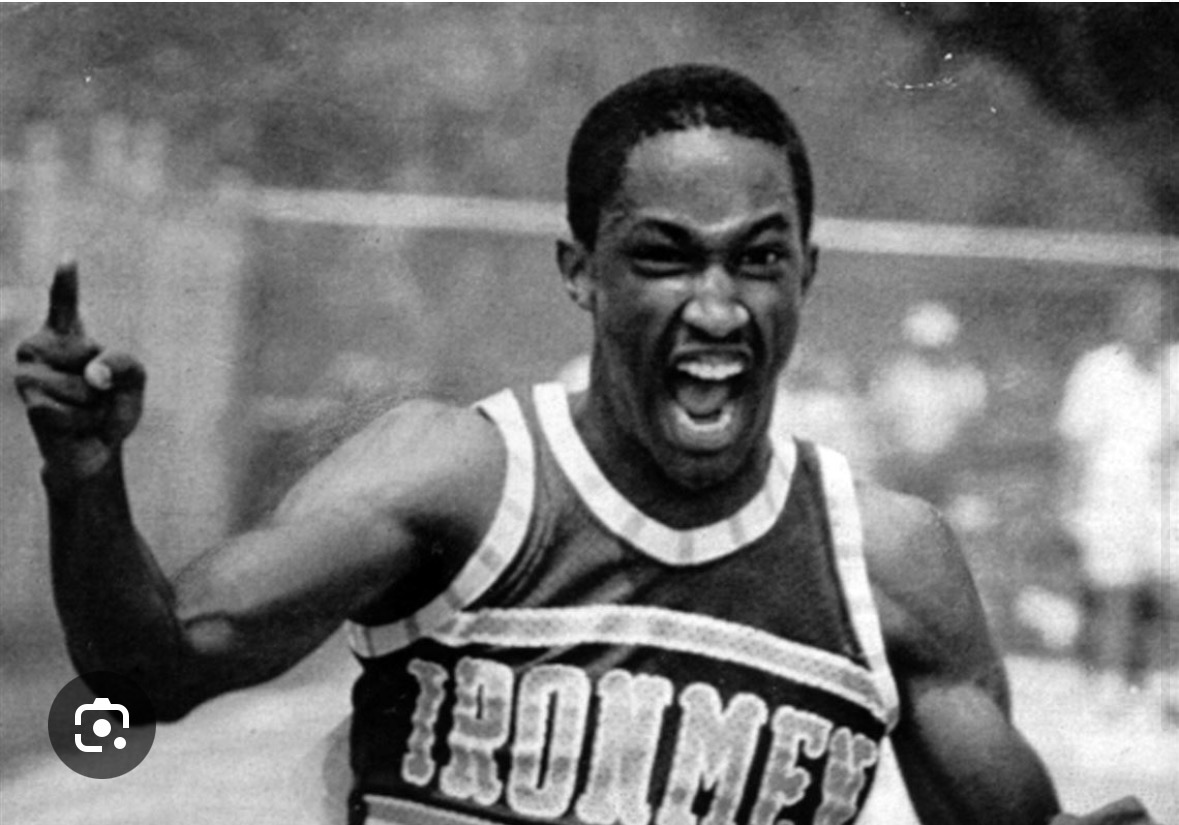
Forget football for a minute. Forget basketball. Forget baseball.
One of the greatest athletes Western Pennsylvania ever produced didn’t need a ball in his hands. He just needed a starting line.
His name was Clinton Davis.
And if you’re under a certain age, there’s a good chance you’ve never heard people around Pittsburgh talk about Davis the way they talk about our football and basketball legends.
They should.
Because Clinton Davis wasn’t simply fast for Western Pennsylvania. He wasn’t simply fast for Pennsylvania. As a teenager at Steel Valley, he became one of the best high school sprinters in America. And at one point, he was beating grown men who ranked among the best runners in the world.
That’s how special Clinton Davis was.
Steel Valley Had a Different Kind of Athlete
Davis graduated from Steel Valley in 1983. By the time he left, he had put together one of the greatest track and field careers in WPIAL history.
The WPIAL Hall of Fame has called Davis the greatest high school sprinter in Western Pennsylvania history. When you look at what he accomplished, it’s difficult to argue.
Davis could dominate the 100 meters. He could dominate the 200. And he could dominate the 400.
That type of range is rare.
As a junior, Davis won all three events at the WPIAL championships. Then he went to the PIAA championships and won all three again.
The next year? He did it again.
WPIAL champion in all three. State champion in all three. Six individual PIAA gold medals in two years.
According to the WPIAL, no other male athlete in league history had accomplished that feat.
His Range Made Him Special
Anybody who knows track understands how crazy that is.
The 100 is about explosion.
Get out of the blocks, accelerate and go. The 400 demands something different. You still need tremendous speed, but you also need the strength and endurance to maintain it when your body starts fighting against you.
Being elite in one doesn’t automatically make you elite in the other.
Davis was elite across the board. There wasn’t one sprint that belonged to him.
They all did.
Then He Ran 10.46
During his senior year, Davis ran the 100 meters in 10.46 seconds, setting a Pennsylvania state record at the time.
But his reputation went far beyond one race or one record.
His performances in the longer sprints established standards that lasted for decades, and national track people knew exactly who he was. Track & Field News recognized Davis as the nation’s top high school indoor athlete in his specialty in both 1982 and 1983.
That’s important because sometimes when we talk about old Western Pennsylvania athletes, people wonder how much of the reputation is local nostalgia.
This wasn’t.
Clinton Davis was nationally elite.
Then He Started Winning Internationally
In 1982, Davis competed at the Junior Pan American Games. He came home with three gold medals.
Think about the progression.
A kid from Steel Valley dominates the WPIAL. Then Pennsylvania. Then he’s competing internationally against some of the best young athletes from other countries.
And he’s still winning.
By that point, Davis wasn’t just one of Pittsburgh’s best young athletes. He was one of America’s.
But one race in particular shows just how advanced he was.
A High School Kid Walked Into Madison Square Garden
January 1983. Madison Square Garden.
Clinton Davis was still in high school when he entered a 400-meter race against a field that included five of the world’s top six quarter-milers.
Not five of Pennsylvania’s best. Not five of America’s best high school runners. Five of the world’s top six.
Davis ran 47.46. And won.
Read that again.
A high school kid from Steel Valley went into Madison Square Garden and beat a field filled with world-class adult sprinters.
That’s different.
At that point you’re not talking about what somebody might become five years down the road.
Davis was already capable of beating elite competition.
His Coach Never Forgot How Special He Was
Years later, former Steel Valley coach Rick Dunmire was asked about Davis’ ability. His comparison tells you everything about the level of athlete he believed he had coached.
Dunmire said that at the same age, Davis’ times were better than Carl Lewis’.
Yes. Carl Lewis. Nine Olympic gold medals. One of the greatest track and field athletes in history.
That doesn’t mean Davis was destined to have Carl Lewis’ career. They competed in different events and ultimately followed very different paths.
But when somebody who watched and coached Davis is making that type of comparison, it gives you an idea of how extraordinary he was as a teenager.
And Because This Is Western Pennsylvania, He Played Football Too
Of course he did.
Davis was also a receiver on Steel Valley’s 1982 WPIAL championship football team.
Imagine being a high school defensive back lining up across from him. You already know the guy you’re supposed to cover is one of the fastest teenagers in America.
Now somebody tells you to play press coverage.
Good luck.
But track was where Davis became historically special.
The 1983 State Championship
His senior season wasn’t just about individual accomplishments either.
Steel Valley won the 1983 PIAA team track and field championship. Davis was everywhere.
He won the 100. He won the 200. He won the 400. And he anchored Steel Valley’s winning 4×100 relay. Four victories at the state championship meet with Davis playing a role in every one of them.
That’s domination.
And that’s why his name shouldn’t only matter to people from Steel Valley or people who followed track in the early 1980s.
His accomplishments belong in the larger conversation about Western Pennsylvania athletic greatness.
Track Stars Don’t Always Get Remembered the Same
I’ve been digging deeper into the history of Western Pennsylvania sports, and one thing I’ve realized is how differently we remember athletes depending on what sport they played.
If Clinton Davis had been a superstar quarterback, we’d still tell stories about him. If he had averaged 30 points per game in basketball, people would still argue about where he ranked among the WPIAL’s greatest players.
Track doesn’t always work like that.
Unless you become an Olympic superstar, incredible high school careers can slowly disappear from the mainstream sports conversation.
The people who know track remember. The people who were around in that era remember. But younger generations might have no idea.
That’s why these stories need to be told.
Imagine Clinton Davis in Today’s World
Take the 1983 version of Clinton Davis and put him in 2026.
A Western Pennsylvania kid wins the 100, 200 and 400 at the WPIAL championships. Then wins all three at states. Then comes back the following year and does it all over again. He sets records. Wins three international junior gold medals. Receives national recognition.
Then, while he’s still in high school, he beats world-class adult sprinters at Madison Square Garden. His race clips would be everywhere. Every major track account would post him. His times would instantly be compared with the best teenagers in America.
National media would know his name. Pittsburgh would know exactly what it had.
Davis didn’t compete in that world. There was no social media machine documenting every performance.
But the accomplishments are still there.
The Stopwatch Doesn’t Lie
That’s one thing I’ve always respected about track.
We can argue about basketball players forever. Who had better teammates? Who played better competition Who played in the better era?
Football has schemes, systems and different positions that make comparisons difficult.
Track gives you something much simpler. Here’s the starting line. Here’s the finish line. Here’s the clock.
Go.
Clinton Davis went. And there weren’t many teenagers in America who could go with him.
Stop Measuring Greatness Only by Professional Fame
That’s probably the biggest lesson in Clinton Davis’ story.
Too often we judge athletes backward. Did he become famous? Did he make millions? Did he become a professional superstar? Did ESPN spend years talking about him?
And if the answer is no, younger generations can assume the athlete couldn’t have been that great.
That’s a mistake.
Sometimes you have to look at what somebody actually accomplished when they competed.
Clinton Davis won six individual PIAA sprint championships in two years. He won international gold medals. He set records. He helped Steel Valley win a state team championship.
And while he was still in high school, he lined up against world-class grown men and beat them.
What more do you need?
Give Clinton Davis His Flowers
Western Pennsylvania loves celebrating its athletes.
We should.
This region has produced NFL stars, NBA players, Major League Baseball players, Olympians and some of the greatest high school athletes Pennsylvania has ever seen.
Clinton Davis belongs in that history.
Maybe his name isn’t mentioned enough because he ran track. Maybe it’s because more than 40 years have passed since he dominated at Steel Valley. Maybe an entire generation simply doesn’t know the story.
That’s exactly why I’m telling it.
There was once a teenager running around tracks in Western Pennsylvania who became so dominant that winning WPIAL and state championships almost doesn’t tell the entire story.
He had to start racing the world. And sometimes, he beat them too.
His name was Clinton Davis. Steel Valley legend. Six-time individual PIAA champion. International gold medalist. Nationally recognized sprinter.
And one of the greatest high school athletes Western Pennsylvania has ever produced.
Give Clinton Davis his flowers.