I’m going to say something that might upset a few people. I think society has become entirely too sensitive.
And before somebody twists my words, let me make something clear.
I’m not saying racism doesn’t exist. I’m not saying people shouldn’t be respected. And I’m certainly not saying Native Americans haven’t experienced generations of discrimination and mistreatment.
What I’m saying is that we’ve reached a point where almost everything has become a controversy.
A name. A logo. A tradition. Something that generations of people grew up celebrating can suddenly become something we’re told needs to disappear.
And the latest controversy surrounding North Hills High School is a perfect example of why I feel this way.
North Hills Is Being Asked to Change Its Name
A group called North Hills Progressives is calling for the North Hills School District to eliminate the nickname “Indians.”
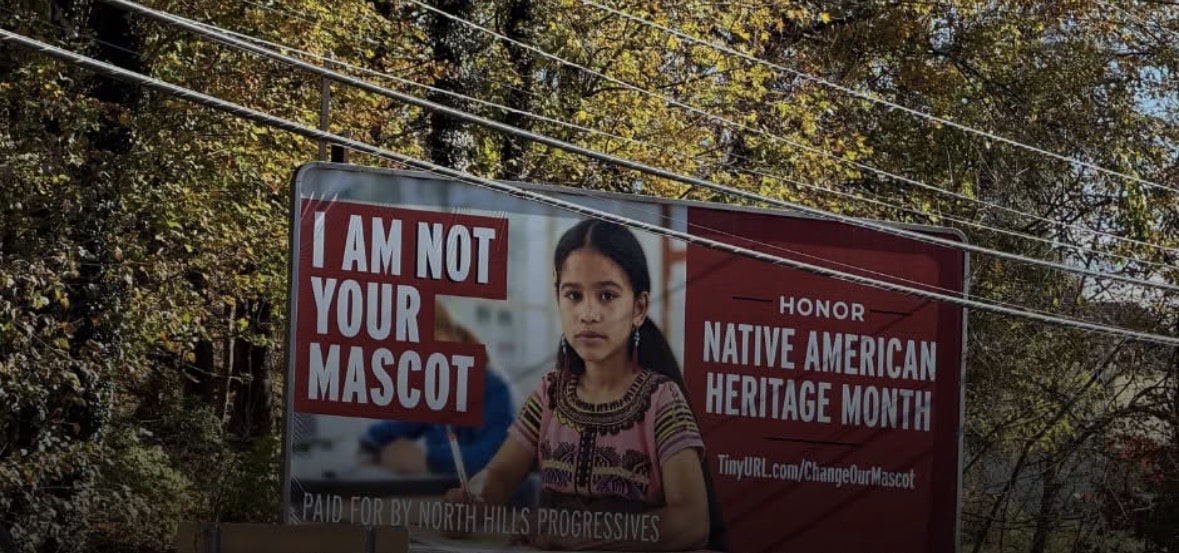
The organization recently paid for a billboard along Babcock Boulevard featuring a Native American girl and the message: “I AM NOT YOUR MASCOT.”
The campaign coincides with Native American Heritage Month.
But here’s something interesting. North Hills already addressed this issue in 2022.
Following community discussions, the school board voted 7-2 to discontinue its traditional Native American chief logo while keeping the Indians nickname.
That was the compromise.
The district agreed to eliminate the imagery that some considered offensive while preserving the athletic identity generations of students had embraced.
Now, four years later, the name itself is being challenged again.
And that’s where I start asking questions.
When Does It End?
If a school removes a controversial logo but keeps its nickname, is that enough?
Apparently not for everyone.
If North Hills changes its name tomorrow, will that actually improve the educational experience of its students?
Will it improve reading scores? Will it help struggling families? Will it create more opportunities for young people?
Those are legitimate questions.
I understand that schools have responsibilities beyond academics, including creating environments where students feel respected.
But I also believe we have to start asking whether every disagreement requires changing something that has existed for generations. At what point does protecting people’s feelings begin to erase the traditions that generations of communities grew up celebrating?
Because if the standard becomes that anything somebody finds offensive must disappear, where exactly do we draw the line?
I’m Looking at This Through the Eyes of a Former Athlete
I played high school basketball at Penn Hills.
We were the Penn Hills Indians. And when I put that uniform on, I wasn’t thinking about mocking Native American culture.
I was thinking about representing my school. My teammates. My coaches. My community. I was thinking about winning championships and making the people who supported us proud.
That nickname represented something much bigger to me than a word on a jersey.
It represented memories. Tradition. Identity. And a connection between generations of athletes.
I know North Hills athletes who probably feel the same way.
When people hear North Hills football, they think about the legendary teams, the championships, the rivalries, and the tradition built by coaches and players over decades.
They think about the great Jack McCurry era. They think about those Friday nights when North Hills was one of the most feared football programs in Western Pennsylvania.
That’s what the name represents to many people. Not hatred. Not discrimination.
Pride.
But I Also Understand the Other Side
Here’s where I think this conversation needs some maturity.
Native Americans are not all going to share the same opinion about mascots.
Some may view certain names as respectful acknowledgments of their heritage. Others see them as stereotypes that reduce real people and cultures to sports symbols.
Those objections deserve to be heard.
In fact, North Hills Progressives has cited statements from Native American advocates and research organizations arguing that Indigenous-themed mascots can reinforce harmful stereotypes. That is a serious argument, whether someone agrees with it or not.
But I also believe intent matters.
There is a difference between deliberately mocking a culture and a community believing it is honoring a tradition.
Now, good intentions don’t automatically erase harmful consequences. I understand that.
But shouldn’t those intentions at least be part of the discussion?
Shouldn’t we be able to recognize the difference between someone acting out of hatred and someone holding onto something that has been meaningful to their community for decades?
We Have Lost the Ability to Disagree Without Demanding Change
This is actually my biggest issue with society today.
Somewhere along the way, disagreement started becoming synonymous with disrespect.
If you don’t support changing a mascot, some people automatically assume you’re insensitive. If you question a social movement, some assume you’re against the people involved. If you defend a tradition, you’re sometimes accused of refusing to evolve.
That’s a dangerous way to approach conversations.
Two things can be true at once.
You can respect Native American history while also questioning whether every school nickname needs to be eliminated. You can acknowledge historical discrimination while believing a community’s traditions deserve consideration. And you can disagree with somebody without making that person your enemy.
We’ve become so focused on identifying what divides us that sometimes we forget how to have an actual conversation.
What About the Other WPIAL Schools?
North Hills isn’t the only Western Pennsylvania school associated with the Indians nickname.
Penn Hills. Peters Township. West Allegheny. All have used that identity.
And the North Hills situation raises a broader question.
If the nickname is unacceptable at one school, shouldn’t the same standard apply everywhere? And if the discussion eventually reaches every school, how much of Western Pennsylvania’s athletic identity could change?
I’m not suggesting that history should prevent progress. But history deserves consideration before decisions are made.
These names are connected to generations of athletes, alumni, families, and communities. That doesn’t automatically mean they should remain forever.
It does mean the conversation deserves more than accusations and emotional reactions.
Maybe We Need to Focus on What Actually Brings People Together
Here’s what I would love to see.
More conversations between school officials, Native American representatives, students, athletes, alumni, and community members.
Not people shouting at one another. Not social media arguments.
Actual conversations.
If a Native American community believes a particular logo or tradition is disrespectful, explain why. If alumni believe a nickname represents pride rather than prejudice, allow them to explain why.
Then let people evaluate the arguments. That’s how meaningful decisions should be made.
Not simply because one side is louder than the other.
My Final Thoughts
I believe society has become too sensitive in certain areas. I believe we’ve developed a habit of turning disagreements into moral battles.
And I believe we’re sometimes too quick to assume that something rooted in tradition must automatically be rooted in hatred.
But I also believe respecting people matters. The challenge is figuring out how to do both.
North Hills has used the Indians identity for generations, with roots extending back to West View High School in 1939. That history deserves acknowledgment.
The concerns raised by Native Americans deserve acknowledgment, too.
But here’s my question.
Are we becoming a society that knows how to correct genuine injustice, or are we becoming a society that believes removing anything controversial automatically represents progress?
Because those are two very different things.
And sometimes, in our rush to prove how sensitive we’ve become, I wonder whether we’re losing something equally important.
The ability to disagree, respect one another, and move forward without demanding that everything change.