
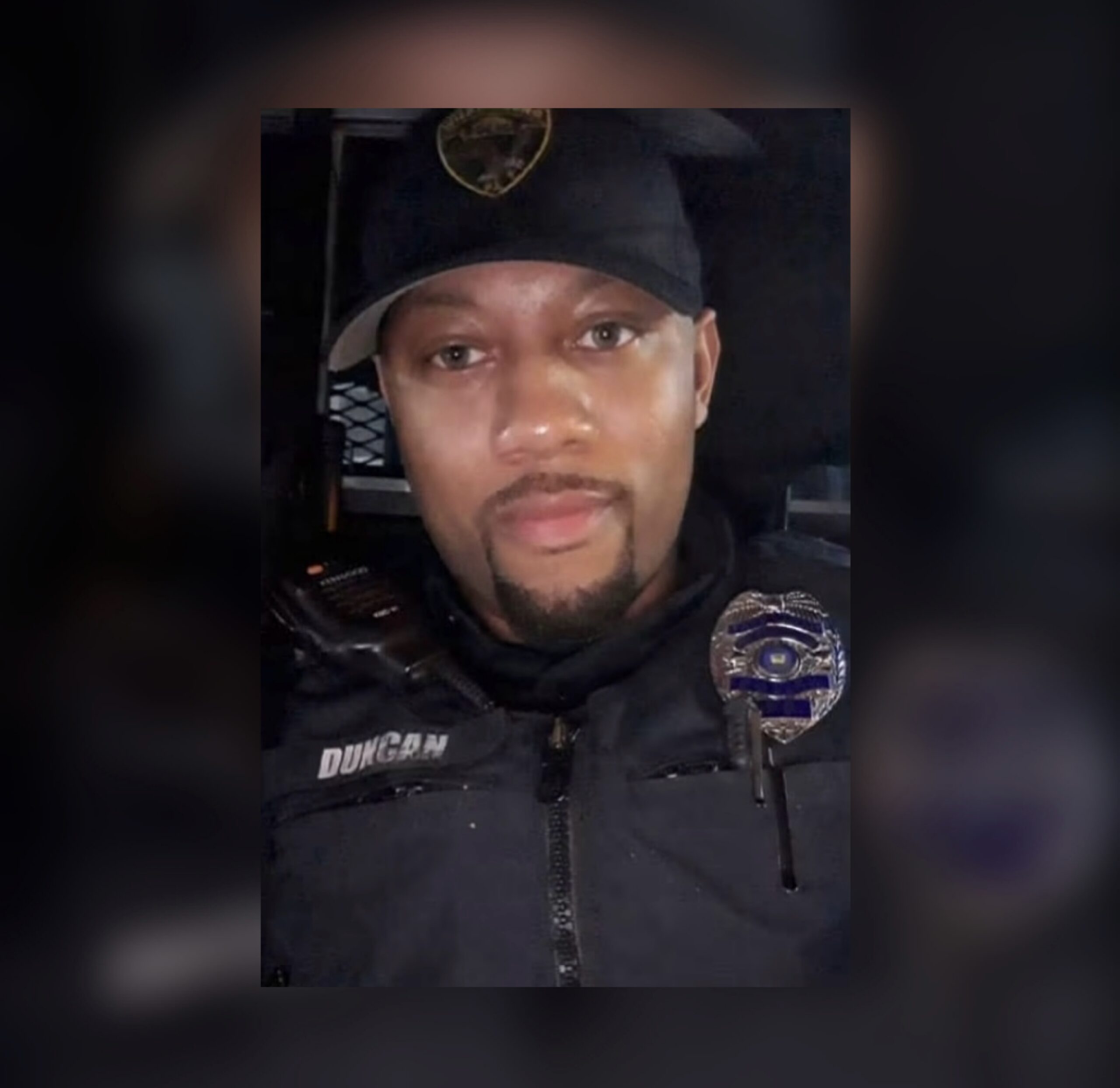
For Christopher Duncan, becoming Chief of Police in Wilkinsburg isn’t simply the next promotion in a law-enforcement career.
It’s personal.
It’s about family. It’s about representation. It’s about accountability. And perhaps most importantly, it’s about changing the relationship between police officers and the people they are sworn to serve.
In September, Wilkinsburg Borough Council officially appointed Duncan as Chief of Police after he had served as interim chief since May. Duncan has spent nearly 12 years with the Wilkinsburg Police Department, working his way through the ranks before receiving the opportunity to lead it.
But Duncan’s connection to law enforcement began long before he ever put on a uniform.
Growing up in East Liberty and spending significant time in Homewood with his grandmother, Duncan had an example of law enforcement within his own family. His grandfather, Earl Duncan, was one of the early African American officers to work Internal Affairs for the City of Pittsburgh.
As a child, Duncan remembers his grandfather taking him and his twin brother around in his detective vehicle, allowing them to sound the siren while sharing stories from his career.
Those childhood experiences planted the seed. Years later, Duncan finds himself sitting in the Chief’s chair.
But his journey also gave him a perspective on policing that isn’t always easy to explain.
As a Black police officer, Duncan says he has experienced criticism from both directions. He recalls being called a racial slur by a white person he arrested and, on the same day, being called an “Uncle Tom” and a sellout after arresting a Black person.
He says his career choice has even cost him friendships with people who viewed becoming a police officer as choosing a side.
Duncan sees it differently.
For him, policing should ultimately come down to doing what is right—regardless of the race of the officer or the person standing on the other side of the badge. That perspective will now help shape how he leads an entire department.
Duncan takes over at a time when conversations surrounding policing extend far beyond arrests and crime statistics. Police accountability, community trust, racial disparities and mental health have all become significant parts of the national discussion surrounding law enforcement.
For Duncan, those conversations aren’t abstract. Mental health, in particular, is deeply personal.
Duncan lost his son’s mother to suicide two years ago after she had been diagnosed with a mental disorder. He watched the emotional pain she experienced, and that loss has influenced how he views the role police can play when responding to people in crisis.
He wants Wilkinsburg officers to develop stronger relationships with hospitals and other agencies so people experiencing mental health crises can receive appropriate help rather than simply becoming another police call.
That priority is already visible publicly. Duncan has discussed expanding partnerships with other agencies to address behavioral-health calls, and the department has worked with the A-Team, which responds to behavioral-health and human-services needs connected to 911 calls.
His vision extends to the officers themselves.
Duncan has emphasized recruitment, retention and expanded training as priorities for the department. He has also spoken about wanting officers to receive training beyond minimum requirements, including opportunities in areas that interest them professionally.
But training alone won’t determine whether his tenure is successful. Trust will.
Duncan wants officers to know Wilkinsburg residents before an emergency happens—not simply arrive in their lives when someone calls 911.
That means community meetings, meet-and-greets, cookouts, concerts and ordinary conversations where the uniform isn’t standing between the officer and the resident.
It also means accountability.
Duncan says supporting police officers and holding them responsible when they fall short cannot be treated as opposing ideas. He believes officers have to be transparent, acknowledge mistakes and understand that their actions affect the credibility of the entire department.
And there is another part of Duncan’s appointment that he doesn’t overlook.
Representation.
For a young Black child in Wilkinsburg, seeing a Black man wearing the Chief’s uniform can provide an image of what is possible. Duncan understands that his position makes him more than the person overseeing a police department. Whether he asks for that responsibility or not, there will be children watching him. His hope is that they see possibilities rather than limitations.
Ultimately, Duncan says he doesn’t want his legacy to simply be measured by how long he held the title of Chief.
He wants people to remember a department that became more transparent. He wants residents to feel like officers became part of the community rather than people who merely policed it. And he hopes his leadership can inspire others to enter law enforcement and help change its culture from within.
When his career eventually ends, Duncan already knows what he would like people in Wilkinsburg to say about his time leading their police department: “Chief Duncan treated the community as home and the people in it as family.”
That may ultimately be the standard by which his tenure is measured.
DrewSchifino.com spoke with Wilkinsburg Police Chief Christopher Duncan about his journey into law enforcement, being a Black officer in America, police accountability, distrust between police and the Black community, mental health, representation and the legacy he hopes to leave behind.
Here is our conversation.
Q: First off, congratulations on being named Chief of Police in Wilkinsburg. What went through your mind when you found out you were getting the opportunity to lead the department?
Chief Duncan: Thank you, I appreciate that. I was ecstatic and so thankful to God for providing me with the platform to be able to continue the vision that our department has for strengthening our relationship with the community.
Q: Before we talk about becoming Chief, take us back to the beginning. Where are you originally from, and what originally made you want to get into law enforcement?
Chief Duncan: I’m originally from East Liberty, but I spent a lot of time in Homewood with my grandma growing up. My grandfather, Earl Duncan, was one of the first African American officers to work Internal Affairs for the City of Pittsburgh. I can remember as a kid, he would take me and my twin brother around in his detective vehicle and let us sound his siren while telling us some of his police stories. From that point, I knew this was what I wanted to do.
Q: What did your path through law enforcement look like from your first day wearing the badge to eventually becoming Chief?
Chief Duncan: My path from day one until now has had its challenges. There were times when I believed that no matter what I did for the greater cause, or the number of arrests I made, it would never change the outcome of the bigger picture. These days, I realize that each action on my part is meaningful, whether it’s an arrest that leads to a person getting deserved justice or taking the appropriate steps to ensure that someone receives help for an existing crisis they may be experiencing.
Q: As a Black man in law enforcement, have there been challenges or experiences throughout your career that you feel were unique because of your race?
Chief Duncan: Yes, absolutely. I can remember arresting a white individual for an offense and being referred to as a racial slur, and on that same day arresting a Black person and being called a sellout and an Uncle Tom. I have actually lost friendships in the past over my career choice because friends looked at what I do as oppressing Black people and siding with white officers. During those times, I felt compelled to explain that race has nothing to do with doing what’s right.
Q: There can sometimes be distrust between law enforcement and the Black community. As someone who understands both worlds, what do you think police departments and communities can do better to close that gap?
Chief Duncan: I believe that we as police officers need to be transparent with the community and always hold ourselves accountable when we mess up. I believe that when communities see that we are honoring that philosophy, they will be more trusting of us. On the same token, it’s my hope that the community will not hold all officers responsible if one officer from another area messes up, especially if both sides—the police and the community—have worked so hard to build that trust with one another.
Q: On the other side of that conversation, what do you think people who have never worked in law enforcement misunderstand most about being a police officer?
Chief Duncan: I think it’s hard to see an officer’s perspective without having done the job. I think there are people who believe that the everyday officer sets out to be, for lack of a better word, a hard-ass. Although there are some officers who are in this profession for the wrong reasons, the majority of us are here to truly help people. That help comes in many forms—from our community officers who are committed to strengthening relationships with the community, to officers dedicated to helping eradicate homelessness, to the constant follow-through we provide in getting people the help they need during a mental health crisis. It’s unfortunate that these stories often go underreported.
Q: Wilkinsburg is a predominantly Black community. What does it mean to you personally to be a Black man serving as Chief in that community?
Chief Duncan: It means so much to me. For me, it shows that our department realizes that real challenges involving diversity truly exist. And though a person of any race can certainly be qualified to run a police department, being able to relate to some of those cultural and diversity issues as a police chief is sometimes a necessity for the community.
Q: When young Black kids in Wilkinsburg see someone who looks like them wearing the Chief’s uniform, what do you hope they take from that?
Chief Duncan: When young Black children see me as Chief, my hope is that they will always know that race doesn’t define the limit of possibilities they have. Yes, at times it may pose challenges, but oftentimes the greatest people are those who overcame them.
Q: Police accountability is a major part of the national conversation surrounding law enforcement. As Chief, how do you balance supporting your officers while also holding officers accountable when they fall short of the standards you expect?
Chief Duncan: As Chief, I intend to make sure all of my officers are held accountable for their actions, not only because it’s the right thing to do, but also because each officer is a representation of me as Chief. This will also be reinforced through diversity training. A huge part of balancing this is maintaining the valued relationships that we have developed with one another. Because we are a smaller department, I feel we have a more intimate bond with each other, and I truly believe that my officers would not put me in a situation that compromises what we are trying to accomplish within the community.
Q: What kind of culture do you want to establish inside the Wilkinsburg Police Department under your leadership?
Chief Duncan: My goal is to foster a culture within the department that mirrors one our community can be proud of and be a part of. I want the community to see that we have a diverse group of officers who enjoy engaging with the community, whether that’s through public meetings, meet-and-greets or even functions like cookouts and concerts.
Q: What are some of the biggest public-safety challenges facing Wilkinsburg right now, and what would you like to see your department do differently or improve?
Chief Duncan: One of the biggest public-safety challenges we are experiencing within our community is mental health crises. My hope is that our officers can develop better relationships with hospitals to ensure that the proper help is being provided for people who are suffering. I’ve been open about this before. I lost my son’s mother to suicide two years ago after she was diagnosed with a mental disorder, and I watched her go through so much emotional pain. That’s something I never want to see anyone have to go through.
Q: How important is it for your officers to actually know the residents, business owners and young people they’re policing instead of only interacting with them when something goes wrong?
Chief Duncan: It’s very important for officers to know the community outside of just routine interactions. This shows that our commitment isn’t limited to when we’re called for a problem, but that we’re also here to really get to know and invest in our community. We can’t truly do that if we’re only being seen when there are issues.
Q: If you could sit down with a young Black man who has had negative experiences with police and doesn’t trust law enforcement, what would you want him to hear from you?
Chief Duncan: That’s a great question. I would want him to hear that he is valued. That he is so much more than the negativity he has experienced. I would want him to know that police, in general, are here to help. Although sometimes officers make terrible decisions, those decisions don’t represent the majority of people in the profession.
Q: Being Chief comes with criticism from every direction. What principles will guide you when you have to make a difficult or unpopular decision?
Chief Duncan: I couldn’t agree more with that statement. I was raised to always do what’s right, even when it goes against what may be the popular choice, because if I don’t have my integrity, I don’t have anything. This is something that I constantly try to instill in my son, even at age 8. It’s hard to get an 8-year-old to understand that concept. But I’m hoping that if I say it enough to him, it will eventually stick.
Q: Years from now, whenever your time as Wilkinsburg Police Chief is finished, what do you hope people say changed for the better because you were Chief?
Chief Duncan: Excellent question to end this with. My hope is that people will say that the way transparency is viewed between police and the community improved. I want people to say that I didn’t treat the community as just work or the people in it as just residents. I want them to say, “Chief Duncan treated the community as home and the people in it as family.” My biggest hope is that I can inspire people to get into this profession and change the culture of it. When people think of police, I want them to associate the profession with words like helper, mentor or even hero.