
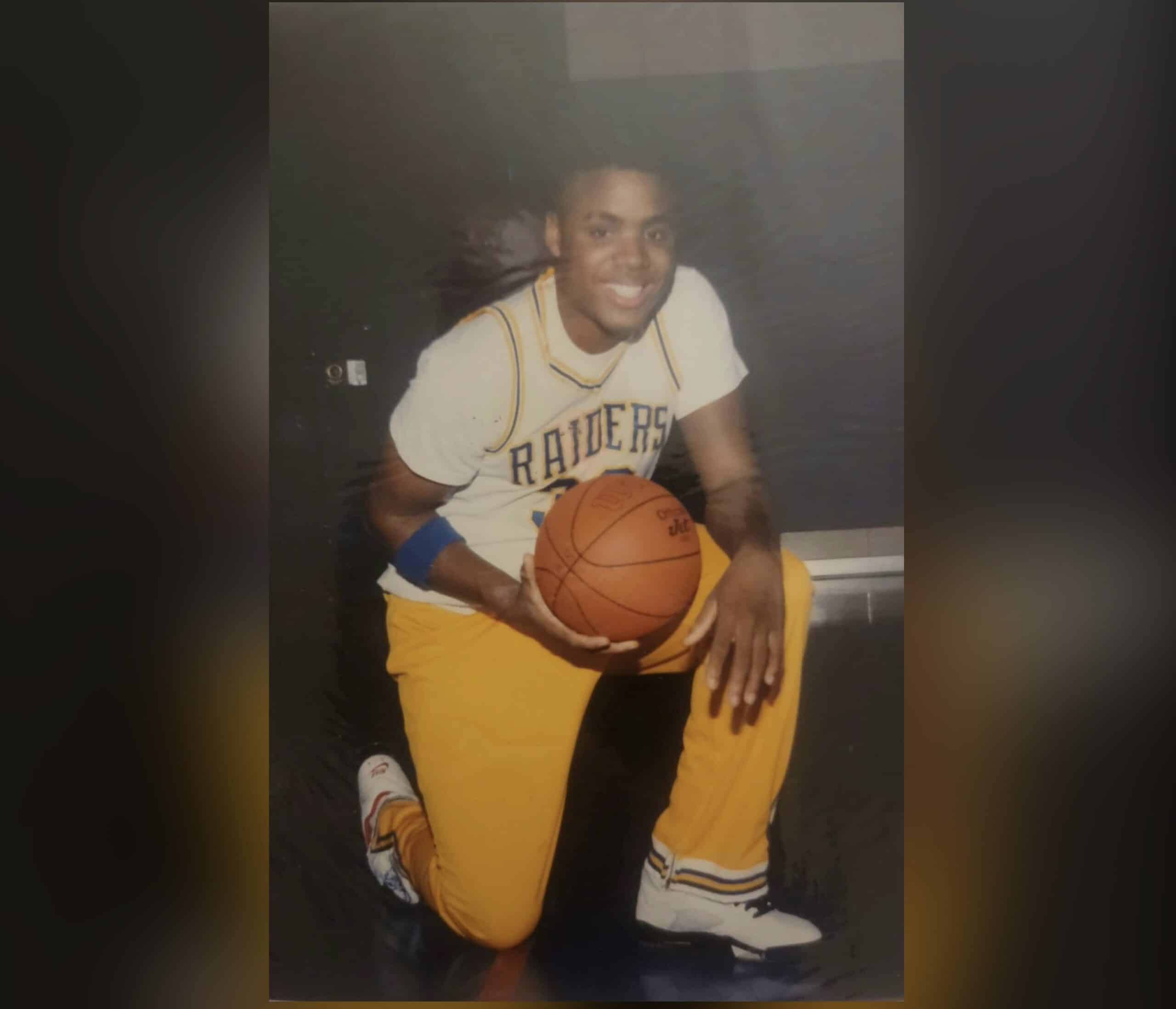
When people talk about the greatest basketball players in Pittsburgh City League history, certain schools usually dominate the conversation.
Schenley. Perry. Peabody. Allderdice.
But one thing I’ve learned over the years is that some outstanding players came from programs that don’t always receive the same recognition. And Carrick High School had one of those players in Keith Crosby.
During the 1989–90 basketball season, Crosby established himself as one of the premier scorers in Western Pennsylvania, averaging more than 28 points per game.
His performances earned him a spot on the prestigious 1990 Pittsburgh Post-Gazette Fabulous Five alongside Will Macon, Yancey Taylor, Norbert Valis, and Jermaine Morgan. That was no small accomplishment considering the basketball talent throughout Western Pennsylvania during that era.
Crosby wasn’t your traditional post player. He had the size to compete inside, the shooting ability to stretch defenses, and the ball-handling skills to create problems for opponents who underestimated his versatility.
And Carrick wasn’t simply a team with one outstanding scorer. The Raiders made a memorable run in the 1990 PIAA Class AAAA playoffs, defeating Penn Hills and Shaler before falling to Mt. Lebanon.
But Crosby’s basketball journey didn’t end when he graduated. He continued his career at Lock Haven University before eventually playing professionally, including time with the Washington Generals and Harlem Globetrotters. Basketball ultimately took him to 53 different countries.
That’s quite a journey for a kid who grew up playing basketball in Pittsburgh.
One of the reasons I created City League Chronicles was to revisit players and programs that helped make Pittsburgh basketball special, especially those whose accomplishments might be unfamiliar to younger generations.
Keith Crosby is exactly the type of player this series was created to recognize.
I recently had the opportunity to catch up with Crosby for an exclusive Q&A about his Carrick playing days, the legendary City League competition, his recruiting experience, and the opportunities basketball provided him around the world.
He also had some interesting things to say about today’s generation of basketball players.
Here’s my conversation with former Carrick standout Keith Crosby.
Q: Let’s take it back to 1990. You were one of the best scorers in Western Pennsylvania, averaging over 28 points per game at Carrick. When you look back at that season, what stands out the most about the player you were and the team you played on?
Keith Crosby: I was an inside-outside player, so I was difficult to guard. We had a good team, and everybody played their role and had no issues with it.
Q: You earned a spot on the prestigious 1990 Pittsburgh Post-Gazette Fabulous Five alongside Will Macon, Yancey Taylor, Norbert Valis, and Jermaine Morgan. What did that recognition mean to you, especially considering the amount of basketball talent in Western Pennsylvania at the time?
Keith Crosby: It was a great feeling being known as one of the best players in Western Pennsylvania.
Q: Carrick basketball doesn’t always receive the historical recognition that programs like Schenley, Peabody, Perry, and Allderdice receive. How good was Carrick basketball during your era, and what do you think people today should understand about those teams?
Keith Crosby: At the time, Carrick was silently feared. It was different for us as well because, unlike other schools back then, we had two rival neighborhoods on one team. So we had other obstacles to overcome before basketball.
Q: The City League was loaded with talented guards and scorers during the late 1980s and early 1990s. Who were some of the toughest players you competed against, and was there anybody who brought out an extra level of competitiveness in you?
Keith Crosby: Of course, you had to always bring your A-game and pack a lunch when facing Perry and Schenley. You had guys like Will Macon, Roosevelt Young, and Randy Young from Perry. Derrick Suber and Will Stevenson from Schenley. Ty Beck and Ray Threat from Brashear. Heath McCromon from Allderdice.
Q: In the 1990 PIAA Class AAAA tournament, Carrick defeated Penn Hills and Shaler before eventually falling to Mt. Lebanon. What do you remember about that postseason run, and how good do you believe that Carrick team really was?
Keith Crosby: We should have won the City championship that year, but due to some unfortunate circumstances, we came up short. Being underdogs going into the playoffs gave us a push. Penn Hills played a triangle-and-two on me, and my man Chris Sledge took over! As we got deeper into the playoffs, we ran into better coaches, not necessarily better teams.
Q: You were putting up big scoring numbers during an era without today’s emphasis on three-point shooting, advanced training, or social media exposure. What made you such an effective scorer, and what part of your offensive game gave defenders the most problems?
Keith Crosby: I always played with guys older than me, so in the O.Z. days, I always played up. I gave most defenders fits because I was a great three-point threat, and I could handle the ball very well for my size. So the assumption was that I was a post player. WRONG!
Q: When you look back at the basketball culture in Pittsburgh during your playing days, from packed gyms to neighborhood rivalries, what do you miss most about that era?
Keith Crosby: What I really miss is the O.Z. days. Every hood had different-colored shirts, so you knew who someone played for just by the color of their shirt. And no matter how much stuff we talked about one another, it was ALL LOVE!
Q: Basketball recruiting was completely different in 1990. There weren’t social media highlights, recruiting websites, or the exposure players have today. What was your recruiting experience like, and which colleges showed interest in you?
Keith Crosby: From going to Metro Index to Jim Valvano’s basketball camp, where I got MVP and started getting recruited by NC State, NCAA violations shut that down. I was being recruited by Pitt, Duquesne, Marquette, and Delaware, all Division I schools. I wasn’t educated on the recruiting experience. My big brother, Darin “Big Dex” Poindexter, was overseas, and my cousin, Shang Bibbens, was in the NBA. So I really had to do things on my own, and my grandparents were more about education than sports. I ended up going with a school that showed it was interested in me the most. Calling, checking on me, asking about family, and asking about school. Only one coach showed me he was interested in more than just basketball, and that was Dave Blank at Lock Haven University.
Q: Looking back on your basketball journey after Carrick, where did the game take you, and were there any opportunities or decisions you wish you could revisit?
Keith Crosby: Looking back, the only thing I would do differently is go Division I. I could have played at any of those schools that recruited me. I found that out during pro-am camps when I put up big numbers against major Division I players. My talents took me all over the world. It started with the Washington Generals, which turned into a contract and a stint with the Harlem Globetrotters. I also played in Venezuela, Chile, China, and Turkey. I’ve been to 53 different countries, and I was definitely blessed to do so.
Q: When you watch today’s high school basketball players, how do you think their skill level, mentality, and understanding of the game compare to the players from your generation?
Keith Crosby: This generation has nothing on our generation. The mentality is very different. The level of basketball IQ in players today has diminished. It’s either dribble a lot to show you have handles or shoot threes, and the further, the better. There can be a team full of skilled players, but they’ll lose because of a lack of understanding of the game.
Q: One reason I started DrewSchifino.com was to recognize great Western Pennsylvania athletes whose names aren’t mentioned enough today. Do you feel players from your era, particularly those who played in the City League, have been overlooked as the years have passed?
Keith Crosby: Absolutely! But when they began the City League Hall of Fame, that changed a lot. Players began to be recognized for their accomplishments. It’s like if you didn’t make it to the NBA or NFL, your accomplishments went unnoticed.
Q: Finally, Keith, when people mention the greatest basketball players to come through Carrick and the Pittsburgh City League, what do you want them to remember about Keith Crosby, both as a basketball player and as a person?
Keith Crosby: At Carrick, I am arguably the best player to play there. My best game statistically was 45 points and 28 rebounds against North Hills. In the City League, I was definitely a problem. You needed to pay attention to the scouting report on me. As a person, I’m a real cool, laid-back guy who got along with everyone.