
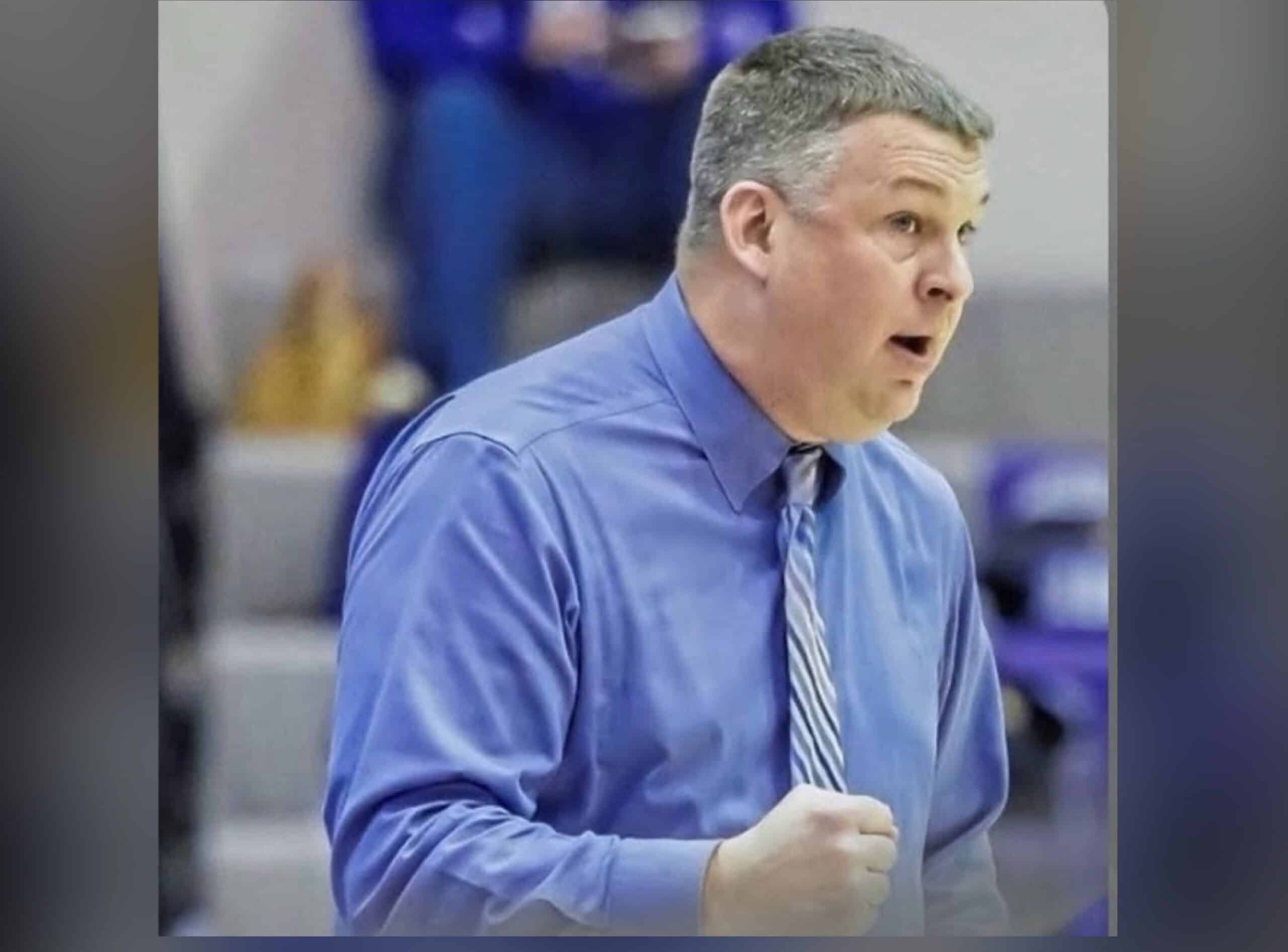
Winning a WPIAL basketball championship is difficult. Winning five puts you in some pretty exclusive company.
But winning championships at multiple schools, rebuilding struggling programs, and remaining successful for more than two decades? That’s what separates good coaches from the great ones.
Jeff Ackermann has built a coaching career that deserves recognition among the best in Western Pennsylvania basketball history.
His résumé includes five WPIAL championships, a PIAA state championship, more than 400 career victories, and successful coaching stops at Moon, Pine-Richland, and Baldwin.
Now he’s taking on another challenge at West Allegheny.
What makes Ackermann’s career interesting to me isn’t simply the number of championships he’s won. It’s his ability to establish a winning culture in different environments.
At Moon, he took a young group that went 14-10 in his first season and developed it into a 29-3 team that captured both WPIAL and PIAA championships in 2004. At Pine-Richland, he continued building championship-caliber teams while competing against some of the WPIAL’s best players and programs.
Then came Baldwin.
When Ackermann arrived, the Highlanders had won just one playoff game in the previous 35 years. He eventually helped transform the program into a championship contender, reaching a WPIAL title game and producing a 21-2 season.
Think about that for a second.
Different schools. Different players. Different expectations. Yet the same coach kept finding ways to win.
And now, at West Allegheny, Ackermann faces another difficult assignment in one of the WPIAL’s most competitive basketball sections.
I wanted to speak with Coach Ackermann about more than championships. I wanted to know which players gave him the most trouble, which games still stick with him, what he thinks about today’s transfer culture, and which coaches helped shape his career.
His answers offered some great insight into the mind of one of the WPIAL’s most accomplished basketball coaches.
And perhaps the most revealing part of our conversation came when I asked how he wanted to be remembered. His answer had very little to do with winning.
Here’s our exclusive 10-question Q&A.
Q: Coach, you’ve won five WPIAL championships and a state championship while building successful programs at multiple schools. When you look back at your career, which championship or team holds the most special place in your heart, and why?
Jeff Ackermann: My 2004 team will always be so special to me. They were my first championship team, but they were also part of the first team I ever coached. I started four sophomores at Moon during my first year in 2002. We went 14-10 that season, improved to 20-9 the following year, and then went 29-3 in 2004, winning both the WPIAL and PIAA championships. Those guys have always been a big part of my life outside of basketball. We’ve had a few reunions, I’ve attended some of their weddings, and we still stay in contact to this day. They were such a fun group of boys who are now grown men. I don’t want to name anyone because I wouldn’t want to leave anybody out. The best part is that some of those former players now live in West Allegheny, and they have kids coming up through the system.
Q: You’ve coached at Moon, Pine-Richland, and Baldwin, and now you’re taking over West Allegheny. What attracted you to this opportunity beyond being closer to home, and what kind of culture are you looking to establish?
Jeff Ackermann: One thing we always try to do is build relationships with our players. We establish a culture where everyone understands we’re going to spend a lot of time in the gym. We want everyone involved as much as possible. Our goal is to build a winning culture and mentality, and that starts during the offseason. Winning spring and summer league games is part of that process. Players begin learning their roles, understanding where they fit in, and getting comfortable with how we want to play.
Q: When you took over Baldwin, the program had won just one playoff game in 35 years. You eventually led the Highlanders to a WPIAL championship appearance and a 21-2 season. What was the biggest obstacle you had to overcome in changing the mentality of that program?
Jeff Ackermann: Baldwin was a big challenge because we came in during COVID, and we couldn’t get into the gym that year. Our first season was difficult, but we started getting things rolling in year two, and we continued improving each season. That’s always my primary goal whenever I take over a program. We want to get better every year. Baldwin was a special place for me. I had so much fun coaching there, and it was a tremendous experience.
Q: Your new section at West Allegheny includes New Castle, Chartiers Valley, Moon, Montour, Mars, and South Fayette. That’s an extremely competitive basketball environment. What will it take for West Allegheny to become a legitimate contender?
Jeff Ackermann: I think our section is the toughest section, top to bottom, in the entire WPIAL. We need to be ready to go from the beginning. We’re going to have a lot of young players involved this season, so getting those younger guys adjusted to varsity basketball is going to be a process. Once again, our goal is to continue improving throughout the season. With fall sports still going on, we haven’t had our entire team together in the gym yet, so we’re taking everything day by day.
Q: You’ve coached against some outstanding WPIAL players over the years. Who are two or three opposing players who gave you the biggest headaches when preparing for games, and what made them so difficult to stop?
Jeff Ackermann: I think the top two players I’ve coached against are easy choices. The first is DeJuan Blair from Schenley. He was a man among boys. He was so athletic and so strong. They beat us at the Palumbo Center in the state playoffs, and he was an absolute beast. The second is T.J. McConnell. With T.J., it wasn’t even about his offense. He was the best on-ball defender I’ve ever seen. I would scout him, and teams couldn’t even get the ball past half court because of the way he guarded. He was such a force defensively. My third player would be Ethan Morton from Butler. I was at Pine-Richland at the time, and we had so many battles with Butler. There were some very memorable games. Ethan was big, skilled, and gave us all kinds of problems. What we had going for us at Pine-Richland was our depth. We were extremely deep, and that depth usually worked in our favor.
Q: Looking back at your championship years at Moon and Pine-Richland, is there one game, coaching decision, or unforgettable moment that still stands out to you?
Jeff Ackermann: My time at Moon and Pine-Richland gave me some amazing experiences, both as a coach and as a person. We were fortunate to have so many great wins. One of my best victories came in 2004 when my Moon team beat Perry by one point at North Allegheny. We were down by double digits in the second half and had to come back to win. At the end, we needed one big defensive stop to secure the victory. That’s something we always tell our players. If you want to win a championship, there will come a moment when you need a big defensive stop in a big game. Another unforgettable game was our 2015 semifinal victory over No. 1 Latrobe while I was coaching Pine-Richland. That game was played at Plum High School and went into double overtime. What an atmosphere. What a high-level basketball game. I believe we committed only three turnovers the entire game, despite playing two overtimes. Latrobe had so many outstanding guards, and so did we. We dealt with major foul trouble but somehow found a way to overcome it. The best word to describe that game is survive. That’s exactly what we did. What a battle.
Q: You’ve coached high school basketball for more than two decades. With AAU, social media, transfers, and individual exposure becoming such major factors, what’s the biggest difference between coaching players today and coaching players 20 years ago?
Jeff Ackermann: Without a doubt, it’s how transient so many players have become. I’m used to being part of a program and developing players and teams over time to compete in high-level games. Now, it’s not uncommon for teams to bring in three or four transfers during the summer. It seems like what’s happened at the college level is now happening at the high school level. I don’t see things changing anytime soon. It’s unfortunate where high school sports are heading.
Q: You’ve had success at schools with different basketball traditions, talent levels, and expectations. What’s the foundation of your coaching philosophy, and what separates championship-level programs from average ones?
Jeff Ackermann: One thing I’m very proud of is that everywhere I’ve coached, our teams have rarely underachieved. We’ve been able to work hard and have a lot of success. I’ve been blessed to coach so many amazingly talented players who were willing to put in the work. We make it clear from the beginning that we’re going to spend a lot of time in the gym and focus on building a winning environment. Offensively, we emphasize sharing the basketball. I love having four players score in double figures. All of my best teams have been able to do that, and it makes you extremely difficult to defend. Defensively, we’re going to work hard to build a tough, hard-nosed, man-to-man defensive team. I think every season there are probably three, four, or maybe five teams capable of winning a WPIAL championship. But it’s not just about talent. It’s about the culture those programs have established and the type of players they have who can help put them over the top.
Q: When you look at WPIAL basketball history, who are some coaches you admired, learned from, or considered your toughest competition? And is there a coach you believe doesn’t receive enough recognition?
Jeff Ackermann: I wouldn’t have become a head boys basketball coach if Sam Kosanovich hadn’t brought me into South Park High School while I was still in college to coach the junior varsity team. I was about 21 years old, jumped right in, and fell in love with coaching. Another important person was my first athletic director at Moon, Bill Moore. He hired me and believed in me when I had never been a varsity head coach. I had only coached junior varsity basketball. Three years later, we were celebrating the first boys basketball WPIAL and PIAA championships in Moon history in 2004. Those two guys are on my Mount Rushmore when it comes to my coaching career. I’ve always been a big fan of Dan DeRose. He’s a great coach. I also have friends in coaching whom I’ve talked with over the years, including Danny Holzer, Gary Goga, and Joey David. I had a tremendous assistant at Baldwin for a few years, Joe Michalski, who is now the Seton LaSalle girls basketball coach. He’s a great guy and a great coach. I could go on and on because there are so many outstanding coaches. I also spent one year as an assistant under Tim McConnell, and he was tremendous. He was intense, but he could also joke around and have fun.
Q: Coach, you’ve accomplished more than most coaches could ever dream of, but you’re still embracing new challenges. When your coaching career eventually comes to an end, how do you want Jeff Ackermann to be remembered, not just for championships, but for the impact you’ve had on your players?
Jeff Ackermann: I have three kids who all attend South Fayette. More than anything, I would love to be remembered as a caring father to my children and my family. They mean everything to me. I’ve also been blessed to maintain so many relationships with former players over the years, and that means a lot. I really hope everyone who played for me looks back fondly on those days. You only get one high school career, and you should make the most of it. If any of my former players ever need anything, I’m always here for them. We might not win every game, and we might not win every big game, but we always gave our best effort. We don’t take shortcuts or look for the easy way out.
Final Thoughts
After reading Coach Ackermann’s answers, one thing stood out to me.
For a man who has won five WPIAL championships and a state title, some of his most meaningful memories have nothing to do with trophies.
They’re about relationships.
Former players inviting him to weddings. Teammates staying connected decades after graduation. Young men growing into adults and eventually raising families of their own. That’s something people sometimes overlook when evaluating great coaches.
Championships are important. Winning matters. But the impact a coach has on the lives of young people can last much longer than a basketball season.
I also found his comments about today’s transfer culture interesting. Here’s a coach who built much of his success by developing players over several years, and he’s now navigating a high school basketball environment that looks very different from the one he entered more than two decades ago.
His next chapter at West Allegheny won’t be easy. He’s entering a brutally competitive section with a young team and high expectations.
But if his previous coaching stops have taught us anything, it’s that Jeff Ackermann knows how to build a basketball program.
And something tells me he’s not finished adding to his legacy.
I want to personally thank Coach Jeff Ackermann for taking the time to participate in this Q&A and share his experiences with the readers of DrewSchifino.com.