
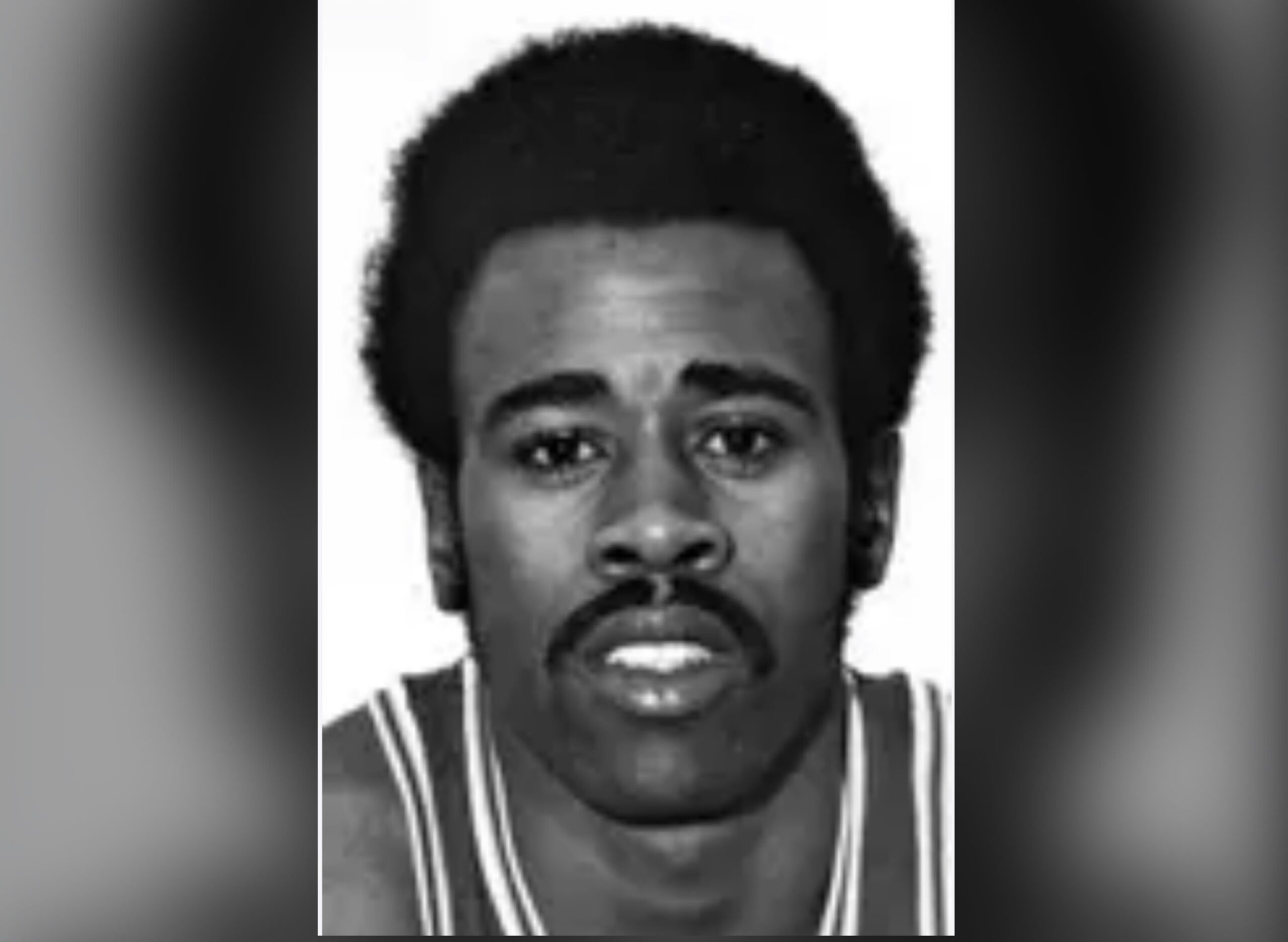
When I first got to West Virginia University, I did what a lot of competitive basketball players do.
I started looking at the records.
Who scored the most? Who had the big games? Who were the great players who came through WVU before me?
One name immediately caught my attention.
Wil Robinson.
I looked at his scoring numbers and thought: I gotta average those numbers.
That’s just how I was wired.
I wasn’t looking at those records just to admire them. I wanted something to chase.
But the more I learned about Robinson, the more interesting his story became to me.
This wasn’t somebody from New York, Philadelphia or one of the places everybody automatically associates with producing basketball players.
He was from Uniontown. He played at Laurel Highlands. He was a Western Pennsylvania hooper.
And that always meant something to me because, historically, you haven’t seen a ton of Western Pennsylvania basketball players go to WVU and become big-time scorers.
Wil Robinson did. And more than 30 years later, I did too.
But when it came to putting the ball in the basket, Robinson set a ridiculous standard.
20.0. Then 25.0. Then 29.4.
Look at Wil Robinson’s three varsity seasons at West Virginia:
1969-70: 20.0 points per game.
1970-71: 25.0 points per game.
1971-72: 29.4 points per game.
And remember something very important: There was no 3-point line.
Robinson scored 1,850 points in only 75 varsity games at WVU. His career average was 24.7 points per game.
That’s not somebody who had one hot season.
That’s a scorer. A walking bucket. Every year his scoring average went up. Almost 30.
By his senior year, everybody knew who the scorer was and he still averaged 29.4.
That’s impressive in any era.
He Broke Jerry West’s Record
This is where you really understand what Wil Robinson accomplished.
We’re talking about West Virginia University. You can’t discuss WVU basketball history without Jerry West.
West is not simply the greatest player in school history. He’s one of the greatest basketball players ever.
Jerry West had averaged 29.3 points per game during the 1959-60 season.
Robinson came along in 1971-72 and averaged 29.4. He scored 706 points in 24 games and broke West’s WVU single-season scoring-average record.
More than five decades later, Robinson’s 29.4 remains the school record.
Think about how crazy that is.
All the great scorers who have come through Morgantown since 1972, and nobody has averaged more.
When your name sits above Jerry West in a scoring category at West Virginia, you could put the article down right there.
You could score the basketball.
Before Morgantown, Western Pennsylvania Already Knew
Robinson didn’t suddenly become a scorer when he got to WVU.
Western Pennsylvania had already seen it.
At Laurel Highlands, he was a high school All-American who averaged around 30 points per game and helped lead the Mustangs to the 1968 Pennsylvania state championship.
So by the time Robinson crossed the state line and went to Morgantown, he already had a reputation. WVU’s own history describes him as one of the most sought-after high school players in the country.
Even as a freshman, back when freshmen weren’t eligible to play varsity basketball, Robinson averaged 21.6 points per game for WVU’s freshman team.
Then they finally let him loose on the varsity.
He averaged 20 immediately.
That’s What Caught My Attention When I Got There
Years later, here I come from Penn Hills. Another Western Pennsylvania kid going to West Virginia.
When I saw Robinson’s numbers, I didn’t look at them like some old statistics buried in a media guide.
I looked at them as a player.
20.0. Okay.
25.0. Okay.
29.4. Now you’ve got my attention.
I wanted to average those numbers. That’s the competitive side of you.
You see what somebody before you accomplished and you want to see how close you can get.
I didn’t get to 29.
But during the 2002-03 season, I averaged 20.1 points per game for West Virginia. I scored 582 points, had 15 games of at least 20 points and finished fifth in the Big East in scoring. At the time, I became only the second WVU player in the 3-point era to average at least 20 points per game.
Greg Jones was the other.
But there was always something cool to me about the Western Pennsylvania connection with Robinson.
Laurel Highlands to WVU. Penn Hills to WVU.
Two different generations of Western Pennsylvania basketball. Two guys who went to Morgantown and averaged 20.
He did it three times.
Robinson Was More Than Just Numbers
Sometimes people see huge scoring averages from another era and dismiss them without understanding the player.
Robinson wasn’t just somebody taking a bunch of shots on a bad team.
He became a first-team All-American in 1972. He was a two-year WVU captain. He once dropped 45 points on Penn State at the Coliseum. By the end of his career, he owned six of WVU’s seven highest individual scoring performances in the Coliseum.
The Houston Rockets selected him in the fourth round of the 1972 NBA Draft, and the Pittsburgh Condors also selected him in the ABA Draft.
He eventually played professionally in the ABA.
This was a legitimate player. WVU eventually put him in its Sports Hall of Fame.
He earned every bit of that recognition.
And He Was Only 6-Foot-1
That’s another part I appreciate.
Robinson wasn’t some 6-foot-8 mismatch overwhelming smaller guards.
He was listed around 6-foot-1. He had to know how to score.
You don’t average nearly 30 points per game at the Division I level at that size without having something special offensively.
WVU coach Sonny Moran once described Robinson as the complete offensive basketball player.
His senior year he shot 45.8 percent from the field and 83.8 percent from the free-throw line while taking more than 24 shots per game.
Again: No 3-point line.
For somebody who played the game and understands how difficult scoring becomes when the defense knows you’re the guy they’re trying to stop, that’s what jumps out at me.
Imagine Wil Robinson With a 3-Point Line
I’m always careful comparing eras because basketball changes.
Different rules. Different styles. Different pace. Different defenses. Different athletes.
So I’m not going to take Robinson’s numbers and pretend I know exactly what he would average today.
But I will say this: A guard who could score from distance averaging 29.4 without a 3-point line makes you wonder.
How many of those long jumpers become threes today? How much more space does he have to operate with modern spacing? What does a natural scorer like that do in today’s game?
We’ll never know.
But scorers usually figure out how to score. And Wil Robinson definitely knew how to do that.
Western Pennsylvania Basketball History Runs Deeper Than People Think
Western Pennsylvania will always be known as football country.
That’s fair.
Look at the quarterbacks, defensive backs, linemen and NFL legends this area has produced.
But don’t get it twisted. We have hoopers too.
And Wil Robinson belongs in that conversation.
Before a lot of people watching basketball today were born, a kid from Uniontown went to West Virginia and became one of the greatest scorers in the history of the program.
He averaged 20 as a sophomore. 25 as a junior. 29.4 as a senior. He became an All-American. He broke Jerry West’s scoring-average record.
And more than 50 years later, nobody has broken his.
Give Wil Robinson His Flowers
When I got to West Virginia, I saw those numbers and they gave me something to chase.
That’s one of the beautiful things about records.
The person who set them might never know who’s looking at them years later. Robinson played his final game at WVU decades before I put on that uniform.
But when I got there, his numbers were still talking.
They told me what somebody from Western Pennsylvania had already done in that uniform. And as a young player from Penn Hills who believed I could score with anybody, naturally I thought:
I’m coming for those numbers.
I eventually got my own 20-point season at WVU.
But 29.4?
Wil Robinson can keep that one.
Because more than 50 years later, everybody else is still chasing it too. Wil Robinson was a walking bucket.
And Western Pennsylvania basketball history should never forget him.