
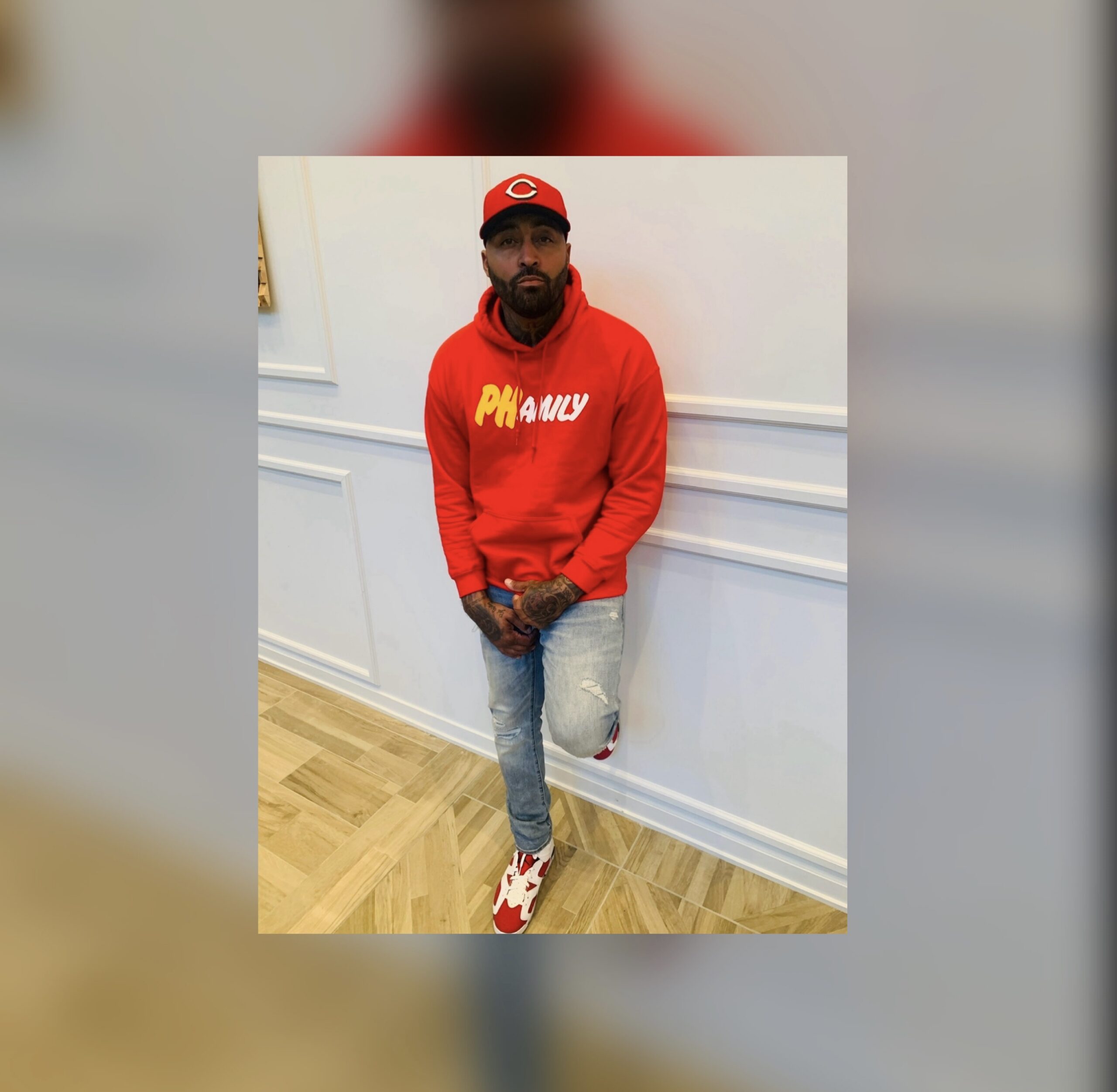
At 45, I’m no longer worried about controlling people’s perception of me. I’m concerned about making sure my children know the truth about their father.
Today, I turn 45 years old. Birthdays hit differently when you get older.
When you’re young, a birthday is about celebrating. It’s about where you’re going, what you’re doing that night, what you’re getting and who you’re spending it with.
At 45, I find myself thinking much more about where I’ve been.
I think about basketball. I think about Penn Hills. I think about West Virginia. I think about Europe. I think about coaching. I think about the mistakes I made, the decisions I would make differently, the decisions I would make exactly the same way and the things I didn’t understand about life when I was 20, 25 or even 35 years old.
Most importantly, I think about my children. That’s probably the biggest difference.
When you’re young, you’re living your life. When you become a father and your children start getting older, you begin thinking about the life you’re leaving behind.
One day my children are going to search my name. They’re going to read old newspaper articles.
They’re going to find stories from my basketball career. They’re going to find accomplishments. They’re going to find statistics. And, yes, they’re going to find controversy.
That’s the Internet. Nothing disappears.
That’s one of the reasons I wrote a book about my life. Long after I’m gone, that book will still exist. My words will still exist. My children won’t have to depend on somebody else’s interpretation of who their father was. They can hear it from me.
And if there is one thing I’ve learned over these 45 years, it’s this: Perception isn’t always reality.
I Can Finally Look at the Whole Picture
I’ve been going through a transformation in my life. It’s difficult to explain unless you’ve experienced it yourself.
My priorities are different. My perspective is different. The things that used to bother me don’t have the same power over me. Things I couldn’t see 20 years ago are obvious to me now.
And sometimes I laugh because I think: Man, if I had this mindset when I was playing basketball, how different could my career have been?
I’ll never know.
Maybe things would have gone differently. Maybe I would have handled certain situations differently. Maybe I would’ve understood when to speak and when to be quiet. Maybe I would’ve understood that every battle doesn’t need to be fought. Maybe I would’ve realized earlier that protecting your peace can sometimes be more important than proving your point.
But I’m also not going to disrespect the young Drew Schifino.
That young man accomplished a lot. That young man had confidence. That young man was fearless. That young man walked into gyms believing nobody in the building could stop him.
Sometimes that confidence probably crossed the line. Sometimes that chip on my shoulder became too heavy. Sometimes I reacted instead of thinking.
I can admit all of that at 45.
Growth isn’t pretending you never made mistakes. Growth is being able to look directly at them without running from them.
But growth also means refusing to allow your mistakes, or somebody else’s perception of those mistakes, to erase everything you accomplished.
Both things can be true.
I could have handled some situations better. And I still had one hell of a basketball career.
I Carried Pittsburgh With Me
People probably don’t understand how much being from Pittsburgh meant to me as a basketball player.
Pittsburgh wasn’t respected nationally as a basketball city. We were a football town. Western Pennsylvania produced football players. That’s what everybody knew.
So when I traveled to major AAU tournaments and stepped on the floor against highly recruited players from New York, Philadelphia, Baltimore, Chicago and everywhere else, I felt like I had something to prove. I wasn’t just playing for Drew Schifino.
I had the 412 on my back.
Every bucket meant something to me. Every big game meant something. I wanted people to understand that Pittsburgh had basketball players too. That mentality helped make me the player I became.
But there was always an irony to it.
I spent so much time trying to make people outside Pittsburgh respect Pittsburgh basketball while feeling, at times, that Pittsburgh itself never completely embraced me.
That bothered the younger me.
I’m able to talk about it differently today. I don’t need everybody to agree with my perception of how I was covered or treated. Other people may remember things differently.
That’s exactly the point.
Two people can experience the same situation and walk away with completely different perspectives.
I know what it felt like from my side. I felt like my controversy traveled faster than my accomplishments. I felt like people were quicker to discuss what they didn’t like about me than what I was doing on a basketball court.
And I wasn’t perfect in that relationship either.
I gave people things to talk about. That’s accountability.
But accountability doesn’t mean accepting a version of your life that you don’t believe is accurate.
The Numbers Can’t Have an Opinion
That’s why I’ve learned to appreciate numbers.
Numbers don’t care whether you liked me. They don’t care whether you thought I was cocky. They don’t care whether you liked an interview I gave. They don’t care about rumors. They don’t care about personalities. They just sit there.
2,318 career points at Penn Hills. When I graduated in 2000, that total ranked sixth in WPIAL history.
147 points in four WPIAL playoff games. That became the WPIAL playoff scoring record.
I was a two-time first-team All-State selection. A two-time Pittsburgh Post-Gazette Fab 5 selection. I was one of the top recruits in the country. And most importantly to me, we won a WPIAL championship at Penn Hills.
That’s history. Nobody can rewrite it.
West Virginia: Two Different Basketball Visions
West Virginia is probably the chapter of my basketball career people have discussed more than any other. Twenty-something years later, I can look at it with a completely different perspective.
John Beilein was the best basketball coach I ever played for. I can say that today without hesitation.
I also believe we saw basketball differently. Both can be true.
Coach Beilein didn’t recruit me. I wasn’t necessarily his type of player, and if we’re being completely truthful, his system wasn’t naturally designed for the way I had learned to play basketball.
That doesn’t make him wrong. It doesn’t make me wrong. It makes us different.
Coach Beilein believed heavily in structure, spacing, execution and creating opportunities through the offense.
I was a scorer. I had spent my entire basketball life learning how to make something happen when nothing appeared to be there.
Some scorers see things differently. You see an opening before it exists. You attack. You improvise. You turn a broken possession into two points.
Defensively, Coach Beilein believed strongly in team concepts and help defense. I understood the philosophy.
But one of my natural gifts was playing passing lanes. I could anticipate where the basketball was going. That wasn’t something somebody taught me.
It was instinct.
I still hold West Virginia’s single-game record with 11 steals.
So naturally there were moments when I felt like structure was taking away some of the instincts that had helped make me successful.
Looking back now, I understand both sides much better.
A coach has to coach his system. A player wants to use his gifts. Sometimes those things fit perfectly. Sometimes they don’t.
That’s one reason I understand why today’s athletes use the transfer portal.
Sometimes nobody has to be the villain. Sometimes a player and a coach simply aren’t the right basketball fit. Going separate ways doesn’t always have to mean somebody failed.
What Happened at WVU Doesn’t Define Me
My time at West Virginia eventually ended because of a coaching decision.
I disagreed with it. I accepted it. And life continued.
I wasn’t arrested. I wasn’t charged with a crime. There wasn’t some criminal allegation behind my departure. It was basketball. It was a coach making a decision about his program. That’s his right as a head coach.
And more than two decades later, I don’t carry hatred toward Coach Beilein.
Quite the opposite. I respect him. The older I’ve gotten, the more I’ve appreciated how good he was.
Before my WVU career ended, I had already shown what I could do at that level.
During the 2002-03 season, I averaged 20.1 points per game, earned third-team All-Big East honors and became only the second WVU player of the three-point era at that time to average at least 20 points.
I was the team’s MVP. I scored 33 against Duquesne. I scored 32 against Rutgers. I scored 31 at Villanova. I reached double figures every game that season.
Those things happened.
So did the ending. My life includes both.
I don’t need to erase one to acknowledge the other.
Europe Gave Me Something Bigger Than Basketball
My basketball story didn’t end in Morgantown. God had a much bigger world waiting for me.
Basketball took me overseas. Poland. Portugal. Switzerland. Austria. The Czech Republic. Germany. Holland.
Think about that.
A kid who came through Penn Hills got an opportunity to travel the world because he could put a basketball through a hoop.
I got paid to do something I loved. I experienced different cultures. I met people I never would’ve met. I saw places I might never have seen otherwise.
When you’re living it, sometimes you’re so focused on the next game, the next contract and the next season that you don’t fully appreciate how extraordinary the experience is.
At 45, I appreciate it. I’m grateful.
There are millions of kids who pick up a basketball dreaming about playing professionally. I got to live that dream. Maybe it didn’t happen exactly the way teenage Drew pictured it.
Life rarely does.
But it happened. And I thank God for that.
Coaching Taught Me What Basketball Was Really About
Later, basketball gave me another identity.
Coach.
But even that word doesn’t completely describe what I wanted to be.
When I coached high school basketball, I never looked at myself as simply a basketball coach. I looked at myself as a mentor who happened to coach basketball.
That’s an important distinction.
Most high school basketball players aren’t going to play Division I basketball. Most aren’t going to play professionally. Eventually the ball stops bouncing for everybody.
What happens then?
That’s why I cared about my players beyond the scoreboard. I wanted them to know somebody believed in them. I wanted to teach them things basketball had taught me. Accountability. Confidence. Resilience. Loyalty. Work ethic. How to respond when life doesn’t go your way.
My ending at Steel Valley became another controversial chapter. I made a decision during the playoffs that some people agreed with and others strongly disagreed with.
Looking back, there are parts of that situation I would handle differently. I take accountability for that.
But the reason behind my decision hasn’t changed. I believed I was standing up for one of my players. If protecting a kid I believed needed somebody in his corner made things more difficult for me, I could live with that.
People can debate my decision. That’s fair.
What means more to me today is knowing how my players felt about me. They knew I cared about them.
When I reflect on coaching, that’s what makes me smile. Not wins. Not losses. Not titles.
Relationships.
Penn Hills Is the One That Hits Differently
Of everything I reflect on at 45, Penn Hills might be the most complicated.
That’s home. That’s where people learned my name. That’s where so much of my basketball identity was created. And that’s why I have never completely understood why my accomplishments aren’t more visible there.
Through my work, I’ve visited gymnasiums all across the WPIAL. I’ve seen schools celebrate their history. They display their 1,000-point scorers. They recognize Big 33 football selections. They honor championship teams. They hang pictures. They display basketballs. They make sure the next generation understands who came before them.
I believe Penn Hills should do more of that—not simply for me, but for everybody.
Penn Hills has an incredible athletic history. Olympians. NFL players. Division I athletes. State champions. WPIAL champions. Generations of great athletes.
That history deserves to live somewhere besides people’s memories.
And yes, I believe my basketball career deserves to be part of that history. That’s not arrogance. At 45, I’m comfortable enough with myself to say that.
If somebody walked into the Penn Hills gym without knowing anything about me, what inside that gym would tell them what happened there 26 years ago?
Would they know a Penn Hills player scored 2,318 career points? Would they know he scored 147 points a WPIAL record during a four-game WPIAL playoff run? Would they know about the All-State selections? Would they know about the Fab 5 selections? Would they know that player went from Penn Hills to averaging more than 20 points per game at West Virginia and eventually became a professional basketball player?
That isn’t about feeding somebody’s ego. That’s preserving history.
Our 2000 championship team recently reached its 25th anniversary. I would have loved seeing that entire team recognized.
Those moments matter.
One day the people who remember those games firsthand won’t be here. What will remain?
That’s why history has to be preserved intentionally.
Sometimes Flowers Matter More as You Get Older
For most of my life, I told myself recognition didn’t matter. Just keep moving. Keep working. Keep proving people wrong.
But transformation makes you revisit things. You start asking questions you didn’t have time to ask while you were running.
I look at my basketball resume and wonder how I haven’t been inducted into some of the major basketball halls of fame in Western Pennsylvania.
I believe my accomplishments warrant that consideration. That’s not me saying somebody else doesn’t deserve an honor. That’s not bitterness. It’s simply me looking at what I accomplished and being willing to say: I believe that career deserves its flowers.
When I was younger, I probably would’ve said that angrily. At 45, I can say it peacefully.
There’s a difference.
Recognition doesn’t determine my worth. A plaque doesn’t determine whether I could play. A Hall of Fame doesn’t create the 2,318 points. It doesn’t create the WPIAL championship. It doesn’t create the playoff record. It doesn’t create a 20-point-per-game Division I season. It doesn’t create a professional career overseas.
Those things already happened.
Recognition simply tells future generations that they mattered.
Now I’m Part of the Media
Life has an interesting sense of humor.
Today, I’m part of the media.
I write. I interview people. I tell stories. I run my own platform.
The same kid who sometimes believed the media misunderstood him now has a platform that allows him to tell other people’s stories.
Maybe that’s one reason I’m so passionate about giving people their flowers. I know what it feels like to believe the complete version of your story isn’t being told.
Being on this side has also taught me something important: Stories are complicated. People are complicated. A headline can be factually accurate and still not tell you everything about a human being. One moment can be real without representing an entire life.
That’s something I wish I understood when I was younger.
It’s something I understand very clearly now.
Accountability Is Part of My Transformation
I don’t want this article to sound like 45-year-old Drew blaming everybody else. That would mean I haven’t grown at all.
I caused some of my own problems.
There were moments when I should have handled things differently. There were times when my pride was too strong. There were times when the chip on my shoulder controlled me instead of motivating me. There were battles that weren’t worth fighting. There were things I said or did that gave people ammunition to form certain opinions of me.
That’s on me.
But accountability has to be honest in both directions.
Taking responsibility for my mistakes doesn’t require me to accept things about myself that aren’t true. My controversial moments were generally situations where people could debate whether they agreed with my choices.
People are entitled to their opinions.
Agree with me. Disagree with me. That’s life.
But I know who I am.
And my children deserve to know who I am beyond somebody else’s perception.
This Is Why I Wrote My Book
One day I’m not going to be here. None of us are.
That’s not something I say sadly. It’s reality.
What matters is what remains.
My children will have pictures. They’ll have videos. They’ll have stories from people who knew me. They’ll have newspaper articles. They’ll have my website.
And they’ll have my book. They’ll be able to hear their father’s voice through those pages. They’ll know that their dad wasn’t perfect.
I don’t want them believing I was. Perfect people don’t exist.
I want them to know I made mistakes and learned from them. I want them to know I stood on what I believed. I want them to know basketball changed my life. I want them to know Penn Hills meant something to me. I want them to know Pittsburgh meant something to me. I want them to know I carried that 412 with pride everywhere basketball took me. I want them to know that when I coached kids, I cared about those kids as human beings. I want them to know their father traveled the world doing something he loved.
I want them to know I fell down. I got back up. I evolved.
And eventually I learned that peace feels better than constantly trying to prove people wrong.
What I Would Tell the Younger Drew
If I could sit across from the 18-year-old version of myself today, I wouldn’t tell him to stop being confident.
I’d tell him to keep that confidence. Keep that fire. Keep that belief that nobody can guard you. Keep carrying Pittsburgh on your back. Keep walking into gyms like you belong there.
But I’d tell him something else.
You don’t have to fight every battle. Everybody who misunderstands you doesn’t require a response. Everybody who doesn’t give you credit doesn’t require revenge.
Sometimes time will tell your story better than you ever could. Listen more. Think before reacting. Understand that coaches see the game differently. Understand that being right in your mind doesn’t always mean you’ve handled a situation correctly. Understand that basketball is something you do. It isn’t everything you are.
Most importantly, I’d tell him: One day you’re going to care much less about what strangers think and much more about what your children think.
I wish I understood that earlier.
But maybe wisdom wouldn’t be wisdom if we were born with it. Sometimes you have to live long enough to earn it.
45
So today I’m 45.
I’m not angry.
I’m thankful. Thankful I’m alive. Thankful for my children. Thankful for another birthday. Thankful for basketball. Thankful for Penn Hills, even with the complicated feelings I have about how my history has been recognized. Thankful for West Virginia, including the difficult ending, because every part of that experience helped shape me. Thankful for Coach Beilein and what I learned playing for him. Thankful for every country basketball allowed me to see.
Thankful for every teammate. Every coach. Every player I coached. Every kid I mentored. Every person who supported me. Even some of the adversity deserves gratitude because adversity forced me to grow.
Would I change some things? Absolutely.
Do I have regrets? Of course.
Anybody who reaches 45 and says they wouldn’t change a single decision probably hasn’t reflected deeply enough.
But would I erase my journey? Never.
Because every version of Drew Schifino had to exist for this version to be here. The kid from Penn Hills. The scorer. The highly recruited player. The Mountaineer. The professional. The coach. The controversial young man. The father. The author. The journalist. The mentor.
The man who finally learned that peace doesn’t come from convincing everybody else that you’re a good person.
It comes from knowing who you are.
At 45, I know who I am. My children will know too.
That’s why I wrote my story. That’s why I created my platform. That’s why I continue documenting the history I believe deserves to be remembered.
And that’s why I’m finally comfortable saying that I deserve my flowers without needing those flowers to validate me.
Give them to me. Don’t give them to me.
Put my name on a wall. Don’t put it there.
Vote me into a Hall of Fame. Don’t vote me in.
None of it changes what happened.
2,318 points happened. 147 points in four playoff games happened. A WPIAL championship happened. A 20-point-per-game season at West Virginia happened. Playing professional basketball around the world happened. Mentoring young men happened.
And now the transformation is happening.
That might end up being the accomplishment I’m proudest of.
Because basketball gave me a name. Life gave me perspective. Fatherhood gave me purpose.
And God gave me another year to keep becoming the man I’m supposed to be. Happy 45th birthday to me.
I’m still here. I’m still growing. I’m still writing my story.
And this time, I’m holding the pen.