
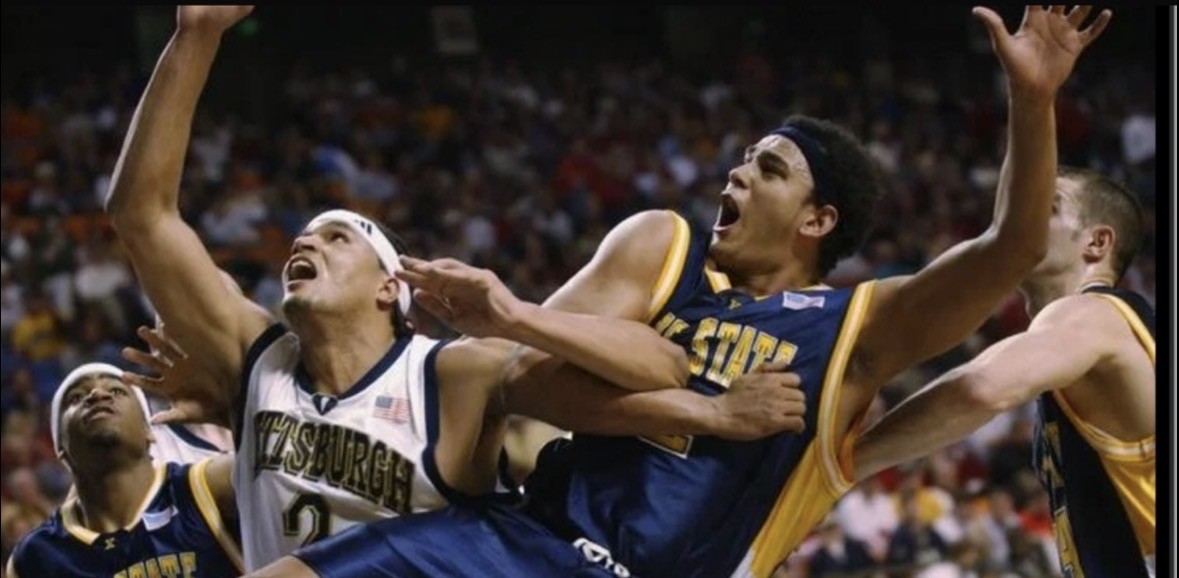
When people talk about great Pittsburgh basketball players, certain names always come up. But one player whose story deserves to be remembered is my former AAU teammate, Nate Gerwig.
Most people around Western Pennsylvania remember Nate for his outstanding career at Schenley High School, where he helped lead the Spartans to the 2001 PIAA Class 4A State Championship game before falling to a loaded Coatesville team.
But for me, one of the coolest parts of his basketball journey came in college. Nate was part of Kent State’s historic 2002 NCAA Tournament team that shocked the country and advanced all the way to the Elite Eight. Along the way, Kent State defeated Pittsburgh. As a Pittsburgh kid, that probably sounds strange to some people.
But I was a West Virginia Mountaineer. At the time, Pitt was one of our biggest rivals, and I’ll be honest, I loved seeing my guy and his teammates knock them out of the tournament. There was definitely some friendly satisfaction watching another Pittsburgh kid help eliminate the Panthers.
That’s what made sports fun. You competed against friends, rooted against rivals, and celebrated the people you came up with.
What I’ve always respected about Nate was how he never needed the spotlight. He was simply a winner. Whether it was at Schenley, Kent State, or later in his basketball career, he played the game the right way. His journey is another reminder that Western Pennsylvania has produced far more great basketball players than most people realize.
Not everyone makes the NBA.
But making an Elite Eight, playing high-level Division I basketball, and representing Pittsburgh on the national stage is something very few athletes ever accomplish. That’s why these stories deserve to be told.
Q: Growing up in Pittsburgh, when did you first realize basketball could take you beyond Schenley High School?
A: During my freshman year at Schenley, I realized I had a legitimate chance to play college basketball. I was incredibly fortunate to earn a spot on the varsity team as a freshman after the graduation of two great players, Brian Carroll and Naron Jackson. We weren’t the best team in the city that year but getting meaningful varsity minutes at such a young age gave me all the confidence in the world. It showed me I could compete at a high level and gave me the belief that basketball could take me somewhere.
Q: What do you remember most about Schenley’s run to the 2001 PIAA State Championship game?
A: The relationships with my teammates are what stand out the most. Jack Higgins, Seth Silverman, and I all went to middle school together. Even back in sixth, seventh, and eighth grade, we believed we had a chance to build something special by the time we were juniors and seniors. Winning all those games and reaching the state championship was something we talked about years before it actually happened. To accomplish it together made it that much more meaningful.
Q: Looking back, what made that Schenley team so special?
A: Our competitiveness. We had so much talent that practices were often harder than our games. We had players like Jason Benson (Mansfield) and Nate Watkins (UPJ), who went on to have outstanding Division II careers and would have been stars on just about any other team in the city. During my junior year, we had four Division I players and two future Division II standouts on the same roster. That doesn’t even include Scooter Jackson, who was another tremendous talent. Everyone was fighting for playing time, which elevated the level of competition every single day. Iron sharpens iron, and that’s exactly what happened with our team.
Q: What led you to choose Kent State over your other recruiting options?
A: My goal was simple: to go somewhere I knew I could play early and compete for championships. I had offers from a few lower-tier Power Five programs, but many of those schools were winning only seven to nine games a season and hadn’t been to the NCAA Tournament in years. Kent State was the perfect fit. They had just reached the second round of the 2001 NCAA Tournament after upsetting Indiana as a No. 13 seed. They were also graduating key frontcourt players, creating an opportunity for me to earn minutes immediately. At the same time, they were returning one of the best backcourts in the country and were favorites to win the MAC. It was exactly the type of winning environment I wanted to be part of.
Q: The 2002 Kent State team made one of the greatest NCAA Tournament runs in school history. When did you realize that team was capable of making a deep run?
A: The first day I stepped on campus. Our returning leaders—Trevor Huffman, Andrew Mitchell, Eric Thomas, and Demetric Shaw—had an incredible chip on their shoulders. Their confidence was contagious. They truly believed they could win a national championship, and they weren’t just saying it. They had already made a deep NIT run and upset Indiana in the NCAA Tournament the year before. Their expectations were never just to make the tournament; they expected to compete with anyone in the country. That mindset spread throughout the locker room until every one of us believed it, too.
Q: As a Pittsburgh native, what emotions did you feel beating Pitt in the NCAA Tournament? Did you hear from family or friends back home afterward?
A: Honestly, I never lost sleep over Pitt not offering me. I always looked at it as their loss, and getting the chance to prove that on one of the biggest stages in college basketball was incredibly satisfying. It always surprised me that players like Chaz McCrommon, Jack Higgins, Shawn Hawkins, and I could make so much noise right in Pitt’s backyard, yet they barely recruited any of us. We sold out the Pitt Field House for the City League championship games in 2000 and 2001 while they were struggling to draw fans to Big East games. Back then, they seemed much more focused on recruiting players from New York than looking in their own backyard. Looking back, it all worked out exactly the way it was supposed to. It would have been fun to stay home, but choosing Kent State was the best decision I could have made.
Q: What was the atmosphere like during that tournament run, and how did life change after reaching the Elite Eight?
A: We stayed incredibly focused and never got caught up in the hype. Our veteran players had been through postseason basketball before, and our head coach, Stan Heath, had just come from Michigan State, where he had been part of four straight Final Four teams as an assistant. Winning at the highest level was simply the expectation. Nobody was satisfied with just making the tournament or winning one game. We wanted more. Because of that mentality, the media attention and excitement around campus never became distractions. Looking back, being around people with those standards taught me what championship culture really looks like. Those lessons have stayed with me far beyond basketball.
Q: Who were some of the teammates and coaches who had the biggest impact on your career at Kent State?
A: Stan Heath and Jim Christian had a tremendous impact on me. Stan coached us to the Elite Eight before taking the Arkansas job, and Jim Christian took over afterward. Both were exceptional leaders who never allowed any individual to become bigger than the team. They demanded accountability every day while genuinely investing in their players as people. As for teammates, Antonio Gates and John Edwards stand out. John Edwards arrived at Kent State as a walk-on who, quite honestly, struggled to catch the basketball during his first couple of years. But I’ve never seen someone work harder to improve. He developed into an NBA player and watching that transformation taught me the value of persistence and daily commitment. Antonio Gates was simply one of the greatest athletes I’ve ever been around. There were practices where I’d just stop and watch because of what he was capable of doing. Before Kent State, he’d faced plenty of adversity and attended four different schools, but his confidence never wavered. He believed he was one of the best athletes in the country long before everyone else did. Watching him eventually become an NFL Hall of Famer reinforced the importance of believing in yourself, even when your path isn’t a straight line.
Q: Looking back, what does being part of one of the greatest teams in Kent State history mean to you today?
A: It’s something I’ll always be proud of. The memories from that season and the relationships with my teammates will last forever. When you accomplish something historic together, those bonds never go away. I’m grateful to have been part of that team, and I hope Kent State gets another chance to make a run like that someday.
Q: After basketball, what has life taught you that the game couldn’t?
A: Basketball taught me to compete, but life taught me that you don’t have to compete in everything. I’ve learned to keep my competitiveness where it belongs—on the court and in the right situations. You don’t have to win every conversation or be the best at every single thing you do. Sometimes being a great teammate, husband, father, or friend matters far more.
Q: What advice would you give today’s Western Pennsylvania basketball players who dream of playing Division I basketball?
A: Keep working on your game every single day. Develop your skills, get stronger, and get yourself into the best shape possible. The path to Division I basketball is very different today than it was when I was coming out of high school. Players now have opportunities to start at the Division II, Division III, or junior college level and work their way up through the transfer portal. Don’t get discouraged if your first opportunity isn’t exactly where you hoped it would be. Stay patient, keep improving, and trust the process. It may take a little luck, but I’ve always believed the harder you work, the luckier you get.