
Success rarely happens overnight.
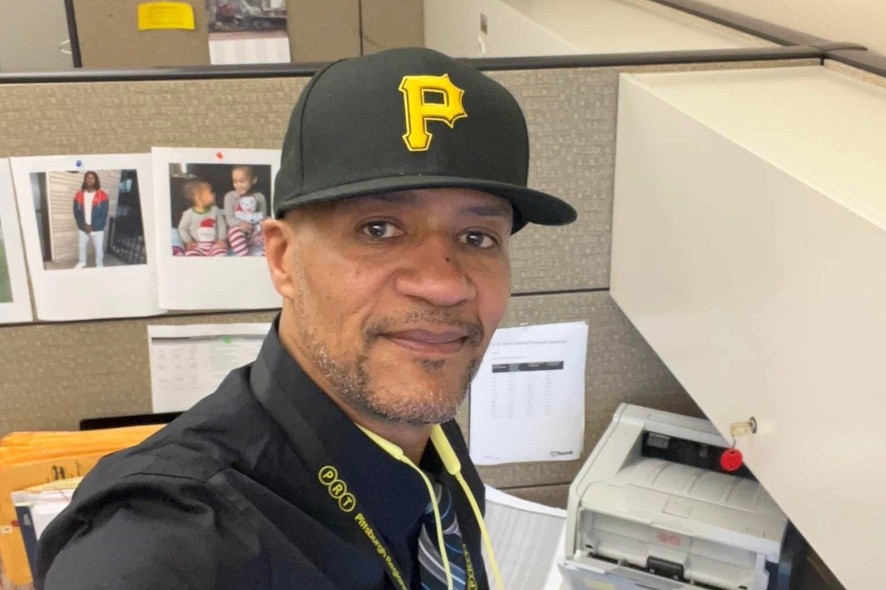
For Khalid Harper, the journey to becoming Manager of Benefits for Pittsburgh Regional Transit has been built on nearly two decades of hard work, dedication, and continuous growth.
Harper began his career at PRT in 2008 working in customer service. While many people view entry-level positions as a destination, Harper viewed it as an opportunity to get his foot in the door and begin building a long-term career. With a background in Human Resources, he always had his sights set on advancing within the organization.
Nineteen years later, that vision has become a reality.
Today, Harper manages benefits for more than 2,800 active employees and over 3,000 retirees. His responsibilities include overseeing medical, dental, vision, life insurance, pensions, retirement plans, flexible spending accounts, Medicare reimbursements, vacation and sick time administration, and major life events such as marriages, divorces, and births.
His role extends far beyond paperwork and administration. Harper conducts benefits presentations for new employees, organizes annual wellness fairs across eight PRT locations, leads monthly wellness meetings, works with government healthcare programs, collaborates with child support agencies, and helps review healthcare plans and premiums for future years.
Throughout his career, Harper has earned four promotions, a testament to both his work ethic and commitment to professional growth. What makes his story inspiring is not just the position he holds today, but the path he took to get there. Harper’s journey demonstrates that career advancement often starts with simply getting an opportunity and maximizing it through consistency, professionalism, and perseverance.
After nearly two decades with Pittsburgh Regional Transit, Harper says he’s not finished yet. And based on his track record, his next promotion may only be a matter of time.
Tell us a little about yourself and your role at Pittsburgh Regional Transit.
My name is Khalid Harper, and I grew up in Wilkinsburg, PA. I attended Wilkinsburg High School from 1990-1994 and attended Duquesne University from 1994-1999. Married in 2003, I now have six children and three grandchildren. I am a God-fearing man. My role at Pittsburgh Regional Transit is Manager of Benefits Administration.
What originally attracted you to PRT back in 2008?
Back then, I worked a lot of jobs that really didn’t have a career path; they were just jobs. A neighbor I grew up with started with PRT right out of high school. They are now retired with full benefits at age 48. I noticed the career path they were on. I reached out to get some knowledge about the company and possible openings. They told me there was a customer service position open if I wanted to get my foot in the door. They also put a recommendation in for me with our employment department, and my story began there!
Why was Human Resources the career path you wanted to pursue?
I have always wanted to help people, and that’s what Human Resources is all about. Whether it be guiding someone on their career path, helping someone find employment, or just helping folks in general, I look to make a positive impact on people’s lives and hope to help change them for the better. I had experience in benefits, with six years working for UPMC and Highmark. I knew I could be beneficial to PRT’s Human Resources Department, specifically in benefits.
What lessons did you learn working in customer service that still help you today?
Treat people how you want to be treated! Dealing with the public can be difficult because of so many different personalities. When people contact the call center, they are looking for assistance to navigate their day. A lot of times, you must put yourself in their shoes to understand the situation. When a bus is late or doesn’t show up, it can change the whole course of someone’s day. You must understand that instead of being confrontational, even if they are upset. Your conversation with that person, by showing empathy, can ease the whole situation. Always stay positive and treat people right. I stick to that with any position I’ve held!
You’ve earned four promotions during your career. What do you believe contributed most to your advancement?
Hard work, a positive attitude, and never being content. I was in customer service, but I always tried to learn what other departments’ job duties were, learning as much as I could about the company on a daily basis. The hard work did not go unnoticed.
What are some of the biggest responsibilities you manage on a daily basis?
Managing employees who report to me and overseeing healthcare benefits. You need to understand who your employees are because everyone is different. How can I get the most out of this employee in a positive way? We are a team working together toward our departmental goals. Leading by example and acknowledging how important they are to our success is a must. Employees are people first, and any good leader should recognize that.
With healthcare, we are in constant communication with five different vendors on a daily basis: UPMC, Highmark, United Concordia Dental, VSP Vision, and our Highmark Medicare plan. Some days can get busier than others. We also collaborate daily with other departments such as payroll, legal, employee relations, workers’ compensation, employment, and garage directors to ensure employee benefits are in place.
Many people don’t realize how much goes into employee benefits. What are some things people may not know about your job?
Man, there’s a lot that goes into maintaining benefits. We manage benefits for over 2,800 active employees and more than 3,000 retirees. We are with an employee from their hire date, through their entire employment, through retirement, and unfortunately through death.
When a retiree passes away, we manage benefits for the surviving spouse. Our retirees are offered post-retirement healthcare, and if death occurs, the surviving spouse continues to receive benefits.
I conduct an hour-long benefits presentation with all new-hire classes. Our department administers employees’ medical, dental, vision, life insurance, pension contributions, 401 plans, 457 plans, Roth plans, flexible spending plans, COBRA coverage, QDRO payments for divorce settlements, and Medicare Part B reimbursements for retirees 65 years of age and older.
I manage our Wellness Incentive Program, which consists of a member from each of our eight locations, our EAP Director, and representatives from both UPMC and Highmark. We collaborate on ideas to get employees more engaged in healthcare and make the company a healthier workplace. I am also part of a team that conducts annual review meetings with our medical vendors to review yearly statistics.
How important are wellness programs and employee health initiatives in today’s workplace?
Wellness programs are very important! A healthy employee means that employee is able to attend work. A lot of people don’t know that the health of your company determines your healthcare premiums and how much they may increase in upcoming years. An unhealthy company can drive your premiums through the roof.
You have low-risk employees and high-risk employees. With the nature of our employees’ work, there are five chronic conditions that affect our premiums. We try to focus on those chronic conditions, educate employees, and get them engaged to avoid them.
We have a wellness incentive that allows employees to be reimbursed for their medical deductible. The employee must complete four activities, with the mandatory activity being an annual physical. Employees then have eight other activities to choose from in order to complete the remaining three requirements.
With the incentive offered, along with hosting our wellness fairs and flu shot clinics, we are noticing a lot more engagement.
What advice would you give someone trying to get their foot in the door at a company and work their way up?
My advice would be to first have a plan. Know where you want to go and what you want to accomplish. Work hard and respect other employees. You never know who will be on the other side of that interview table when you walk in. Also, trust the process. Success is not easy. In my 50 years, nothing easy has been worth it!
What has been the most rewarding part of your career at PRT?
Meeting and working with so many different professional people in the corporate world from every walk of life. Knowing I am making a positive impact toward the company’s goals. Making my wife and kids proud of me means a lot to me. And obviously, my salary. Lol.
What challenges have you faced throughout your professional journey?
I was in a department where management only acknowledged your mistakes. You could do your job 99% of the time the correct way, but they would only focus on the 1% you didn’t do correctly.
Hard work and dedication were not acknowledged; they went unnoticed. As an employee, I felt very unappreciated. The leaders in the department were not there to build up their employees, only to break them down. The 1% you didn’t do correctly, instead of becoming a teaching moment, resulted in punishment.
I loved my job, but the leadership almost broke me, and I was ready to quit. Faith in the Lord is the only reason I made it through. Not long after I wanted to quit, a position opened up in Human Resources, where I wanted to be. So, I needed to go through that difficult time to get where I am now.
What goal do you still hope to accomplish before your career is over?
My goal is to keep climbing the professional ladder, continue making positive impacts at the company, and put away as much as I can so I can enjoy retirement comfortably.
ow has Pittsburgh Regional Transit changed since you first started?
With the current leadership, we are more collaborative, innovative, and have more effective learning and teaching strategies.
As an example, if you don’t have any supervisor or managerial experience, our Learning and Development Department offers training to help you gain those credentials. All of the tools are there for an employee to have a very successful career.
What motivates you to keep pushing after nearly 20 years with the organization?
Honestly, my family! Being able to provide for them means the world to me. I truly love my job, so I don’t need much motivation to show up and perform effectively.
What message would you like to leave for young professionals looking to build a successful career?
I’ll refer back to Question 7. Have a plan and trust the process. Never believe someone when they tell you that you can’t do it. Never be content with where you are; always strive for growth. Take advantage of everything a company has to offer to help build your career.
Keep your faith in God in everything you do, and there’s nothing you won’t be able to accomplish.