
Sometimes when I read a crime story, it’s not necessarily the headline that catches my attention.
It’s the details buried inside the story. The things that make you stop reading for a moment and start asking questions.
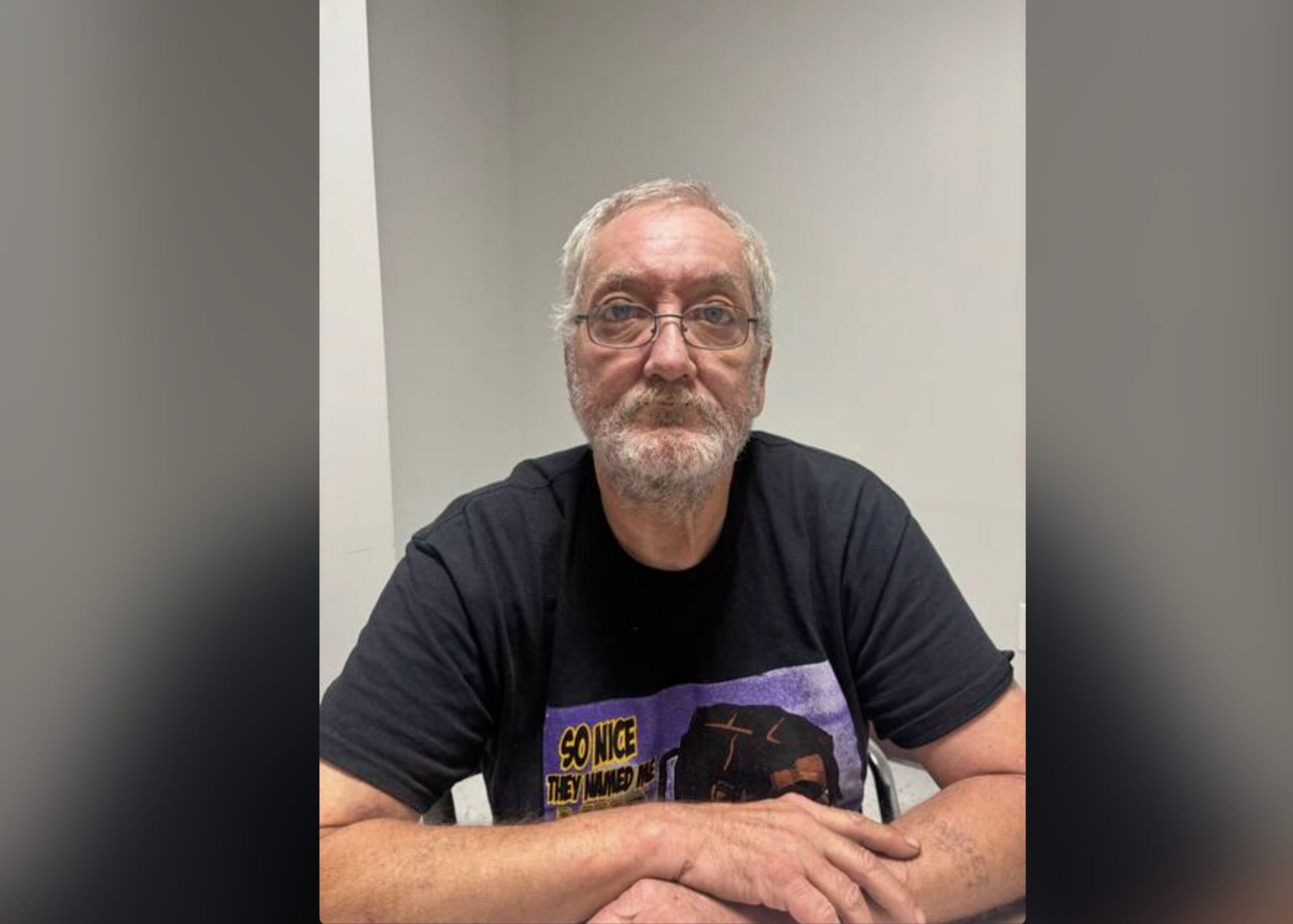
That’s exactly what happened when I came across the news that authorities in Westmoreland County had arrested 61-year-old James Kruczek of West Mifflin in connection with the 1985 killing of 16-year-old Lottie Jo Gunn.
The arrest itself is significant. A family has waited more than four decades for answers.
But something else about this case immediately caught my attention. This wasn’t the first time Kruczek’s name had surfaced in a homicide investigation involving a young woman.
And that’s where I believe this story deserves a much closer look.
A 16-Year-Old Girl, 131 Miles From Home
In May 1985, the body of 16-year-old Lottie Jo Gunn was discovered along Turner Valley Road in North Huntingdon.
She had been stabbed.
Gunn was originally from Akron, Ohio, approximately 131 miles away.
According to her family, she had a history of running away from home.
But there’s an important distinction that sometimes gets lost when discussing cases like this. Running away from home doesn’t mean someone deserves to become a victim. It doesn’t make their disappearance less important. And it certainly doesn’t mean their family loves them any less.
Lottie Jo was somebody’s daughter. Somebody’s sister. A young girl whose life ended before she ever had the opportunity to experience adulthood.
Her family spent 41 years wondering what happened.
Think about that. Forty-one years. Birthdays passed. Holidays came and went. Family members grew older. Her parents died without seeing anyone arrested for her killing.
And now, more than four decades later, advances in forensic technology have reportedly helped investigators identify a suspect.
According to court documents described in the Tribune-Review, investigators obtained a DNA sample from Kruczek and compared it with evidence preserved from Gunn’s clothing.
Authorities reported a match.
Kruczek has now been charged with criminal homicide. The charge remains an allegation, and he is presumed innocent unless proven guilty.
But the history surrounding his name raises additional questions.
Another Young Woman. Another Homicide Investigation.
Here’s the part of the story I found particularly interesting.
Kruczek was previously charged in connection with the death of 18-year-old Diane Lewis. Lewis was originally from Elk County and had been living in McKeesport. She was reportedly involved in prostitution. Her remains were discovered in a wooded area of North Huntingdon in 1987.
Kruczek was prosecuted in connection with her death but was acquitted in 1988.
That acquittal matters. Legally, he was not found guilty of killing Diane Lewis, and the case cannot be presented as though he was.
But from an investigative standpoint, the fact that his name appeared in two separate homicide investigations involving young women in the same general region is something I find worth examining.
According to the Tribune’s reporting, investigators had also considered Kruczek a suspect in Gunn’s killing decades before the recent arrest. Now, more than 40 years later, authorities believe they have enough evidence to charge him in that case.
Which brings me to the question that immediately crossed my mind.
Have investigators gone back and examined other unsolved homicides and disappearances from that same period?
Not because we know Kruczek was responsible for any additional crimes. We don’t.
But because the history makes a broader review worth considering.
He Was Around 20 Years Old
Another detail that stood out to me was his age.
Kruczek is now 61.
That would place him at approximately 19 or 20 years old when Gunn was killed in 1985. That’s remarkably young to be accused of a homicide of this nature.
And if investigators ultimately establish that he committed Gunn’s murder, an important question becomes what else was happening in his life during those years.
Was this an isolated act? Were there other violent incidents that never resulted in charges? Were there women who disappeared whose cases were never connected to one another? Did investigators at the time have access to all the information they needed?
These are questions, not accusations.
But I believe they are legitimate questions for law enforcement to explore.
One thing we know from the history of serial homicide investigations is that crimes committed in different jurisdictions can sometimes remain disconnected for years.
A body discovered in one county might be investigated independently from a disappearance reported in another. Different police departments may have different evidence, witnesses, and records. And in the 1980s, investigators didn’t have the DNA technology or interconnected databases available today.
That creates the possibility that patterns investigators couldn’t recognize decades ago might become clearer with modern forensic tools.
The Victims Society Sometimes Overlooks
There’s another part of this story that I think deserves attention.
The backgrounds of the two young women.
One was a teenager who reportedly ran away from home. The other was an 18-year-old woman reportedly involved in prostitution.
Historically, runaways, people involved in street-level sex work, and individuals without stable housing have sometimes been especially vulnerable to violence.
Their circumstances can also make investigations more complicated.
Some travel frequently. Some move between cities. Some don’t have stable addresses. Some lose contact with their families for extended periods. And unfortunately, some disappearances have not received the urgency or public attention they deserved.
That doesn’t mean these women weren’t loved. It doesn’t mean nobody was looking for them. And it doesn’t mean their lives were somehow less valuable.
It means their circumstances could make them more difficult to locate and their cases harder to investigate.
Think about a young woman who disappeared in Pittsburgh in 1984. Or a runaway teenager last seen in McKeesport in 1986. Or someone involved in prostitution who was last seen getting into a vehicle somewhere in the Mon Valley.
Those are hypothetical examples, not cases I’m claiming are connected to Kruczek. But they illustrate why investigators shouldn’t limit their review to cases that initially appear identical.
Sometimes the most important connection isn’t where a victim was found. It’s where that person was last seen, who they encountered, and how they traveled.
Could There Be More Victims?
This is the question I keep coming back to.
And I want to be very clear. There is currently no evidence presented in the reporting I’ve reviewed establishing that Kruczek was responsible for additional homicides beyond the crime for which he has now been charged.
He was acquitted in the Diane Lewis case. He has not been convicted in the Lottie Jo Gunn case.
Those facts must remain part of this discussion.
But I also don’t believe investigators should automatically assume that every homicide or disappearance from that era was an isolated event.
If the evidence supports expanding the investigation, then expand it.
Look at unsolved cases from the early 1980s through the late 1980s. Look at Westmoreland County. Look at Allegheny County. Look at Washington County. Look at Beaver County. And look beyond Western Pennsylvania when evidence suggests a connection.
Review missing-person reports. Reexamine unidentified remains.Compare preserved forensic evidence. Look at old witness statements. And revisit cases involving women whose disappearances may not have received widespread attention.
Not every case will be connected. Most may have nothing to do with one another.
But the possibility of identifying even one additional victim or resolving one more family’s decades of uncertainty makes a careful, evidence-based review worthwhile.
DNA Has Changed Everything
One of the most remarkable developments in modern criminal investigations is the ability to revisit evidence collected decades ago.
Imagine being the investigator who preserved a piece of clothing in 1985 without knowing whether technology would ever exist to extract useful information from it.
Forty-one years later, that evidence may become central to a homicide prosecution.
That’s extraordinary.
And it makes me wonder how many other unsolved cases across Western Pennsylvania are sitting in evidence rooms waiting for another look.
How many families have been told there are no new leads? How many investigators have exhausted every available avenue using the technology of their time? And how many cases could potentially move forward if preserved evidence were examined with today’s methods?
Cold cases aren’t necessarily hopeless cases. Sometimes the evidence hasn’t changed.
The science has.
Forty-One Years Is a Lifetime
The most heartbreaking part of this story is what Lottie Jo Gunn’s family has endured.
Her younger sister, JoDee Beal, was only 12 when Lottie Jo was found dead. Now she’s an adult who has spent most of her life without answers.
Her brother-in-law, Mike Beal, reportedly contacted investigators year after year to help keep the case from being forgotten.
That kind of dedication says something.
Families don’t simply stop loving someone because decades have passed. They don’t stop wondering. They don’t stop remembering birthdays. And they don’t stop hoping that one day somebody will finally explain what happened.
An arrest doesn’t erase 41 years of pain. And it doesn’t guarantee a conviction.
But it represents a development that this family waited decades to see.
My Final Thoughts
What makes this case so unsettling to me isn’t simply that a man has been arrested in connection with a homicide committed more than four decades ago.
It’s the history surrounding the investigation.
A 16-year-old runaway from Ohio found murdered in Westmoreland County. An 18-year-old woman found dead in the same general area two years later. A man who was previously acquitted in one case and has now been charged in the other.
And decades of unanswered questions.
I can’t say James Kruczek committed additional murders. Nobody should make that accusation without evidence.
But I can say that I hope investigators examine every credible lead that could help determine whether other cases deserve a closer look.
Because one of the biggest mistakes we can make when studying decades-old crimes is assuming that the original investigation uncovered everything there was to know.
Sometimes it didn’t.
Sometimes investigators lacked the technology. Sometimes witnesses never came forward. Sometimes different police departments didn’t recognize possible connections. And sometimes the victims were people whose circumstances made it easier for their disappearances to go unnoticed by the broader public.
That’s the part that bothers me.
A runaway teenager is still somebody’s child. A woman involved in prostitution is still somebody’s daughter. And a person without a stable home deserves the same commitment to justice as anybody else.
Their lives matter just as much. Their families deserve answers just as much. And their cases deserve to be investigated just as thoroughly.
For Lottie Jo Gunn’s family, the arrest represents a long-awaited development. For investigators, it may be an opportunity to examine the past with tools they didn’t have 40 years ago.
And for me, one question remains.
If there are other unsolved cases with evidence pointing in the same direction, will anyone recognize the connection?
That’s a question worth asking.