
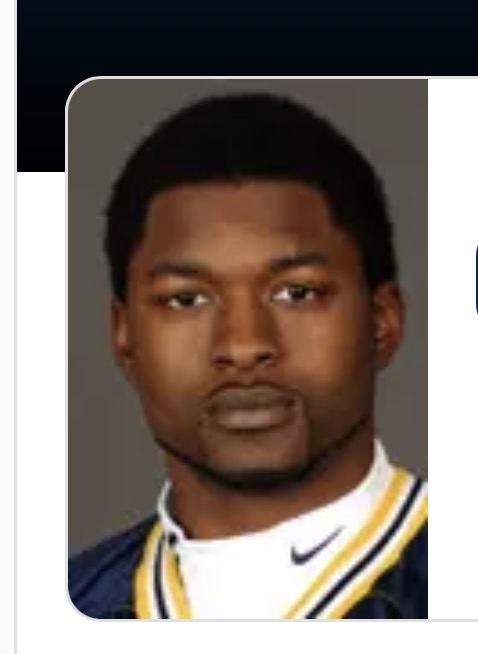
Some players put up statistics. Some players collect awards. And then there are the players who become the identity of a football team.
Eric Wicks was one of those players.
During one of the most successful eras in West Virginia football history, Wicks established himself as one of the toughest and most respected defenders in the Big East. A hard-hitting linebacker with a relentless motor, he brought leadership, toughness, and consistency to every game he played. Long before NIL deals, transfer portals, and social media highlights dominated college athletics, players like Wicks built their reputations the old-fashioned way: preparation, physicality, and production. Whether it was filling a gap against the run, making a key tackle on third down, or setting the tone for the defense, Wicks became a player teammates trusted and opponents respected. His career at West Virginia coincided with an era when Mountaineer football was building national respect. Every great defense needs leaders willing to do the dirty work, and Wicks embraced that role every Saturday.
While fans often remember the touchdowns, big plays, and offensive stars, true football fans understand championships are built on defense. Eric Wicks was one of the players who helped establish that foundation in Morgantown.
In this edition of WVU Brotherhood, Eric Wicks reflects on his journey to West Virginia, the memories that still stand out today, the teammates who influenced him most, and what it means to remain part of the Mountaineer family years after his playing career ended.
Once a Mountaineer, always a Mountaineer.
Q: What originally made West Virginia University the right fit for you?
A: West Virginia was the right fit for me because they recruited me early. All the other schools started recruiting me in the middle of my junior year, but WVU was recruiting me when I was in the 10th grade and offered me a scholarship early in my junior year. At the time, that showed loyalty, and it made me feel like I was at the top of their list. Add in the fact that it was only an hour from Pittsburgh and I had the opportunity to play Division I football, and the decision was easy.
Q: What do you remember most about your recruiting process?
A: My recruiting process was tough at that point in my life. I wasn’t really interested in coaches coming to my house, so most of them came to the school. That worked out because my teammate and best friend, Vaughn Rivers, was in the same situation. We could talk about the different schools and what the coaches were telling us during the recruiting process. As I looked at my options, I already had the West Virginia offer on the board, but the MAC schools kept coming in, and I wanted to play wide receiver. Let’s just say they were all selling me that dream. At the same time, though, I knew the MAC wasn’t the Big East.
Q: Who were some of the coaches that had the biggest impact on your life during your time at WVU?
A: There were plenty of coaches who impacted my life in a positive way. The first guy I’d mention is Coach Tony Gibson. He recruited me and spent a lot of time teaching me about life, not just football. He also helped me get my first graduate assistant position at Pitt, which eventually led to me coaching college football for eight years. Another was Coach Bruce Tall. He invested a lot of time teaching me the game. As my position coach, he spent countless hours helping me improve and become a better player by putting me in positions to make big plays. Lastly, Coach Rod. He taught me there’s only one way to work, and that’s hard as hell. Otherwise, you’re not really trying at all. He always talked about finding that hard edge. It didn’t really make sense until I had my own team.
Q: What was your welcome-to-college-football moment when you realized you were playing at a different level?
A: My welcome-to-college-football moment wasn’t like most people who get their bell rung and wonder what happened. It was my redshirt freshman year. The starter got hurt, and all week the coaches prepared a guy who was one year older than me to start. We were playing Virginia Tech at their stadium. The game started, and the guy who got the start wasn’t playing well. Coach Tall got upset and sent me into the game. The funny part is, I had been sitting on the bench talking trash about how they should put me in. Well… that’s exactly what happened. As soon as I got on the field, my nerves and anxiety kicked in. Right as the quarterback started his cadence, I threw up all over the Virginia Tech player lined up in front of me. The guy yelled, “Oh shit!” The play started, and I made the tackle. The guy who was supposed to block me was still thinking about the fact that I had just thrown up on him. A few plays later, I intercepted a pass and returned it for a touchdown.
Q: What teammate made you better every day in practice?
A: We had a lot of guys who made each other better. Because I had to be versatile, I worked against different players depending on what we were focusing on. Pat White and Jarrett Brown pushed me in the passing game because I always wanted to intercept them. They welcomed that challenge, and we’d battle every day. When Coach wanted to work on the running game or inside run, I had great battles with Owen Schmitt. Darius Reynaud was one of the best slot receivers around, and we worked one-on-one every day. Within our own defensive room, though, we didn’t accept losing. Guys like Mike Lorello, Jahmile Addae, and Akeem Jackson pushed me to never take a day off.
Q: Looking back, what game stands out as your favorite memory wearing the Old Gold and Blue?
A: The 2005 Louisville game. After that game, I think we all felt that if we kept working hard, we were going to beat anybody we played. Steve Slaton and Pat White had the offense rolling, and defensively we were holding it down.
Q: As a linebacker, what was your mindset every time you stepped onto the field?
A: Honestly, every time I stepped on the field, my mindset was to make a big play. I felt like that was my role on the team. If I didn’t make one and we lost, I felt like I hadn’t done my job.
Q: What opposing player or team presented the toughest challenge during your career?
A: Pitt. We beat them, but they also beat us at the worst possible time by ruining our national championship hopes in 2007.
Q: How would you describe the culture inside the WVU locker room during your era?
A: The locker room was a true brotherhood. It was special seeing more than 100 guys all share that same family mentality.
Q: What did it mean to represent the state of West Virginia every Saturday?
A: It meant a lot because there wasn’t an NFL team in the state. There were no pro games on Sundays, so every West Virginian was watching us on Saturdays. In most of our bowl games, the entire country picked against us, but the people of West Virginia never did. They truly bleed Blue and Gold.
Q: How different would your college experience have been if NIL and the transfer portal existed during your playing days?
A: NIL would have been great for us. I definitely would’ve loved making some money while I was playing. As for the transfer portal, I don’t think it would’ve affected me. West Virginia stayed loyal to me, and I was able to play early. I honestly don’t think my situation could’ve been much better.
Q: What is something fans never saw behind the scenes that helped make your teams successful?
A: The biggest secret behind our confidence was knowing we were the hardest-working team in the country. Our strength and conditioning program was second to none. Mike Barwis and the strength staff pushed us past our limits every day. Because of that, overtime games were actually fun for us.
Q: What lessons from football still help you in your life today?
A: Football helped mold me into the man I am today. It taught me the importance of being determined, disciplined, and intentional in everything I do. Whether you’re a father, a business owner, or a football coach, bring your absolute best. One thing Coach always told me was, “How you do anything is how you do everything.” Before college, I was late for everything. That changed quickly. Now, if you’re not 15 minutes early, you’re late. Time is valuable, and nowadays, time is money.
Q: What does the WVU Brotherhood mean to you today?
A: The WVU Brotherhood is strong. There are Mountaineers all over the country, and we’re all proud to represent West Virginia. Anytime one WVU alum sees another, it’s always love.
Q: Who are some former teammates you still keep in touch with?
A: I’ll admit I’m terrible at keeping in touch, but I still have teammates who reach out. When I was coaching college football, I’d see a lot of the guys every year at the coaches’ convention, and it was always great catching up.
Q: What advice would you give current WVU football players?
A: My advice is simple: stack days. Life as a Division I athlete isn’t easy, but the work you put in today prepares you for life during and after football. Just don’t forget to have fun along the way.
Q: What advice would you give young athletes chasing their college football dreams?
A: Stack your days and keep your head down. College coaches don’t care about social media likes or followers. Your film is your résumé, and your body and frame matter too. The determined, hardworking kids are the ones who make it.
Q: When Mountaineer fans hear the name Eric Wicks, what do you hope they remember most about your career?
A: When people hear the name Eric Wicks, I hope they simply say, “That dude was one hell of a football player.”